Marketing Automation for Ecommerce: A Practical Playbook
Automated emails can look modest on a dashboard and still drive a huge share of revenue. In one ecommerce report, they made up only 2% of all emails sent in 2025 but produced 30% of email-driven revenue for users of the platform, which is exactly why marketing automation for ecommerce is not a side project, it's the operating system behind retention, repeat purchase, and recovery Shopify email marketing statistics.
What matters in practice isn't sending more. It's deciding who gets the message, which channel carries it, and when to stay silent. The stores that win don't just launch flows, they build a decision layer that routes a shopper to the right nudge at the right moment, then suppresses the wrong nudge before it burns list quality.
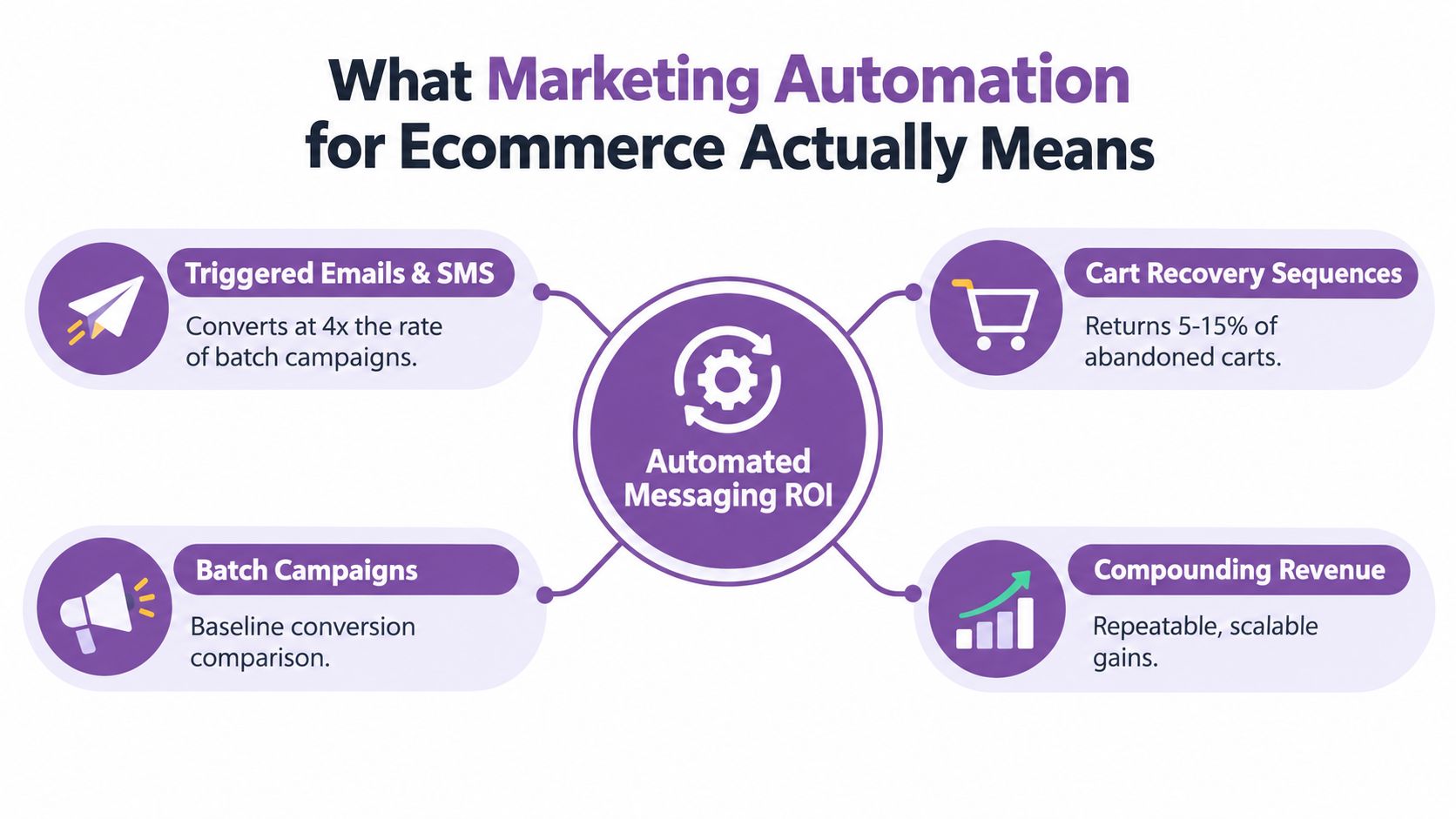
Table of Contents
- What Marketing Automation for Ecommerce Means in Practice
- The Four Workflows Every Automation Stack Needs
- Choosing Between Email and SMS for Each Trigger
- Segmentation as the Decision Layer Behind Automation
- Metrics That Tell You If Automation Is Working
- Setting Up SMS Automation with YipSMS on Shopify
- Your First 30 Days of Ecommerce Automation
What Marketing Automation for Ecommerce Means in Practice
Marketing automation for ecommerce connects store activity to a message, channel, and timing decision. Cart additions, checkout starts, purchases, product views, and lapses become triggers, but the trigger alone is not the strategy. The system must also decide who qualifies, whether email or SMS fits the intent, and when to suppress the contact.
Performance explains the investment. One industry summary reports a 42.1% open rate, 5.4% click rate, and 1.9% conversion rate for automated emails Sender email marketing statistics. Email can also generate strong returns relative to one-off campaigns, with automated messages producing a disproportionately large share of sales from a smaller share of send volume Shopify email marketing statistics.
The three layers a working stack needs
A working stack has three parts. The event source, such as Shopify, a POS, or a subscription app, records what happened. The decision engine applies segments, timing, channel preferences, purchase status, and suppression rules. The outbound channel delivers the message through email, SMS, or both.
SMS deserves a deliberate role rather than a simple email fallback. It suits high-intent moments that need quick attention, while email gives the store more room for education, product detail, and longer follow-up. Sending both without frequency controls can create duplicate pressure, damage engagement, and make a discount feel necessary.
Practical rule: if a workflow cannot distinguish between an abandoned cart and a completed purchase, it is guesswork, not automation.
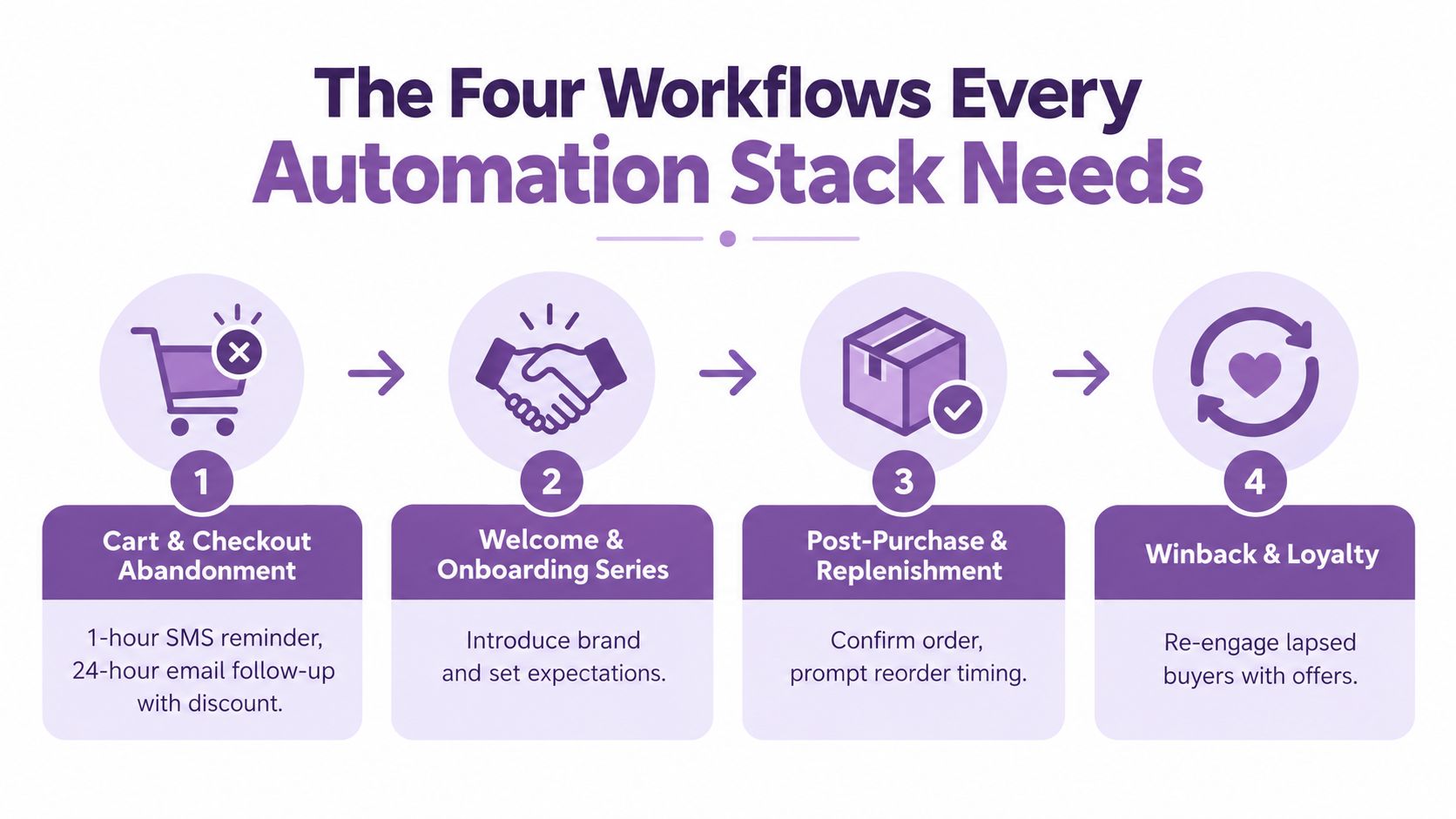
The stack usually supports four workflow families: cart and checkout abandonment, browse retargeting, post-purchase, and winback. Their shared decision layer answers three questions, who should receive the message, which channel should carry it, and when should the system stay quiet.
The Four Workflows Every Automation Stack Needs
Cart and checkout abandonment belongs at the front of the build because it captures the clearest buying intent. A shopper who added an item or started checkout but did not purchase should receive a 1-hour SMS reminder, followed by a 24-hour email follow-up if the order remains incomplete. Add a final nudge only when the shopper is still eligible. Suppress anyone who buys, or the flow will stack discounts, irritate recent customers, and teach shoppers to wait for coupons.
Build in this order
Browse retargeting is where restraint matters most. A product view or anonymous browse session from the last seven days can qualify a non-purchaser, but the system should cap contact at two or three touches before suppression. Email usually gives this flow enough space for product detail. SMS should require recent, explicit permission and a strong intent signal, not serve as a default reminder.
Post-purchase automation starts after the order, not after the customer goes quiet. Order confirmation and shipping updates handle immediate reassurance. Once delivery is reasonably likely, a time-based follow-up can request a review, recommend a related product, or prompt replenishment. The main risk is selling before the buyer has received or used the item. Suppression also matters when a customer has an unresolved delivery issue.
Winback needs rules for who deserves another offer and who should be left alone. Start with a no-purchase window, often around 60 days for the general base, then create a deeper VIP branch for top spenders. Their offer, contact pace, and sunset path can differ from the long tail. A lapsed customer who has never responded to prior messages may be better suppressed than pushed into another discount bucket.
Each workflow should define the audience, channel, timing, and stop conditions before the copy is written. That decision layer protects both conversion and margin.
A cart flow that saves a few orders is useful. A winback system that knows when to stop discounting protects margin.
For a broader pattern library, CPG brand email marketing results shows how structured flows beat scattered blasts, though timing and offer strategy will differ by store.
Choosing Between Email and SMS for Each Trigger
Channel choice should follow shopper intent, urgency, and the cost of another message. SMS suits a warm shopper who may act quickly, while email gives you space for product detail, reassurance, and a softer follow-up. For cart recovery, SMS usually leads when intent is fresh. Email can follow with more context, product imagery, or a reminder about the offer.
Here is a practical routing model for Shopify stores:
| Trigger | Lead Channel | Email Role | SMS Role | Typical Split |
|---|---|---|---|---|
| Cart abandonment | SMS | Longer follow-up, product detail, code reminder | Fast reminder while intent is fresh | SMS first, email second |
| Browse retargeting | Main nurture channel | Use only with recent, explicit opt-in | Email in most cases | |
| Post-purchase | Receipt, shipping, review, cross-sell | Shipping delay or back-in-stock notice | Email-led | |
| Winback | SMS for high-LTV, email for long tail | Re-engagement and softer offers | Direct reactivation for high-intent segments | Split by value tier |
That split lines up with a simple comparison many operators keep close, including the SMS vs email marketing trade-off guide that stores use when deciding what belongs in text and what belongs in inbox. It also reflects the broader lesson in CPG brand email marketing results, channel selection changes the economics of a campaign.
Routing rules that stop channel conflict
Set a daily frequency cap for each customer across both channels. Suppress SMS for numbers that have stopped engaging, and keep one source of truth for discount codes so email and SMS never send conflicting offers. A buyer who converts should leave every related recovery flow immediately.
A store that lets both email and SMS claim cart recovery without a shared cap will double-message the same buyer within an hour, which is where opt-outs spike. Give SMS the first opportunity when consent and intent are strong, then delay or suppress email based on the shopper's response.
The decision layer matters more than adding another flow. Define who receives the message, which channel gets priority, when the second channel is allowed, and what event stops communication.
Segmentation as the Decision Layer Behind Automation
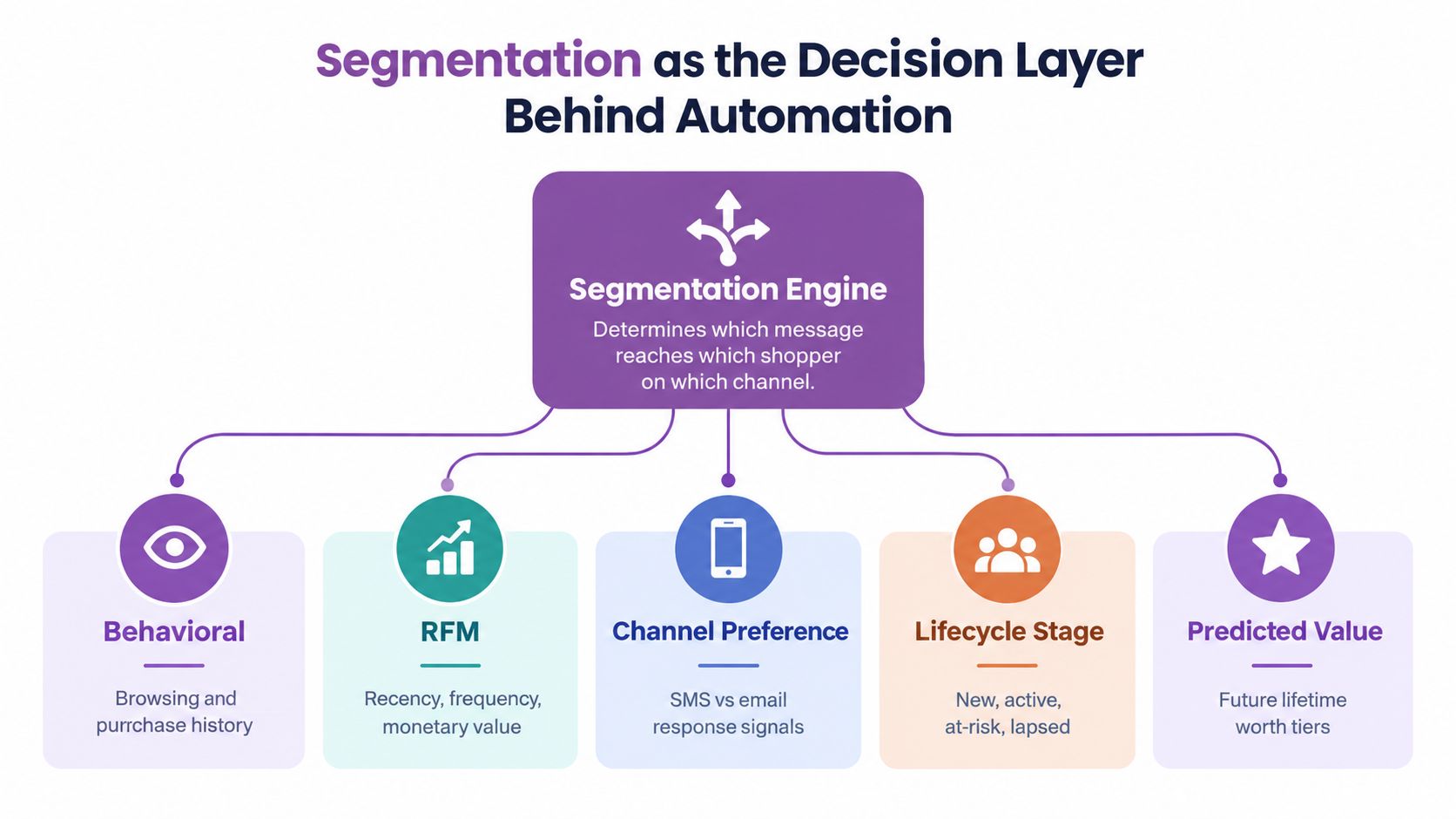
Segmentation isn't list-building for its own sake, it's the routing engine that decides which message reaches which shopper on which channel. The store owner who treats segmentation as a decision layer gets fewer, better-targeted sends, and that usually beats a larger list with weak routing.
Five cuts matter most in ecommerce. Lifecycle stage separates prospect, first-time buyer, repeat buyer, and lapsed customer. Engagement recency tells you whether someone is still responsive by email or only through SMS. Predicted spend tier helps you avoid giving the same offer to a high-value buyer and a bargain hunter. Product affinity tells you what category they keep returning to. Geo and time zone keep send timing sane.
Suppression is where money gets saved
The mistake most stores make is building segments and forgetting the no-go rules. If someone just bought, they should not get a cart abandonment flow. If a subscriber is hitting too many emails, throttle them before they unsubscribe. If a customer is a low-margin, discount-driven buyer, block them from full-price flows and keep the offer discipline tighter.
Rule of thumb: every segment should answer one decision, send, suppress, switch channel, or change offer.
That's why a VIP or winback layer should sit on top of the base segments rather than replace them. The same customer can be lapsed, high-value, and product-specific at once, and those overlaps are where the best routing decisions come from. For a deeper operational view of data structure, customer data segmentation is a useful reference point.
The goal is not more segments. It's fewer messages that are more relevant, more profitable, and easier to suppress when the context changes.
Metrics That Tell You If Automation Is Working
Revenue is the first check, but it's not the only one that matters. I prefer a three-tier metric stack because it keeps the dashboard honest without turning every review into a spreadsheet hunt.
| Metric | Healthy Range | What It Signals |
|---|---|---|
| Automation-attributed revenue | Rising share over time | Flows are carrying more of the business |
| Revenue per recipient | Higher than campaign sends | The audience and timing are aligned |
| Cart recovery rate | 8% to 12% | The recovery flow is doing useful work |
| Browse recovery rate | Directionally improving | Product-interest messaging is landing |
| Welcome series conversion | Consistent and stable | New subscribers are being activated well |
| Post-purchase repeat rate | Stable or improving | Retention messaging is working |
| Winback reactivation | Segment-dependent | Lapsed buyers are still responsive |
| Deliverability | Stable, not drifting | Your sender reputation is holding |
| Unsubscribe rate by flow | Low and flat | Offer fatigue or channel saturation isn't building |
| SMS reply rate | Rising when intent is high | Two-way engagement is real |
If revenue dips, check deliverability first. If clicks stay fine but conversions fall, the offer is probably off, or the landing page is doing the damage. If unsubscribes climb flow by flow, the issue is usually fatigue, not the channel itself.
SMS needs a different lens than email because opens are already very high, so open rate isn't the diagnostic metric that matters most. SMS reply rate and revenue per send tell you more about whether the message was worth sending in the first place.
Attribution also needs humility. Last-click reporting tends to under-credit SMS because a text often creates the intent that email or a direct visit closes later. If you only look at the final touch, you'll cut the very flow that rescued the order.
Setting Up SMS Automation with YipSMS on Shopify
The cleanest SMS-first setup starts with consent, not creative. Get explicit opt-in through a checkout checkbox, a clear popup, or a keyword join, and keep the language plain so people know they're agreeing to promotional texts and can opt out at any time. If you're tightening the compliance side, the SMS campaign for online stores reference is a practical reminder that the mechanics matter as much as the message.
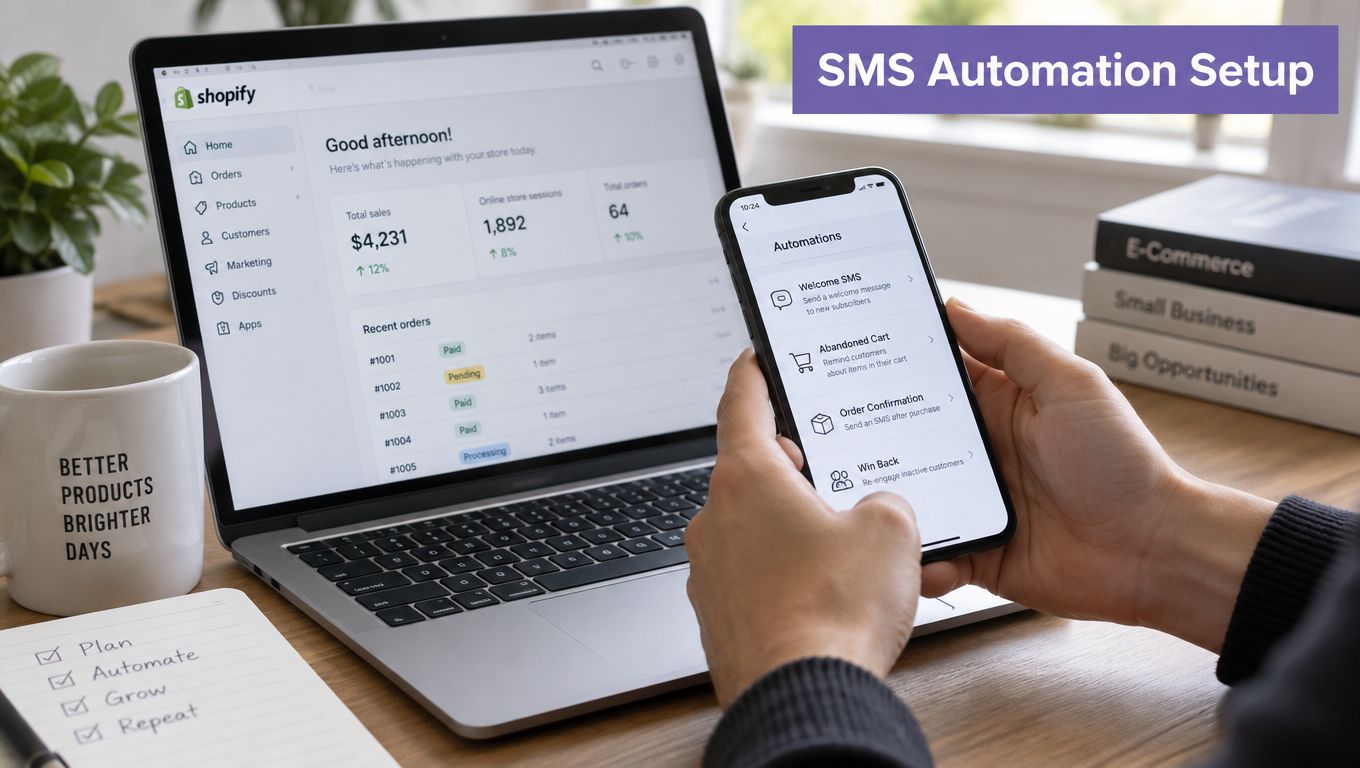
Then connect Shopify and make sure customer and event data sync cleanly. If the platform can't see cart events, checkout events, and purchase events in real time, the automation will fire late or fire on the wrong person. That's where many stores lose trust, not in the copy.
A practical Shopify setup path
Start by turning on the core flows, cart abandonment, checkout abandonment, browse abandonment, welcome, post-purchase, shipping updates, and winback. Then decide where SMS should lead and where it should only support email. For most stores, SMS belongs in the highest-intent steps, while email handles the longer explanations and receipts.
If you're using a tool like YipSMS, keep the orchestration simple at first. It supports Shopify-connected SMS flows, customer sync, and opt-in capture, which makes it easier to move from a generic blast model to event-based routing. The Shopify integration overview is useful if you want to see how that connection is typically structured.
Use reply keywords for two-way conversations, then review the analytics with a narrow eye. Look at revenue per send, recovered carts, and unsubscribe rate first. If opt-outs rise on a flow, throttle it before you scale spend or frequency.
A store can also segment VIPs into a separate, lower-frequency SMS path so high spenders don't get treated like casual browsers. That one adjustment often keeps the list healthier than adding more campaigns.
Your First 30 Days of Ecommerce Automation
Week one should be boring on purpose. Turn on cart abandonment and welcome flows in email, then verify that suppression works before you touch anything else. If a buyer completes checkout, they should not still be sitting in a cart recovery queue.
Week two is where SMS enters. Capture opt-in clearly, then add an SMS cart-abandonment touch for shoppers who've already shown purchase intent and are comfortable receiving texts. The goal is not volume, it's to use the channel only where speed matters.
Week three adds post-purchase and review-request automation. That gives you a retention layer that doesn't depend on discounts and lets you see whether the store can create repeat behavior without constant promotion.
Week four is for winback and measurement. Deploy the lapsed-buyer flow, then inspect attribution, deliverability, and opt-outs before you expand anything. A flow that looks good in screenshots but drives unsubscribes is not a win.
The most common mistakes are predictable. Stores skip suppression rules, launch winback before they have enough repeat buyers, or treat a modest automation share of revenue as the finish line. Mature systems keep improving because they route better, not because they send more.
Use this checklist first, in order of likely impact.
- Cart abandonment: verify trigger timing, suppression, and channel split.
- Welcome flow: make sure new subscribers get the right first impression.
- SMS opt-in capture: add a clean, compliant path before scaling text sends.
- Post-purchase: confirm order, shipping, and follow-up timing.
- Winback: only after your repeat base is large enough to support it.
- Deliverability review: check before increasing send volume.
If a flow is not segmented or suppressed, do not turn it on yet.
YipSMS Inc. gives Shopify stores a straightforward way to build SMS automation around consent, event triggers, and revenue tracking without turning the setup into a technical project. If you want a practical way to recover carts, route VIPs differently, and keep your SMS flows tight, visit YipSMS Inc. and see how it fits your store's automation stack.
How this article was made: the YIPSMS team drafts some articles with AI writing tools, then checks pricing, compliance and product details against how YIPSMS actually works before publishing. Spotted something wrong? Tell us through your YIPSMS account.