SMS Marketing Software for Shopify: 10 Top Picks in 2026
Two pricing pages are open in your tabs. One tool advertises a flat monthly fee. The other shows a per-message rate so low it looks like a rounding error. You build a quick spreadsheet, and the numbers do something you didn't expect.
The per-message tool charges less per text but bundles credits you can't fully use. Add carrier fees, MMS billed at roughly double the SMS rate, and number registration, and the "expensive" flat plan wins. Push the volume up and the ranking flips again.
That's why SMS cost depends on how you pay, not just the rate. Segment math matters too. A message past 160 characters bills as two, and emoji push a send into Unicode encoding, which cuts the characters per segment and doubles the bill for one cheerful symbol.
This guide compares 10 SMS marketing software options on pricing structure, Shopify depth, integrations, and the store situations each one suits. Every entry names the honest limit, the point where a small store hits a ceiling, and the revenue flows the tool automates.
Table of Contents
- 1. YipSMS Inc.
- 2. Postscript
- 3. Klaviyo
- 4. Omnisend
- 5. Yotpo SMS
- 6. Privy
- 7. Attentive
- 8. Sendlane
- 9. SimpleTexting
- 10. SlickText
- How the 10 SMS marketing software options compare on pricing and Shopify fit
- Picking the Right SMS Tool Starts With Your Revenue Flows
1. YipSMS Inc.
YipSMS prices messages rather than seats. The monthly fee buys a lower per-message rate, so the right plan is the one that costs less at your actual send volume, not the one with the cheapest sticker rate.
Free is $0 per month at $0.025 per SMS and $0.055 per MMS. Gold is $99 per month at $0.018 and $0.042. Premium is $299 per month at $0.015 and $0.030.
At 10,000 SMS, Free costs $250. Gold costs $99 plus $180, or $279. Premium costs $299 plus $150, or $449. Gold overtakes Free at about 14,100 messages. Premium only beats Gold past roughly 66,700.
Break-even rule: A monthly fee pays for itself only when the per-message discount covers the subscription at your real send volume. The free plan suits volumes below about 14,100 messages a month, where that math still favors it.
What it automates on Shopify
Install is one click. List growth runs through a drag-and-drop popup builder, text-to-join keywords, QR codes, and Shopify segment sync. Ten prebuilt automations turn on in one click: abandoned cart and checkout, popup subscriber welcome, shipped and delivered notifications, keyword opt-in replies, AI chat response, and segment entry.
Cart recovery is the flow most stores switch on first. Baymard's compilation of 50 ecommerce studies published between 2006 and 2025 puts abandonment at roughly 7 in 10 online shopping carts, with mobile shoppers at higher risk because smaller screens and weaker error recovery make checkout harder to finish (Baymard).
The honest limits
Campaigns can be personalized and scheduled across time zones, and the revenue dashboard tracks clicks through to checkout revenue. YipSMS registers numbers for 10DLC and toll-free messaging. It reports more than 5,000 brands and 300 million texts sent. The 97% deliverability figure and the 5x to 7x return figures are company-reported, not independent benchmarks.
The rate ladder is the ceiling. The $0.015 rate sits on the $299 plan, and results still depend on list quality and consent. A side-by-side of why store owners are switching shows where that pricing holds up against other Shopify SMS tools.
2. Postscript
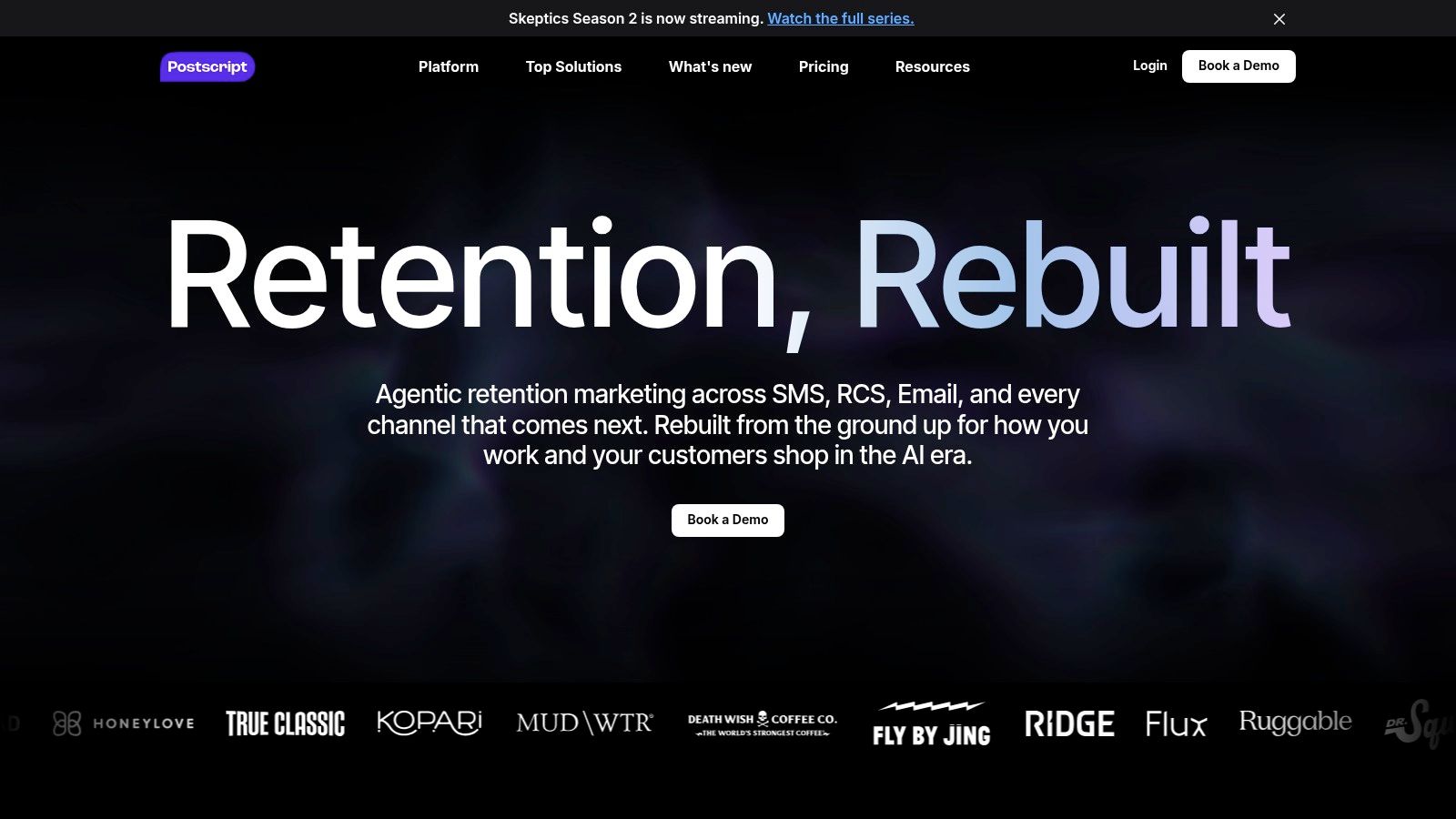
A shipping update and a cart-recovery text are different revenue flows, and Postscript prices them against a monthly minimum once the trial ends. The entry tier starts low. After the trial, a minimum spend replaces that free-looking start. Short plain texts at modest volume can stay under it, so the floor is the number to plan around. MMS and long personalized copy reach it faster. Confirm current plan details on Postscript before you budget.
Where the Shopify depth shows
The platform reads order and browse behavior from your store and turns it into targeting. You get visual flows for cart and browse abandonment, welcome series, upsells, and shipping updates, plus popups, forms, and checkout collection for list growth. That is the Shopify depth a broadcast tool does not give you. A small store can run those flows early.
The ceiling
Customer service is where many brands end up using this channel. Text Request's 2025 survey of more than 500 professionals in the United States and Canada found 76% of organizations using business texting deploy it for customer service, while 30% use it for marketing and promotions, and 83% of consumers read business texts within 30 minutes (Text Request). Shared inboxes matter more than another campaign template for that mix.
Costs still climb with message volume and carrier fees. Price one real campaign against the monthly minimum.
3. Klaviyo
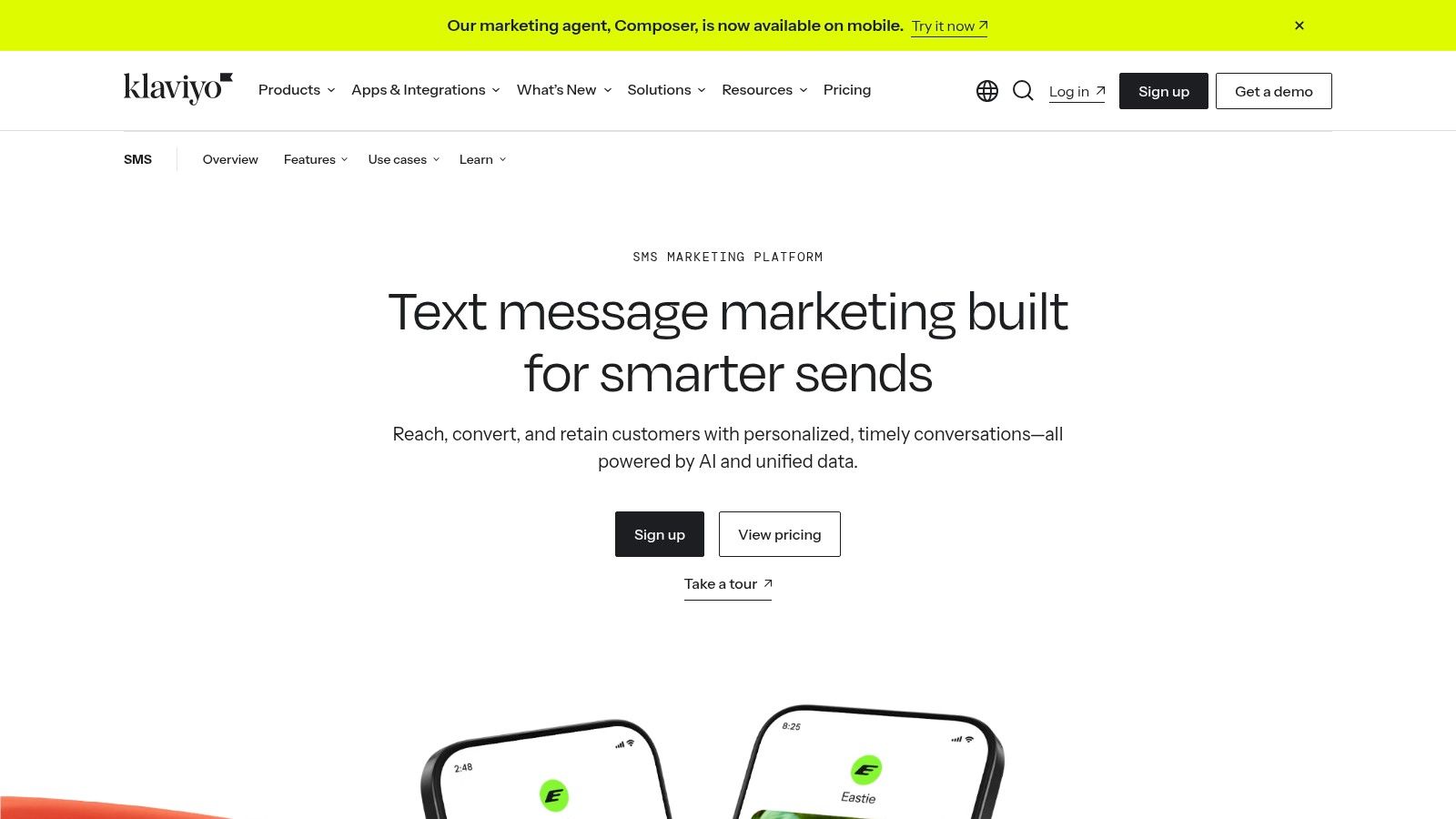
If Klaviyo already sends your email, adding SMS costs you one integration instead of two, and that's the entire business case for most stores. SMS is usage-priced with no single universal per-text rate, because the cost depends on destination, message segments, and number type.
Why the shared profile matters
SMS and email run inside the same customer journey here, which means someone who clicks an email but doesn't buy can get a text without you exporting a list. Shopify activity feeds segmentation, signup forms collect consent, and SMS is available across multiple countries (Klaviyo).
Personalization is the argument for paying for that depth. A 2025 survey of 3,300 consumers in the United States, United Kingdom, and Australia found 90% wanted more personalized communications and 81% were likely to ignore irrelevant marketing messages, while one in four said generic messages made them less likely to purchase (Attentive). Ecommerce brands increased SMS volume 31% year over year, so the inbox is getting louder.
The ceiling
SMS spend renews monthly and unused dollar-based spend does not roll over, which is a quiet cost for seasonal stores. The broader feature set is also more than a small catalog needs.
4. Omnisend
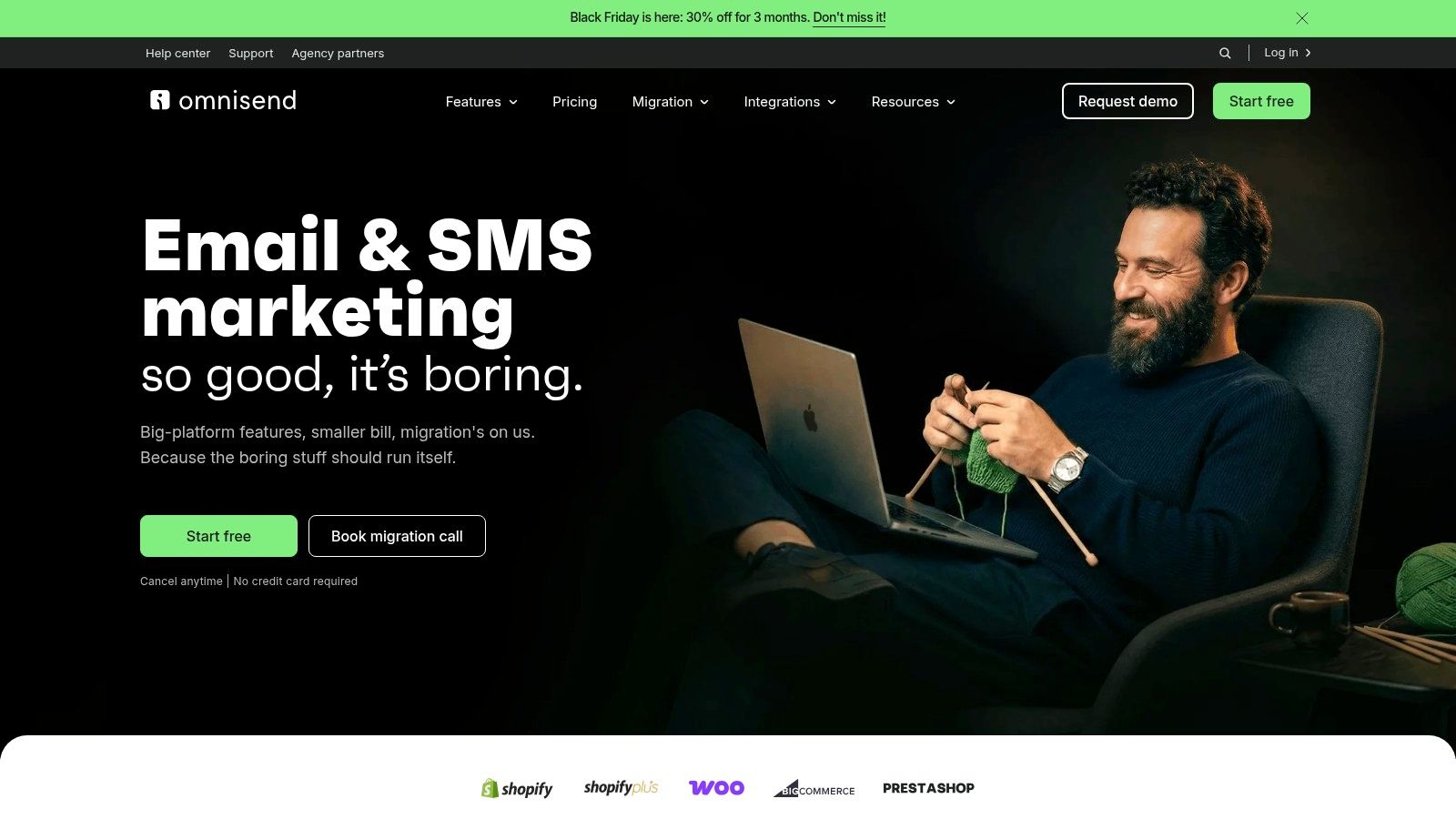
Omnisend gates SMS behind its top tier. New customers need Pro to add SMS at all, and credits are purchased separately from the plan fee. That's a different pricing shape from tools that bundle messages into the subscription, and it matters most in your first month.
What the gate buys you
Email, SMS, and web push run inside one set of automation workflows, so a browse-abandonment flow can sequence a push, then an email, then a text. Ecommerce targeting, signup forms, consent tools, and 24/7 support ship across plans (Omnisend).
Engagement numbers explain why merchants tolerate the gating. SimpleTexting's 2025 benchmark survey of 1,000 U.S. consumers and 400 business owners or marketing managers found 66% of businesses used SMS marketing software, average click-through rates commonly fell between 21% and 35%, and nearly half of consumers said they had purchased in response to a business text (SimpleTexting). The same reporting notes 73% of users may unsubscribe when messages arrive too often, which turns suppression rules into a revenue feature.
- Watch the credit meter: SMS credits are separate from the subscription, so a heavy promotional month shows up as a second charge.
- Check the volume tier: The lowest advertised per-SMS rate applies only at high spend.
- Plan for the Pro jump: Standard won't get you SMS, so price the whole tier, not the add-on.
5. Yotpo SMS
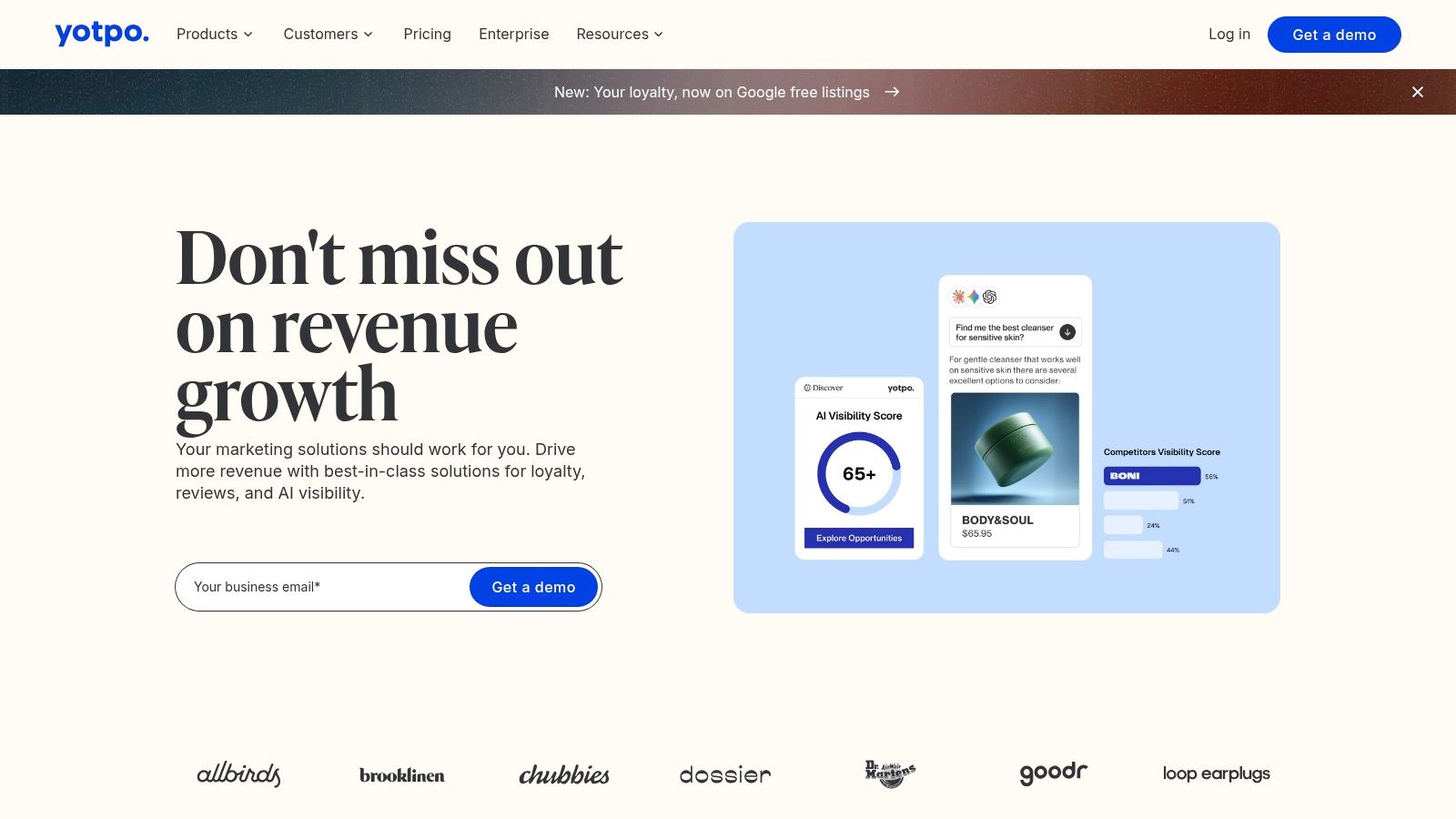
Yotpo SMS began as SMSBump and still behaves like an ecommerce tool rather than a general texting platform. It installs free and charges pay-as-you-go rates per message.
The flows it handles well
On-site opt-in forms and subscriber growth tools sit alongside automations triggered by shopping behavior, including cart activity. Segmentation runs on purchase and browsing data, campaigns can combine SMS with email, and analytics plus RCS messaging round out the stack (Yotpo).
Cheap per-message rates mean nothing if the flow that earns the revenue was never built.
Retail demand backs the channel. Bandwidth's 2024 messaging survey found 81% of retail and ecommerce respondents reported that SMS messages resulted in more purchases (Bandwidth). The catch is that those purchases tend to come from behavior-triggered sends, not blasts.
The ceiling
Feature breadth becomes overhead if you only need cart and shipping texts. Public pricing is less straightforward than a fixed monthly plan, and some advanced tools and support depend on your plan or contract terms.
6. Privy
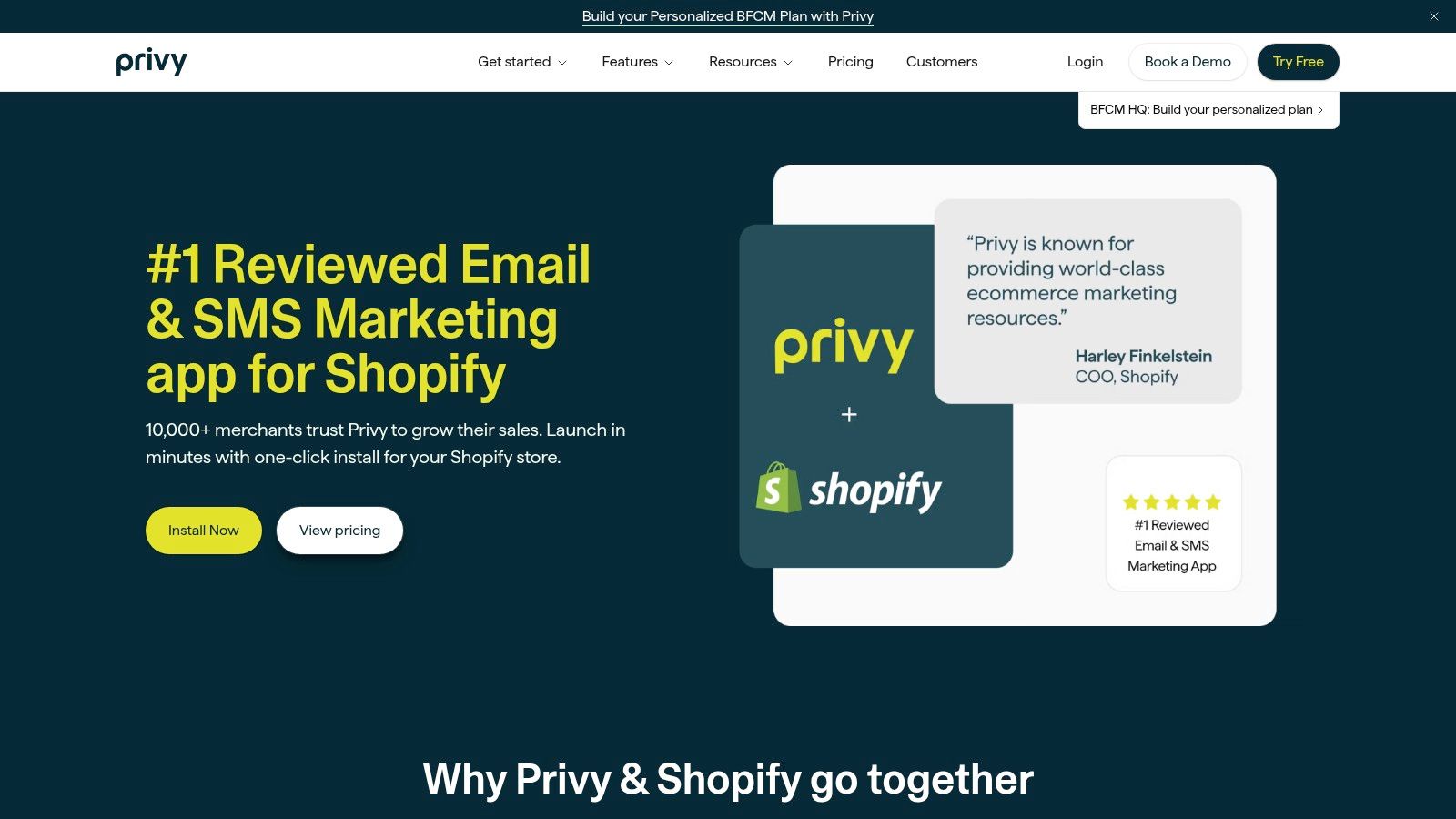
A store that installs Privy for SMS is buying a list-growth suite that texts on the side. Plans start at $30 per month with 250 SMS credits and a 15-day free trial (Privy).
The credit math nobody runs
One campaign to a 1,000-person list needs about 1,000 credits. Those 250 credits fund one send to roughly a quarter of that list, then stop. Contact volume also raises the base price, so $30 describes a small list, not a cheap SMS program. Budget the credits as their own line.
Why stores still pick it
Popups, displays, and landing pages capture email and SMS in one flow. Automations then run welcome messages, abandoned carts, and post-purchase cross-sells from Shopify product, cart, order, and browsing data. Shopify App Store reviews show the app is widely installed. They do not show whether those texts paid for themselves.
In 2024, 81% of consumers surveyed by EZ Texting said they had signed up to receive text messages from a business or organization (EZ Texting). The scarce piece is the offer. A weak incentive fills a list you cannot afford to message twice.
The ceiling
Skip Privy if you do not need popups and email. You pay for a marketing suite to get an SMS inbox. A/B testing and segmentation help later. The credit cap hits first.
7. Attentive
A store doing $30,000 a month opens Attentive looking for a per-message rate and hits a quote form instead. Attentive doesn't publish a rate card. Pricing depends on message volume, list size, channels, and selected tools, and you request a quote. Until sales replies, you cannot price one real campaign.
What the quote buys
SMS, MMS, RCS, email, and push depending on plan. The Shopify integration syncs subscribers, builds segments from purchase data, and triggers order journeys. Signup units, campaign builders, testing, analytics, and dedicated onboarding come with custom plans (Attentive).
That package covers more revenue flows than a plain SMS inbox: purchase segments and order journeys, not just a broadcast. The cost is that none of it has a published rate, so a small store cannot compare a campaign's message spend before the sales call.
Consent is where enterprise tooling earns its keep, and small merchants are the ones who get exposed. The UK ICO's guide to electronic marketing states that promotional texts generally require specific, informed, freely given consent, that consent must identify the organization and communication type, be recorded with its timing and source, and include an easy opt-out. Selling into several countries makes that a data model problem, not a checkbox. Keeping an audit trail of consent documentation is the operational answer, and it's the first thing a regulator or carrier asks for.
Privacy compliance and implementation cost are common reasons a rollout stalls. On a quote-only product, both show up as time with sales and a setup project, not as a line you can model yourself.
The ceiling
Sales-led onboarding rules out self-serve experimentation. Channel breadth adds setup work a two-person team may not finish, so the Shopify journeys stay unused while you wait on a quote.
8. Sendlane
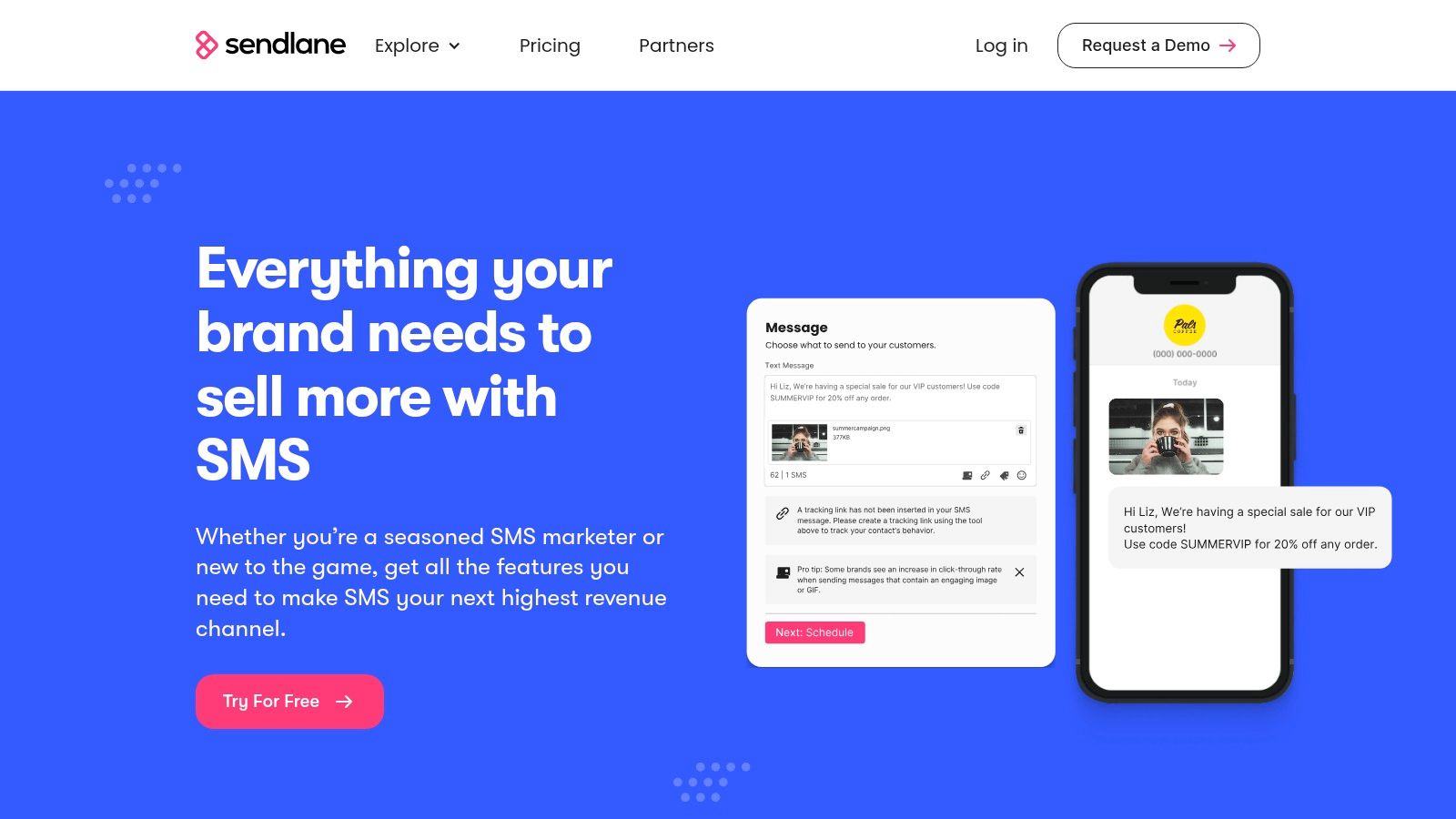
Sendlane sells SMS as an add-on to its email platform, so the number that decides your budget is the credit bundle, not the subscription. Bundles start at $6.25 for 250 credits, plus a $10 monthly activation charge (Sendlane).
That bundle math works out to about 2.5 cents per credit before activation, which is competitive for a store sending a few hundred triggered messages rather than broadcast campaigns.
Why two-way matters here
SMS and email campaigns run together, replies land in a real conversation view, and prebuilt funnels handle the usual lifecycle sends. Shopify integration and unique coupon-code support make attribution manageable in Sendlane.
The test I'd run: Send one question to 200 recent buyers and staff the replies for a day. Response rate tells you more about fit than any feature list.
The response case is strong. TextUs's 2024 State of SMS Engagement Report put SMS at an 80% median response rate (TextUs). A tool that buries replies in a one-way campaign view wastes that.
The ceiling
Activation fees and separate credit purchases make the true monthly cost hard to see up front, and some tiers start well above SMS-only tools. Plan details also vary across Sendlane's pages, so confirm the specifics in writing.
9. SimpleTexting
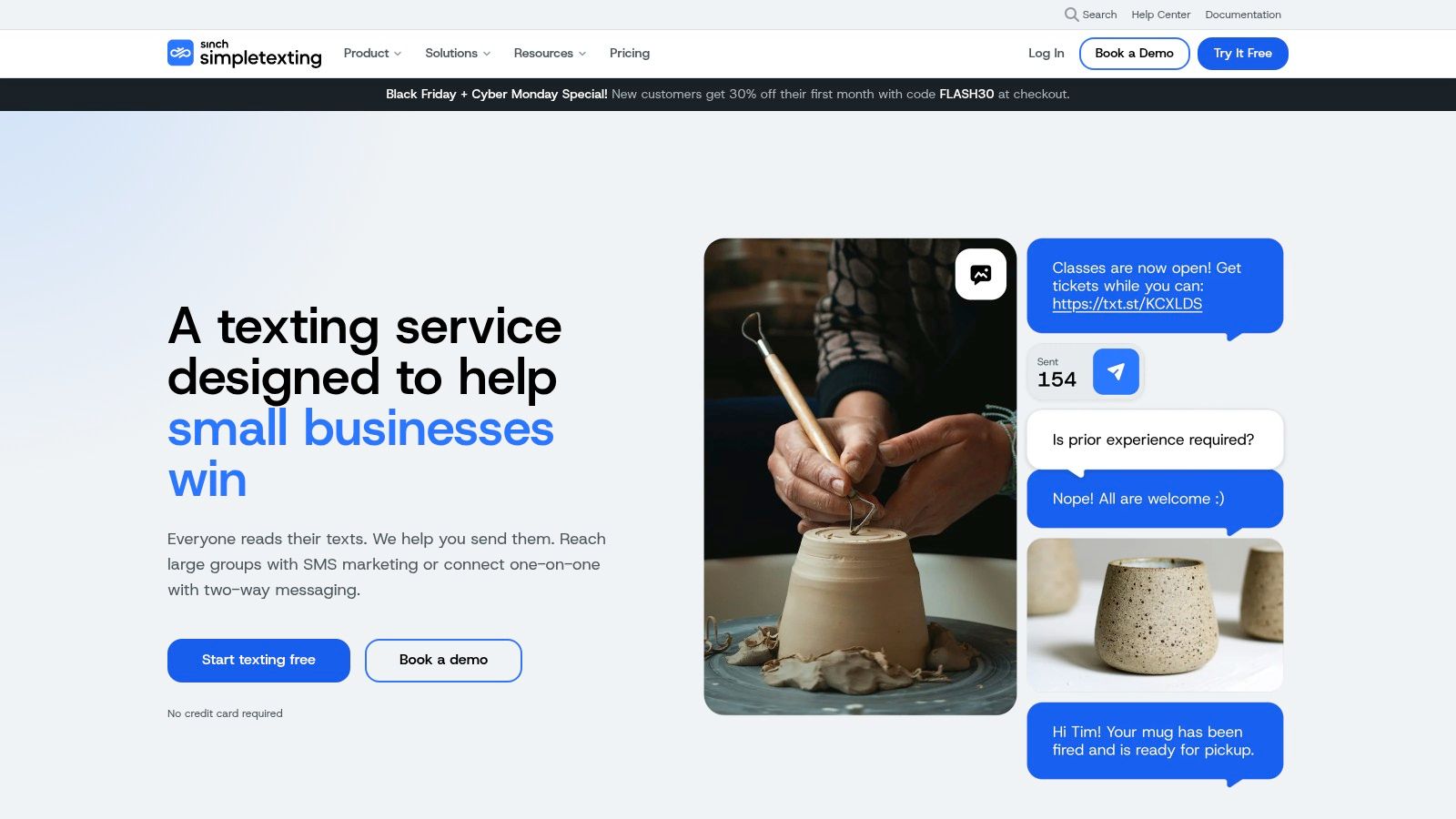
A store sending one promo to 500 people can price SimpleTexting from a published example: $39 per month for 500 credits, plus a local number and a registration fee (SimpleTexting). Divide $39 by 500 and the credit is 7.8 cents before those extras. Set that figure next to a Shopify-native rate before you treat the monthly price as the bargain.
SimpleTexting is a messaging utility. It does not pull orders, segments, or checkout events on its own, so cart, browse, and purchase triggers need Zapier or custom work. That is the ceiling for a small store. You can message a list. The revenue flows that usually justify SMS spend are an integration project, not a switch in the app.
What you are actually buying
The phone habit behind the channel is old. ITU data records more than 725 million mobile subscribers at the start of 2001 and about 15 billion messages sent worldwide in January 2001 alone, nearly four times the 4 billion sent in January 2000 (ITU). SimpleTexting sells application-to-person access to that reach, not a Shopify data layer.
The sending number is its own cost and deliverability decision. This comparison of long code vs short code covers the trade-offs before you pay a registration fee.
Cart copy stays your job
Carrier rules on cart messaging should be checked against current CTIA and carrier guidance (CTIA short code handbook). A general platform will not block an extra cart text or insert the wording a carrier expects. Complaints still hit your number.
Incoming texts are free. Outbound is not. Per-credit pricing climbs once a few hundred triggered sends turn into weekly broadcasts of the same list. I would use it for scheduled sends and keyword replies, and look elsewhere once Shopify events have to fire the message.
10. SlickText
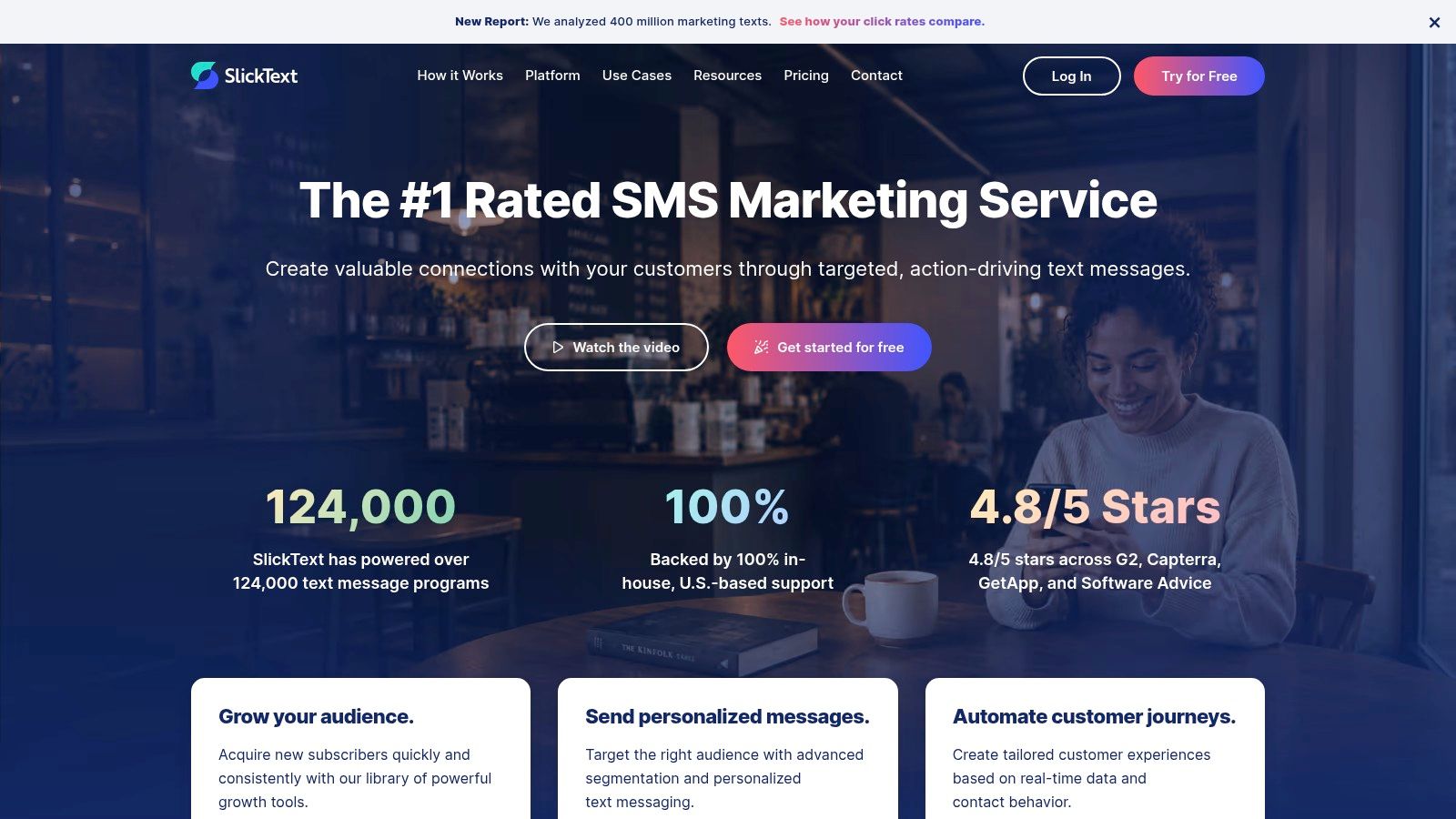
SlickText publishes its tiers, which makes a first budget pass easy. Paid plans start at $29 per month for 500 credits with carrier fees on top, unlimited contacts, and rollover credits (SlickText). Full platform features are included on every paid tier, and a 14-day trial runs without a credit card.
Where the published price misleads
MMS and long messages consume more credits, and carrier fees sit outside the plan. Rollover helps light months, which suits seasonal catalogs better than flat subscription tools.
- Annual or seasonal senders: Rollover credits and unlimited contacts make the entry tier workable.
- Media-heavy campaigns: Price every send as MMS first if product imagery is part of the message.
- Growth teams: Opt-in keywords, reporting, and workflows cover the basics without an ecommerce data layer.
Consent is still your job
CTIA's messaging principles require express written consent specifically for marketing texts, not just a phone number collected at checkout. The call to action should identify the program, state the originating number or short code, name the business, disclose fees, and explain opt-out instructions and the privacy policy, and consumers must be able to revoke consent through text, email, or phone (CTIA messaging principles).
An opt-out keyword in the first message of every flow is not belt-and-braces. It's the cheapest insurance you can buy.
The ceiling
Shopify cart and purchase automations sit further out here than in ecommerce-specific tools, so expect more manual segmentation as your store grows.
How the 10 SMS marketing software options compare on pricing and Shopify fit
Price the flows you send, not the feature list. A credit bundle with a monthly floor costs more in a quiet month than a per-message plan, and a thin Shopify connection means those flows get built by hand.
| Item | Starting Price | Free Option | Shopify Focus | Best For |
|---|---|---|---|---|
| YipSMS Inc. | Free plan; $0.025 per SMS | Free plan and $20 credit after the first review | Shopify-native SMS and MMS | Shopify stores seeking SMS automation and list growth |
| Postscript | $0/month; $49 monthly minimum after trial | Free trial with usage credit | Strong Shopify integration and targeting | Shopify brands focused on SMS lifecycle marketing |
| Klaviyo | Billed per usage by destination, segments, and number type | No free plan; SMS billed per usage | Shopify data within an email and SMS platform | Teams coordinating SMS and email |
| Omnisend | Free plan; SMS requires Pro and separate credits | Free for email and web push | eCommerce-focused, with SMS on Pro | Stores coordinating email, SMS, and web push |
| Yotpo SMS | Free to install; pay as you go | Free to install | Shopify-focused messaging and segmentation | Stores using Yotpo retention products |
| Privy | From $30/month, including 250 SMS credits | 15-day free trial | Shopify-oriented email, SMS, and automation | Stores combining subscriber capture and messaging |
| Attentive | Custom, usage-based pricing | No free plan; pricing by custom quote | Shopify syncing and purchase-based journeys | Enterprise brands needing multichannel support |
| Sendlane | SMS credits from $6.25 for 250, plus $10 monthly activation | No free plan; credit bundles from $6.25 | Shopify integration and coupon support | Brands coordinating email and SMS |
| SimpleTexting | $39/month for 500 credits, plus fees | Free trial | General-purpose SMS with less Shopify-specific focus | Businesses needing mass texting and two-way messaging |
| SlickText | $29/month for 500 credits, plus carrier fees | 14-day free trial | General SMS with limited Shopify-specific focus | Merchants needing straightforward SMS campaigns |
Picking the Right SMS Tool Starts With Your Revenue Flows
Write down the three message flows that earn money for your store. For most catalogs that is abandoned checkout, the welcome sequence, and shipping notifications, in that order. Holiday blasts and win-back campaigns are a layer on top, and only after those three cover their own send cost.
Then price the flows at your real monthly volume. Pull the last 90 days of orders, count abandoned checkouts, and multiply by the messages each flow sends. Add carrier fees and any monthly minimum, and set that total against the subscription tier you would need to reach the lowest advertised rate. The rate card is the marketing. The bill at your volume is the cost.
Ship the flows in order of revenue per message, not in order of how fun they are to build.
Registration comes before the first send. In the United States, 10DLC brand and campaign registration is a prerequisite for deliverability, and unregistered traffic gets filtered or blocked by carriers. Start early, because approval is not instant, and keep the campaign description honest about whether the messages are marketing or transactional.
Launch small. Take a few hundred engaged subscribers, send one flow, and track revenue per delivered message rather than clicks or open rate. A strong click-through rate on a discount blast can still lose money if the margin does not cover the send. Once a flow clears its own cost, widen the segment.
Customer expectation supports the effort. A 2021 Independence Research survey of more than 500 small and medium-sized business decision-makers found almost 63% of consumers would switch to a company offering business text messaging, while 64% said businesses should use SMS more often and 74% said text-based interactions improve their impression of a business (Alianza). Twilio's 2024 research with 4,800 global consumers found 41% named SMS as one of their preferred channels for branded communications (Twilio).
Permission is the asset underneath all of it. An event fires, conditions filter it, and a suppression rule stops the message when it would annoy someone. The same pattern is what operators already build in CRM workflow examples for rentals. Build those suppression rules first. They are the difference between a channel customers opted into and one they block.
YipSMS Inc. is for Shopify stores that want cart and checkout recovery, welcome flows, and shipping updates without a contract. The Shopify app has no monthly app fee on top of message costs. The Free plan is $0 per month at $0.025 per SMS. Premium is $299 per month and prices SMS at $0.015, a 40% savings, so move up only when volume covers that fee. There is a 14-day free trial, and new merchants receive $20 in free credit after their first review. Visit YipSMS Inc. to install the app and send the first campaign.
How this article was made: the YIPSMS team drafts some articles with AI writing tools, then checks pricing, compliance and product details against how YIPSMS actually works before publishing. Spotted something wrong? Tell us through your YIPSMS account.