10 Text Message Marketing Software Picks
Your Shopify store may need SMS to collect subscribers from a popup, recover abandoned carts, announce a restock, answer delivery questions, or bring past buyers back for another purchase. But adding a texting tool can also add another bill, another customer-data connection, and another compliance workflow to manage.
The right text message marketing software should fit those jobs, connect cleanly with Shopify, make costs understandable, and help your team manage consent and delivery. A long feature list won't help if the tool can't trigger a cart reminder from store activity or show whether a campaign led to an order.
This roundup focuses on the choices ecommerce merchants face: Shopify integration, subscriber growth, automations, pricing structure, deliverability, post-purchase messaging, and setup effort. It also distinguishes ecommerce-focused platforms from broader messaging tools. When a vendor reports its own performance figures, they're identified as company claims, not independent results.
A 2025 survey of business owners and digital marketers found SMS software adoption had grown from 42% to 66% over four years, and 67% planned to increase their SMS marketing budgets in 2025, according to SimpleTexting's 2025 texting and SMS marketing survey. That wider adoption makes platform fit more important, not less. Here are the tools to compare.
Table of Contents
- 1. YipSMS Inc.
- 2. Postscript
- 3. Klaviyo
- 4. Attentive
- 5. Omnisend
- 6. Privy
- 7. Shopify Messaging
- 8. Brevo
- 9. SimpleTexting
- 10. SlickText
- Text Message Marketing Software: Top 10 Comparison Table
- Build the SMS Stack Around Your Store's Bottlenecks
1. YipSMS Inc.
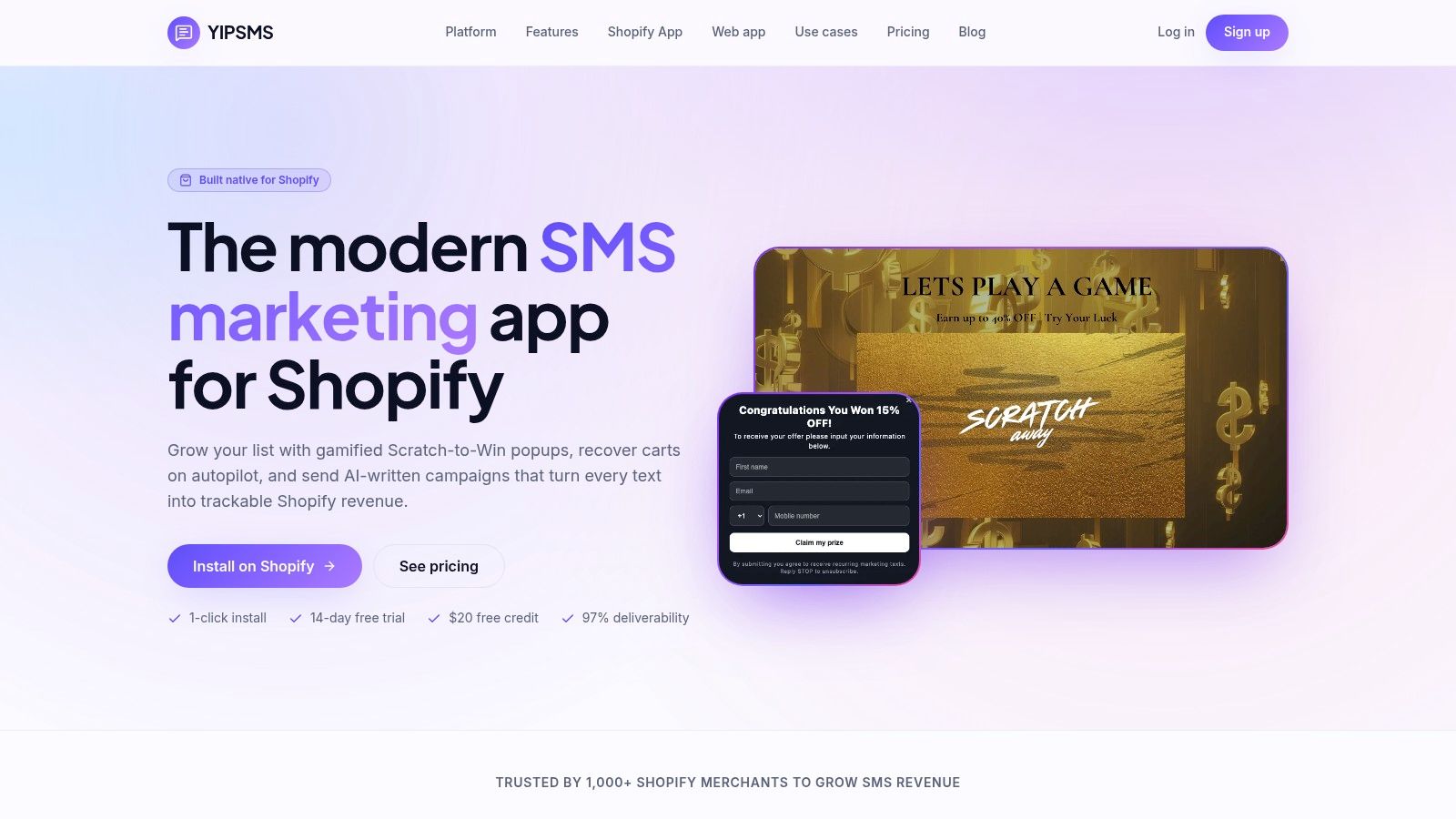
YipSMS is the clearest starting point for a Shopify merchant who wants subscriber growth, cart recovery, and campaign reporting in one SMS-focused app. It connects directly with Shopify, then gives you multiple ways to build a list: gamified Scratch-to-Win popups, standard popups, text-to-join keywords, and QR codes. That range is useful if you collect opt-ins both on your storefront and through offline or packaging touchpoints.
After sign-up, prebuilt automations cover abandoned carts and checkouts, welcome messages, and shipping or delivery updates. Merchants can also create and schedule AI-assisted SMS and MMS campaigns. Shopify customer and segment syncing, automatically generated discount codes, branded links, and click-to-checkout attribution help connect the messages to store activity.
Where YipSMS fits
One-click Shopify installation and built-in consent and opt-out tools reduce setup work, while integrations with Klaviyo and Mixpanel give teams options for coordinating customer data. That makes YipSMS a practical fit for stores that want an ecommerce-native tool without piecing together subscriber acquisition, flows, and measurement themselves.
YipSMS advertises 97% deliverability, 5–7× average ROI, and use by 1,000+ Shopify merchants. Those are company-reported figures, not independently verified benchmarks. Results will depend on opt-in quality, message relevance, sending practices, and the store's audience.
Pricing is pay-as-you-go, with a 14-day free trial and $20 in advertised free credit for new merchants. The Free plan lists SMS at $0.025 per message. Gold is $99/month plus $0.018 per SMS, while Premium is $299/month plus $0.015 per SMS. MMS is priced separately. The lowest advertised SMS rate therefore requires a paid plan, so compare expected message volume against the monthly fee rather than choosing by per-message cost alone.
Best for: Shopify stores that want list-growth tools, ready-made recovery flows, and store-linked campaign reporting in one place.
Trade-off: The headline deliverability and ROI figures are vendor claims, and the lower per-message rate comes with a higher monthly plan fee.
2. Postscript
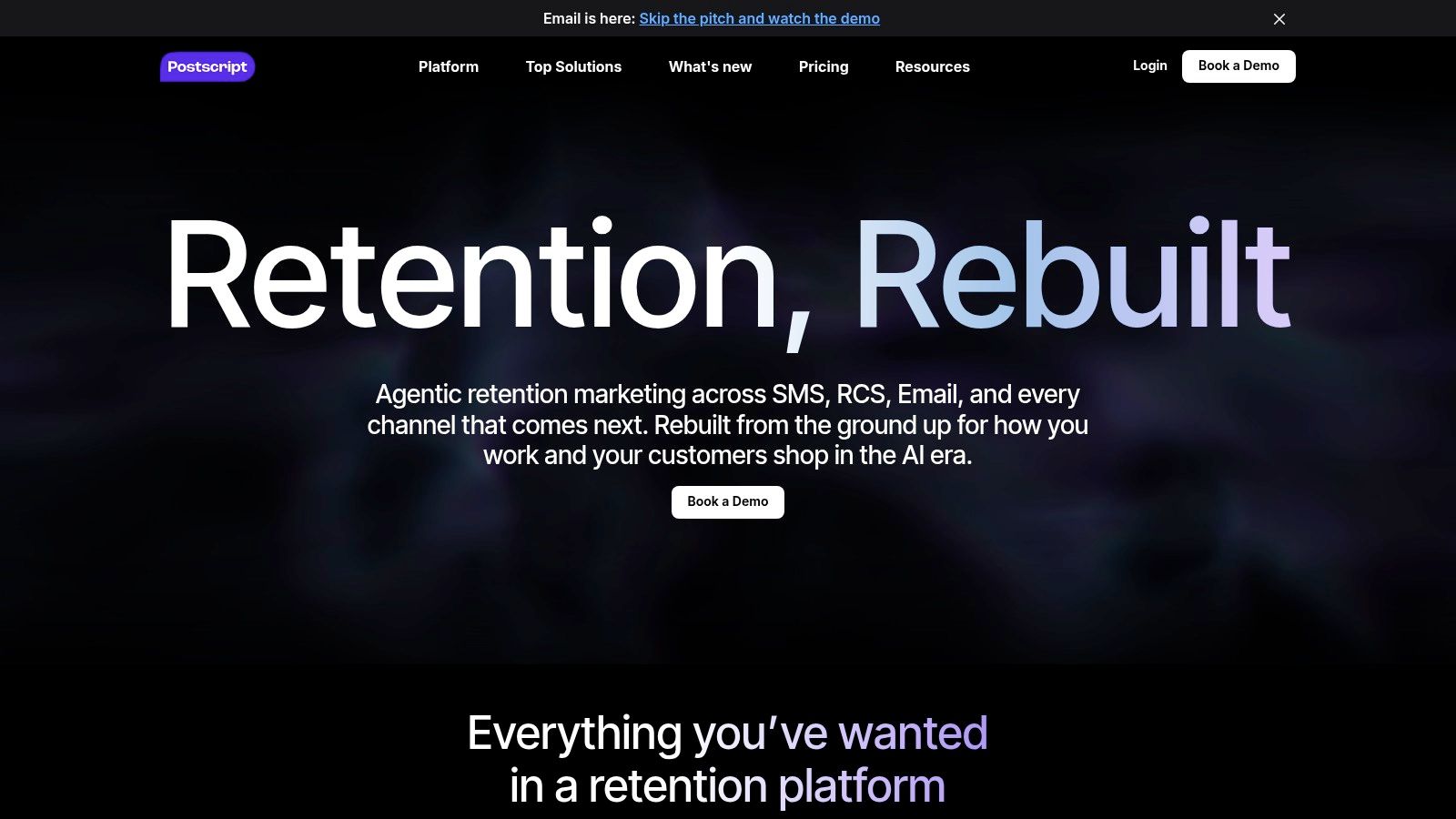
Postscript is a strong match for merchants who want SMS to operate as a dedicated ecommerce retention channel. Its Shopify orientation supports campaigns and automations built around store activity, including welcome messages and cart recovery. Subscriber acquisition tools, segmentation, scheduled sends, and reporting give marketers a focused workspace rather than a general-purpose messaging dashboard.
The platform also supports personalization using Shopify data, as well as two-way messaging and integrations with ecommerce tools. That can help a store coordinate promotional texts with customer conversations and shopping behavior. If your retention team already has email covered elsewhere and wants to put more depth into SMS, Postscript belongs on the shortlist.
Budget and fit
Usage-based billing can suit a store whose sending volume changes with promotions or seasonal demand. However, message costs can rise as campaigns scale, and carrier fees may add to the bill. Some Shopify reviewers have also criticized the platform's value for money, so estimate costs using your actual send plans rather than assuming usage-based means inexpensive.
Postscript is more specialized in SMS than in all-in-one email marketing. Keep your email platform and data handoffs in mind when assessing the full setup. For a closer look at how ecommerce SMS platforms differ, compare SMS marketing platforms for ecommerce.
Best for: Shopify merchants building SMS into a focused retention program.
Trade-off: Variable message and carrier costs can make the total harder to predict, and you may need a separate email tool.
3. Klaviyo
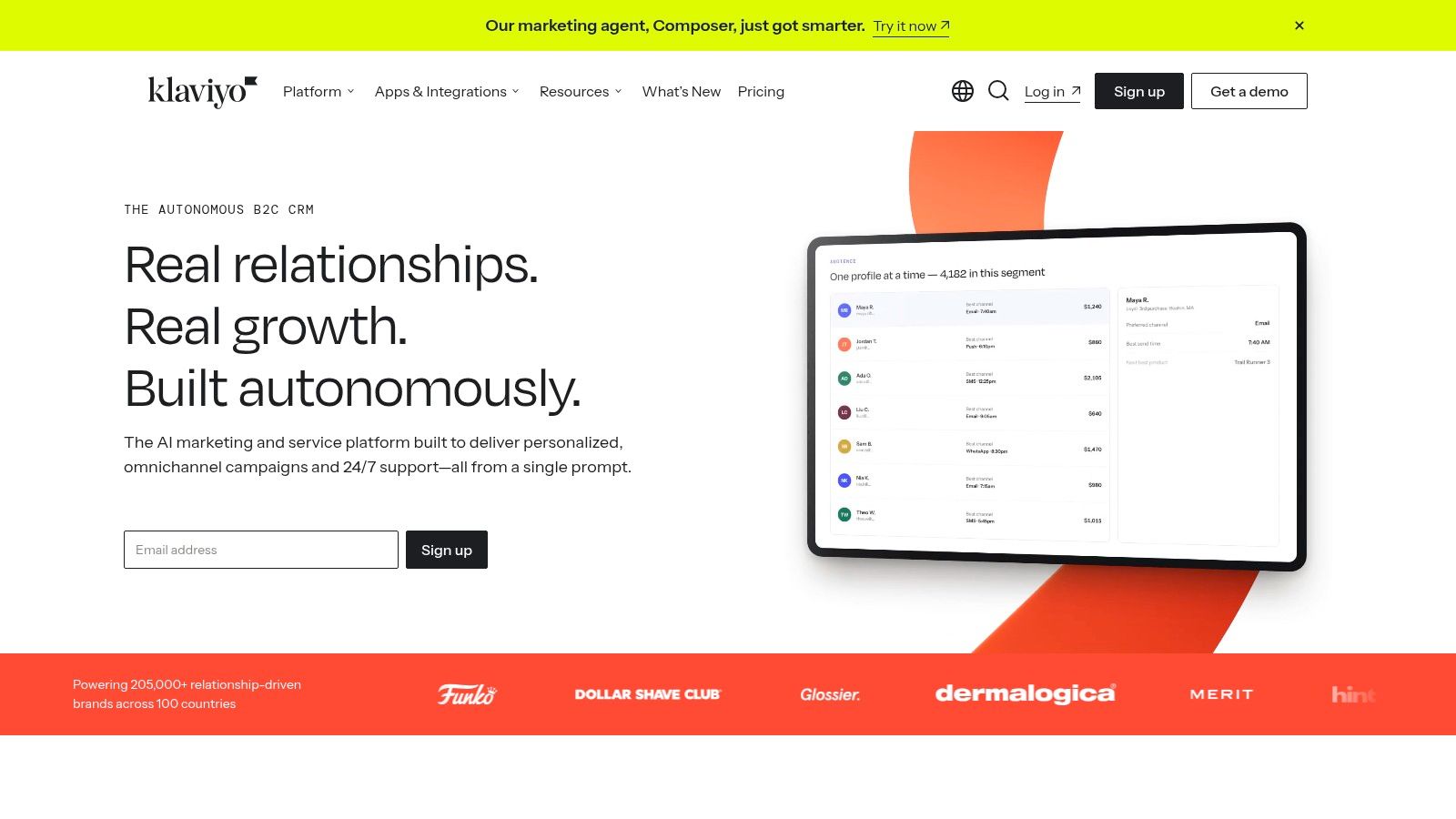
Choose Klaviyo when the main goal is to coordinate SMS with an established email and customer-data program. Its Shopify integration syncs customer and commerce data, so teams can build segments and automate messages using shopping behavior in the same system they use for email. That can reduce the operational burden of maintaining separate audience logic across channels.
SMS campaigns and flows can run alongside email automations, with unified customer profiles and personalization based on store data. For a customer who receives a cart email and later qualifies for an SMS reminder, managing the channels from one platform can make the sequence easier to plan and monitor.
Plan the data and cost setup
Klaviyo's broader feature set comes with more setup decisions than a simpler SMS-only app. Teams need to be comfortable building segments, flows, and channel logic, or they may spend time configuring features they don't use. Per-message mobile rates vary by channel, country, number type, and message segments, so estimate the cost of your actual campaign mix.
Klaviyo also has a large Shopify App Store review base, giving merchants substantial peer feedback to consult. Its SMS capability is most compelling when it complements an existing Klaviyo email program, rather than when a store needs only occasional text blasts. Teams comparing customer-data tools can also review the Disputely Klaviyo integration.
Best for: Stores that want email and SMS flows, Shopify data, and segmentation in one marketing system.
Trade-off: Setup and pricing can become more involved as contact counts and message volume grow.
4. Attentive
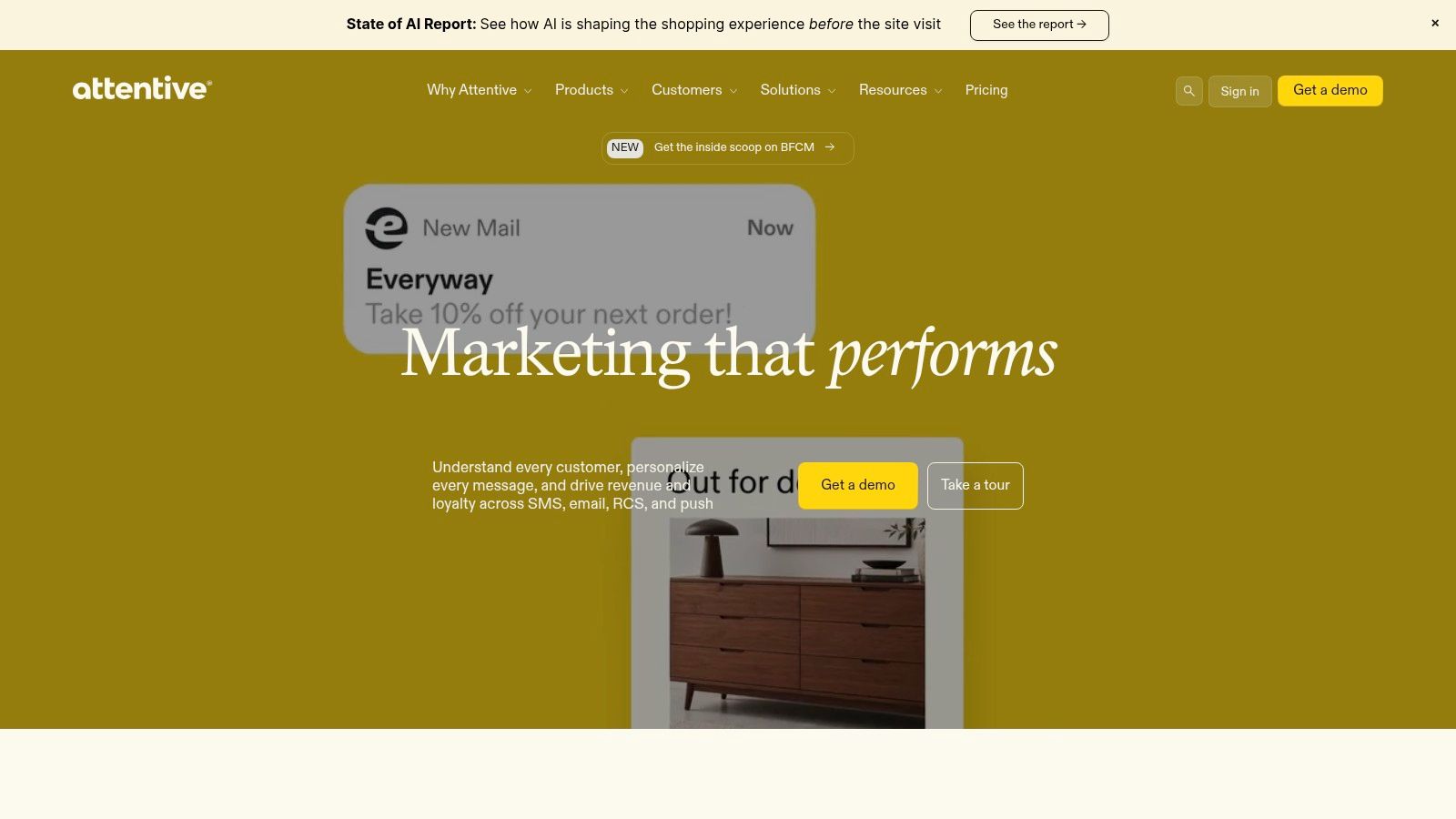
Attentive is aimed at growing ecommerce teams that want to coordinate messaging across channels and have the resources to implement a broader platform. Alongside SMS, it offers email, push, signup experiences, journeys, testing, analytics, and compliance tools. Shopify-connected customer and subscriber data can support commerce-triggered messaging rather than treating each send as a standalone blast.
The platform's breadth is useful when marketing teams need to plan cross-channel customer journeys, test campaigns, and review results within a shared program. Strategic onboarding and support also make it worth considering for a team that expects guidance during implementation.
Assess the commitment before implementation
Attentive uses customized pricing rather than a simple self-serve plan. You'll likely need a sales conversation to understand the cost, expected commitment, and which capabilities are included. That process may be reasonable for a larger team, but it adds friction for a smaller merchant who wants to launch a basic cart-recovery flow quickly.
Don't buy the breadth unless your team can use it. If you need only SMS campaigns and a few automations, the additional channels and onboarding may exceed your requirements. For a bigger operation coordinating SMS, email, and push, compare the sales proposal with the actual journeys your team intends to run. See SMS marketing platform options for another perspective on platform fit.
Best for: Larger or growing ecommerce teams seeking cross-channel messaging and strategic support.
Trade-off: Custom pricing and a sales-led process make it harder to assess cost and fit without direct evaluation.
5. Omnisend
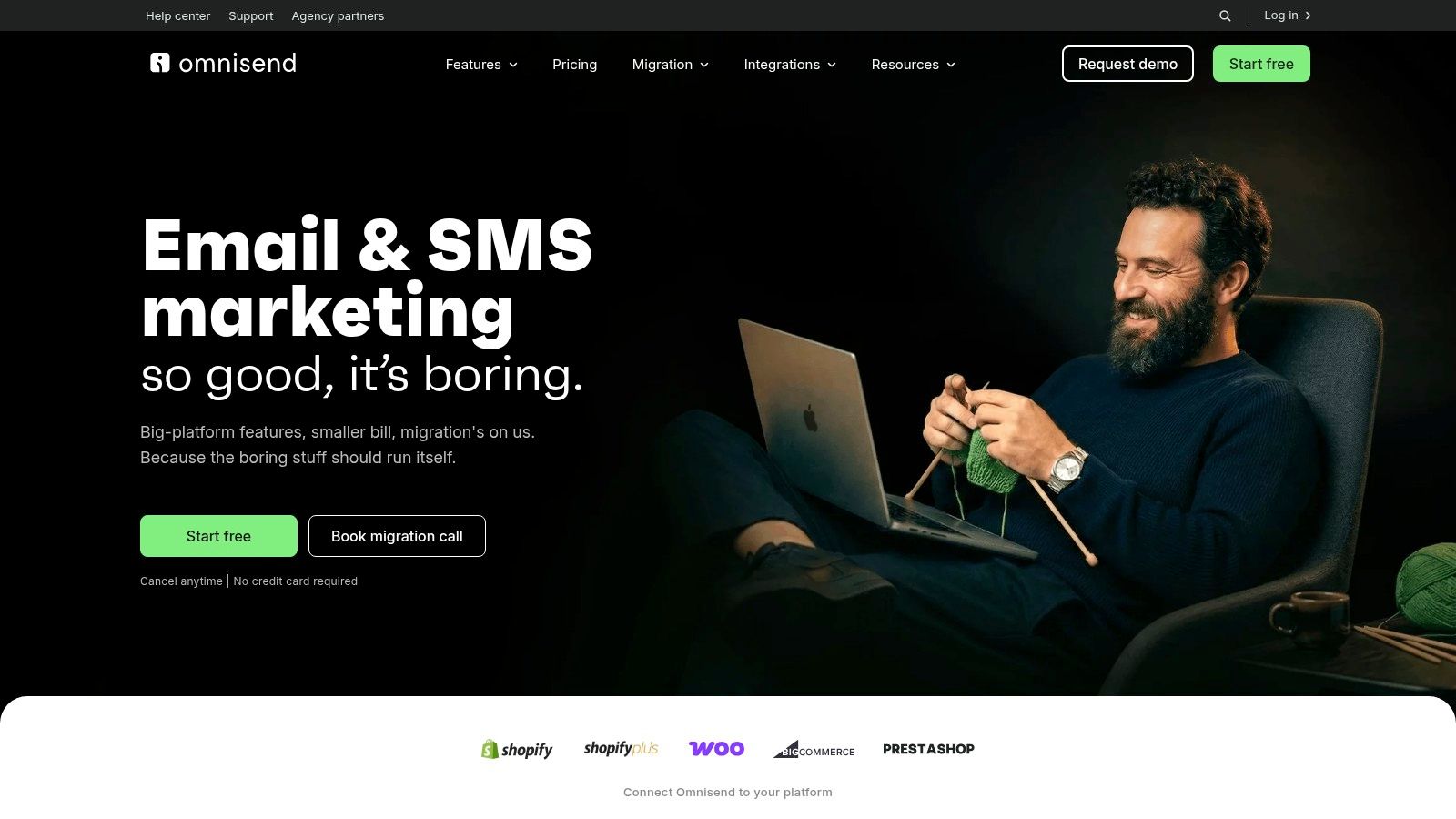
Omnisend suits ecommerce teams that want email and SMS managed together without assembling several separate tools. Its Shopify integration, signup forms and popups, customer-based targeting, and ecommerce automation can support list growth and coordinated campaigns from one platform. That's useful for a lean team that wants a welcome sequence, cart reminders, and promotional messaging in a shared workflow.
The combined setup also gives merchants a way to coordinate messaging across channels. Instead of maintaining unrelated email and SMS automations, you can plan around the customer's store activity and the message each campaign needs to deliver.
Verify current SMS terms
SMS availability and pricing can depend on country, usage, and plan rules. Check the current terms before building a budget or moving an existing audience. Some reviewers have reported account suspensions or slow resolution of SMS-related issues, so review support expectations and the process for resolving a sending problem.
Omnisend is less compelling if your only requirement is low-cost texting. Its value comes from combining email, SMS, automation, and list-growth tools. If you're considering it for a Shopify store, compare the current plan conditions with SMS marketing apps for Shopify.
Best for: Ecommerce businesses that want coordinated email and SMS without managing separate platforms.
Trade-off: Confirm SMS eligibility and pricing for your market, and don't pay for bundled features your team won't use.
6. Privy
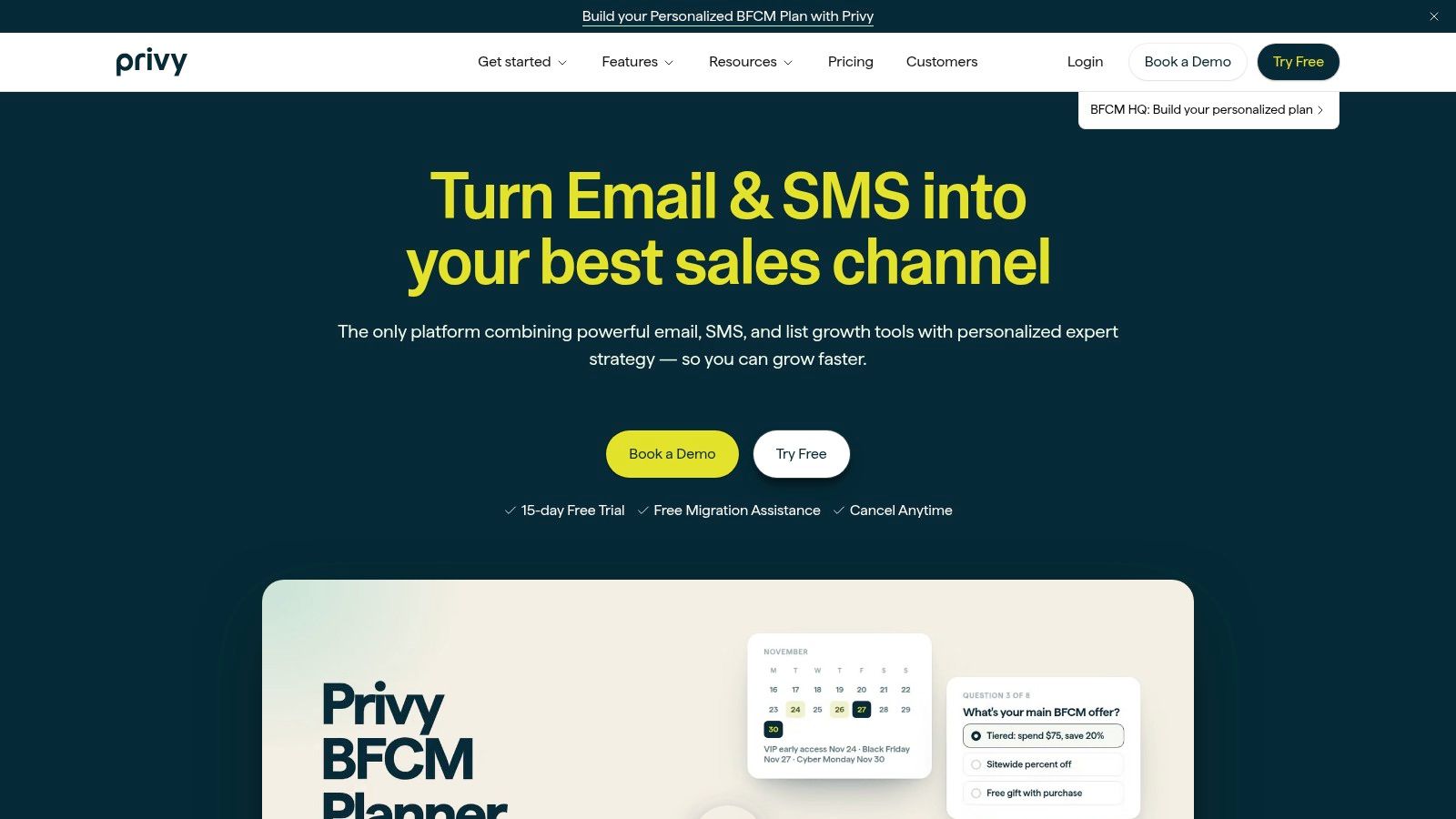
Privy combines website list-growth tools with email and SMS, making it a practical option for smaller Shopify merchants who want to avoid assembling several apps. Its popup and form builder includes exit-intent and multi-step options, while segmentation, targeting, testing, and reporting support campaigns after a visitor subscribes. Shopify-connected customer and shopping-history data can inform those sends.
For a small store, that combination can simplify the path from capturing a phone number to sending a welcome message or basic promotion. A merchant who already uses popups to grow an email list may find it easier to manage SMS within a familiar list-growth workflow.
Estimate credits before you send
Privy publishes pricing and offers a free trial, but SMS credits are limited by plan and usage. Entry pricing includes defined contact and credit allowances, not unlimited texting. Estimate expected send volume and likely overages before using a bundled plan as your long-term SMS budget.
Merchants who want straightforward list capture and basic campaigns may appreciate the combined toolset. Stores that need advanced SMS-only functionality, deeper specialist automations, or more flexibility around message volume should compare Privy with a dedicated SMS platform.
Best for: Smaller Shopify stores that want popups, list growth, email, and SMS in a shared setup.
Trade-off: Credit limits can constrain frequent sending, and advanced SMS programs may outgrow the platform's emphasis on bundled messaging.
7. Shopify Messaging
Shopify Messaging is the simplest choice when you want to create email and SMS campaigns inside the Shopify environment rather than add a separate specialist platform. It gives merchants native access to store context and customer records, and SMS is billed per message through the Shopify bill. That can make the first campaign easier to launch and the cost easier to understand for occasional sending.
The trade-off is depth. A native campaign tool may be enough for a store sending a straightforward promotion, but a business that needs advanced subscriber acquisition, more elaborate SMS automations, or specialist reporting should compare it with ecommerce-focused apps.
Keep the send plan simple
Country availability and per-message rates vary, and destination restrictions may apply. Check those details before scheduling a campaign for customers in different markets. Longer texts can use multiple message segments, which raises the cost, so write concise copy and check how the message is divided before sending.
Best for: Merchants who want basic email and SMS campaigns without another vendor account.
Trade-off: Specialist tools may offer more automation and list-growth depth, while country rules and message segmentation affect costs.
8. Brevo
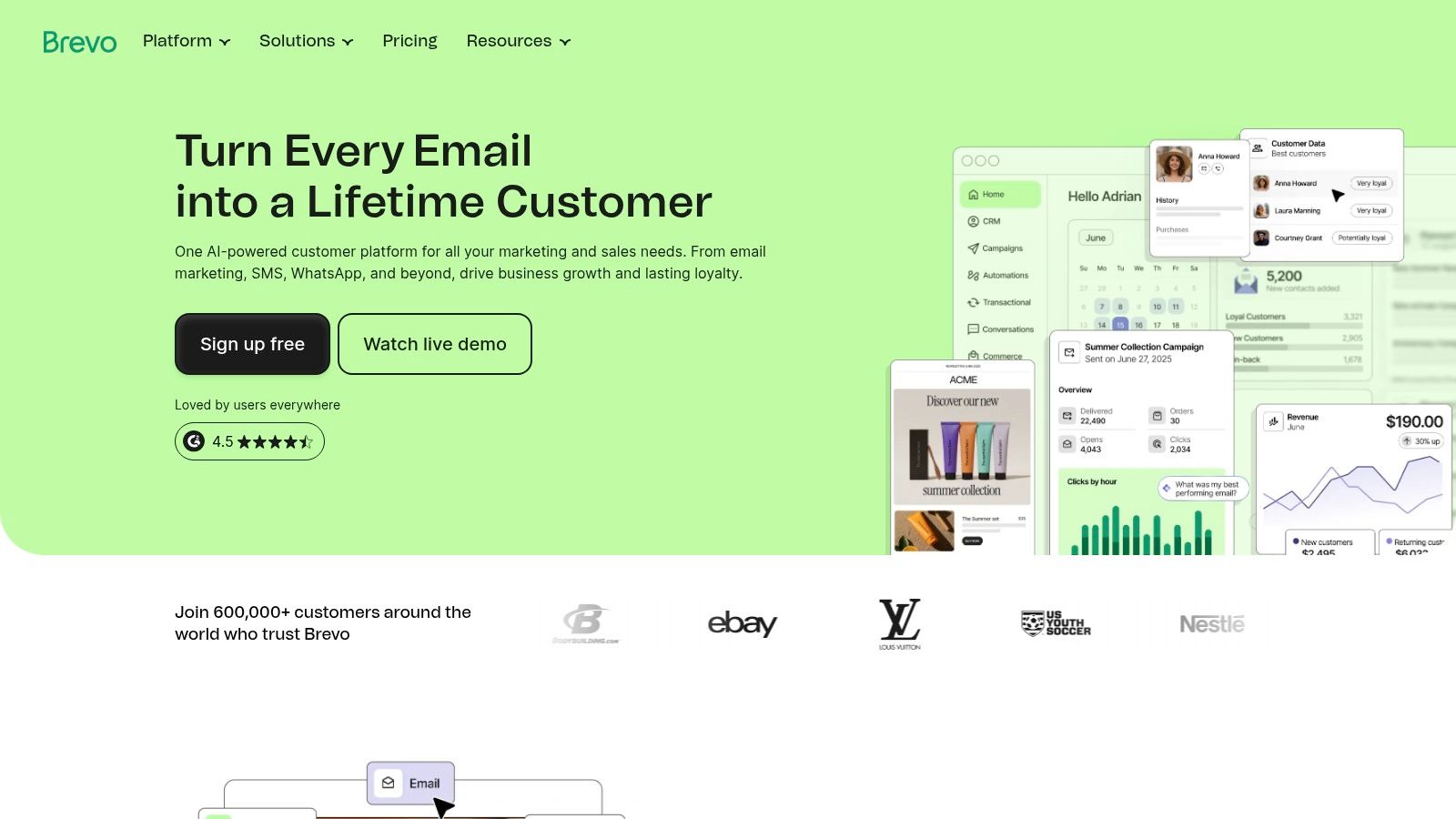
Brevo is a broader messaging platform for businesses that want email, SMS, WhatsApp, and marketing automation together. SMS is added using prepaid credits rather than a dedicated SMS subscription. According to Brevo's documentation, credits start in packs of 100 and don't expire, a structure that can suit merchants whose sending schedule is irregular.
The platform also supports SMS to many destination countries, subject to availability and local requirements. That wider messaging scope can be useful if your business communicates with customers across regions or wants channels beyond SMS in the same system.
Expect more configuration for Shopify workflows
Brevo is less suited to Shopify retention than ecommerce-first options. Costs per SMS vary by destination country and message length, so model a campaign against the markets you serve. Some features and integrations may also take more configuration than a Shopify-native app.
Choose Brevo when several communication channels matter and prepaid credits suit your sending pattern. Choose a specialist Shopify platform when your priority is to connect store events directly to cart recovery, post-purchase updates, and customer segments with minimal setup.
Best for: Businesses seeking a broader messaging platform and prepaid SMS credits for irregular sends.
Trade-off: Shopify-specific retention workflows may need additional integration and configuration work.
9. SimpleTexting
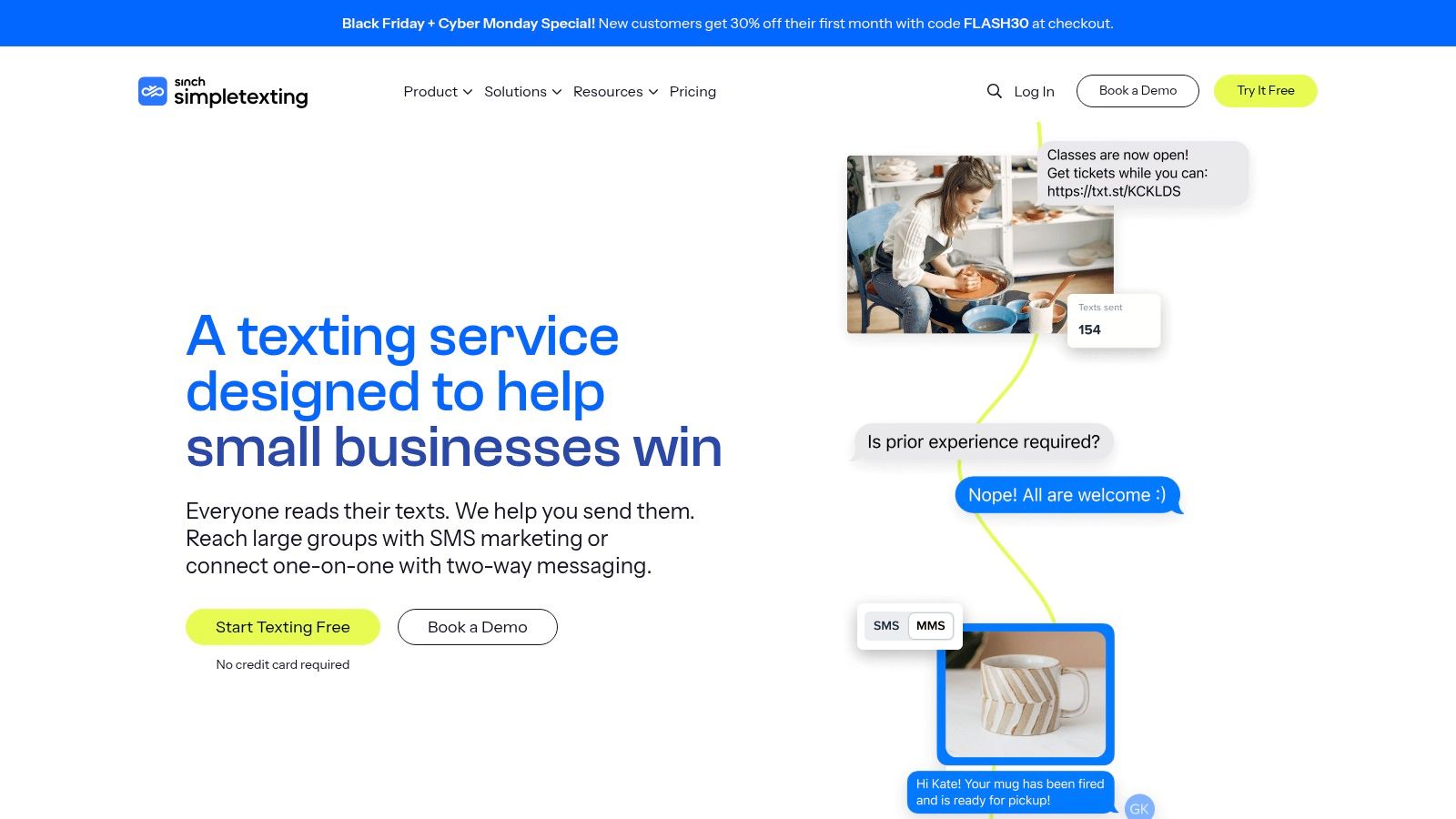
SimpleTexting works well for businesses that need bulk sends and two-way conversations alongside marketing. It supports auto-replies and drip campaigns, as well as MMS, opt-in forms, keywords, segmentation, and reporting. An API and integrations with tools including Mailchimp and Zapier give teams more ways to connect texting with their wider operations.
That mix can fit a merchant whose SMS program spans promotions and customer service. For example, a store can use opt-in keywords for list growth and manage replies through two-way messaging, while using other integrations to pass information to supporting tools.
Compare volume and number costs
SimpleTexting's pricing calculator can help estimate a plan based on sending volume. Incoming SMS replies are free, but costs still depend on credits and number type, and carrier fees may apply. Build those charges into your estimate rather than looking only at the platform's plan price.
The main limitation for Shopify stores is that SimpleTexting isn't as centered on browse, cart, and order events as ecommerce-specific platforms. If your priority is broad texting and conversation management, that may be an acceptable trade. If you need automated flows tied closely to Shopify shopping behavior, check event triggers and integration depth before committing.
Best for: Businesses combining promotional texting with two-way customer conversations.
Trade-off: Shopify-specific cart and order workflows may require more integration work than on an ecommerce-native platform.
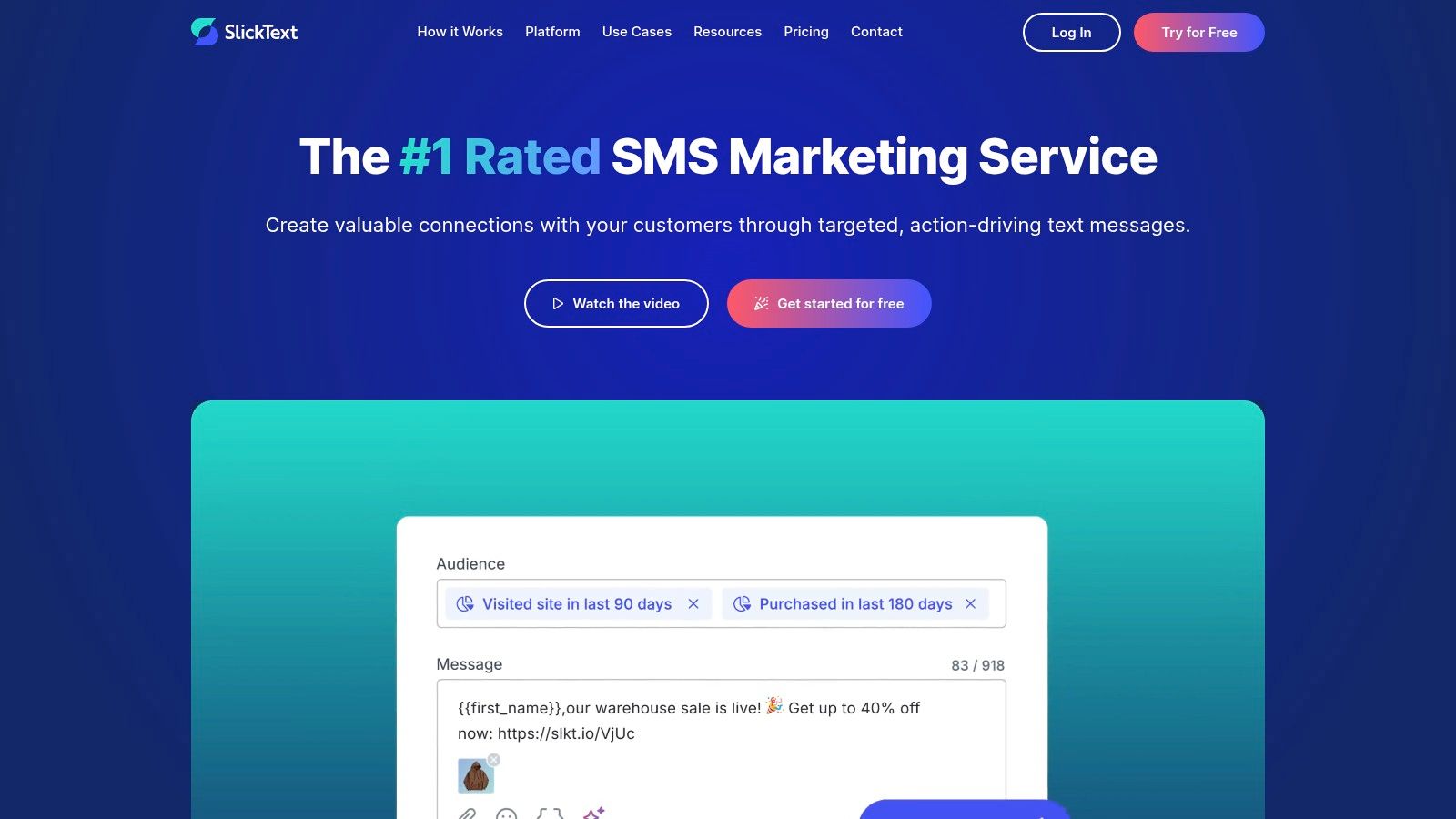
10. SlickText
SlickText combines subscriber acquisition and SMS marketing with a Shopify integration for ecommerce campaigns. Merchants can use signup options, targeted campaigns, and workflows for cart recovery, restock alerts, flash sales, and review requests. Its ecommerce tools can personalize messages using store data, making it a more relevant fit for a Shopify merchant than a general-purpose texting platform.
Published volume-based pricing helps with an initial budget comparison, and paid plans include unlimited contacts, rollover credits, and support. Those features can help a store plan around campaign volume without treating its contact list as the main cost driver.
Check market and support fit
Carrier fees apply in addition to plan costs, so include them in your estimate. SMS availability is limited to the U.S. and Canada, which rules SlickText out for some international programs. Some onboarding and dedicated account support are reserved for higher-volume plans, so confirm what support comes with the plan you're considering.
SlickText is a sensible candidate if your store sells primarily in its supported markets and wants a mix of subscriber growth and ecommerce workflows. If your audience is international, choose a platform with the destination coverage your customers require rather than building around an unavailable service.
Best for: U.S. and Canadian Shopify merchants seeking list-growth tools and ecommerce-oriented SMS workflows.
Trade-off: Carrier fees add to plan costs, and its market coverage is limited.
Text Message Marketing Software: Top 10 Comparison Table
| Platform | Best fit | Core capabilities | Pricing / value | Standout consideration |
|---|---|---|---|---|
| 🏆 YipSMS Inc. | 👥 Shopify stores seeking focused, affordable SMS | Shopify automations, AI-assisted SMS/MMS, popups, attribution | 💰 14-day trial + $20 credit; Free: $0.025/SMS; paid plans from $99/month | ✨ Scratch-to-Win signup; ★ 97% deliverability is company-reported |
| Postscript | 👥 Merchants making SMS a dedicated retention channel | Shopify campaigns, automations, segmentation, two-way messaging | 💰 Usage-based; costs rise with volume and carrier fees | ✨ Ecommerce-focused SMS; value for money is a concern for some reviewers |
| Klaviyo | 👥 Brands coordinating email and SMS | Unified profiles, segmentation, Shopify data, cross-channel flows | 💰 Rates vary by country, number type, and message length | ✨ Combines SMS with broader email and customer-data tools |
| Attentive | 👥 Growing or larger teams seeking strategic support | SMS, email, push, journeys, testing, analytics | 💰 Custom pricing; contact sales | ✨ Cross-channel messaging and onboarding support |
| Omnisend | 👥 Ecommerce merchants managing email and SMS together | Campaigns, signup forms, automation, Shopify targeting | 💰 SMS pricing and eligibility vary; check current plan rules | ✨ Combines list growth and multichannel automation |
| Privy | 👥 Smaller Shopify stores building subscriber lists | Popups, forms, email/SMS, segmentation, reporting | 💰 Trial available; SMS credits are limited by plan and usage | ✨ Accessible list-growth tools paired with messaging |
| Shopify Messaging | 👥 Shopify merchants sending occasional campaigns | Native email/SMS campaigns and customer data access | 💰 Pay per message; rates and availability vary | ✨ Runs inside Shopify without a separate specialist platform |
| Brevo | 👥 Businesses needing broad, international messaging | Email, SMS, WhatsApp, automation | 💰 Prepaid SMS credits; rates vary by destination and message length | ✨ Non-expiring credits are suited to irregular sending |
| SimpleTexting | 👥 Businesses combining marketing texts and customer service | Bulk SMS, two-way messaging, drip campaigns, API | 💰 Volume-based; carrier fees may apply | ✨ General-purpose texting with replies and opt-in tools |
| SlickText | 👥 U.S. and Canadian Shopify merchants | Store-data campaigns, cart recovery, restock alerts | 💰 Published volume-based plans; carrier fees extra | ✨ Shopify workflows; SMS availability limited to the U.S. and Canada |
Build the SMS Stack Around Your Store's Bottlenecks
Choose a platform based on the ecommerce job that needs attention first. YipSMS is the strongest fit for Shopify-native subscriber growth and prebuilt recovery flows. Klaviyo or Omnisend make more sense when email and SMS need to run together. Shopify Messaging is a straightforward place to start with native campaigns. Postscript suits merchants who want a more dedicated Shopify SMS channel, while Attentive fits teams considering a broader messaging program with strategic support.
Don't choose by feature count. Choose by the work your store needs the tool to do. If you're losing sales after checkout abandonment, prioritize event-triggered recovery and clear suppression rules. If your list is small, focus on consent capture and useful signup experiences. If delivery questions drive support contacts, make post-purchase updates part of the evaluation instead of judging the platform only on promotional campaigns.
Before selecting a plan, estimate message volume and check how per-message charges, carrier fees, and plan costs add up. Confirm the Shopify events that trigger each automation, test whether customer segments sync as expected, and review how the platform records consent and processes opt-outs. For international selling, verify the rules and records needed in each market. Global consent requirements differ, so a single generic popup isn't a safe substitute for localized consent collection and proof.
Treat deliverability as an operating process, not a headline promise. A U.S. federal regulation requires marketers to honor consent-revocation requests made through reasonable methods within no more than ten business days, as set out in the eCFR rule on revocation of consent. In practice, your team should suppress opted-out numbers across campaigns and automations, separate transactional updates from promotions, and monitor whether messages are delivered and lead to orders.
For a first campaign, use a small, relevant segment and track delivered messages, clicks, conversions, revenue per recipient, and unsubscribes. For abandoned carts, test an early reminder and evaluate orders and revenue rather than clicks alone. Keep discounts for a controlled test or a segment where the offer makes sense. If SMS will support repeat purchases, consider how a loyalty program fits into the message journey, and compare QR-based loyalty program tools for ways to connect offline and online engagement.
YipSMS Inc. combines Shopify-connected subscriber growth tools, prebuilt cart and post-purchase automations, and campaign attribution in one SMS marketing app. If you want a practical way to test text message marketing software against your store's needs, visit YipSMS Inc. to review its features and start a trial.
How this article was made: the YIPSMS team drafts some articles with AI writing tools, then checks pricing, compliance and product details against how YIPSMS actually works before publishing. Spotted something wrong? Tell us through your YIPSMS account.