Checkout Abandonment Rate: Shopify Guide for 2026
Approximately 70% of shoppers abandon their carts, and the key to improving that number is understanding late-stage checkout friction rather than treating every lost cart as the same problem. The checkout abandonment rate tells you how many high-intent shoppers reach checkout, then leave before paying.
That distinction changes where you spend your time. A shopper who adds a product while comparing prices may never have intended to buy during that session. A shopper who enters shipping or payment details has shown stronger intent, so a late-stage exit points toward a more specific obstacle, such as unexpected costs, missing payment options, slow delivery, or a checkout that feels unsafe.
For Shopify merchants, the opportunity isn't another generic reminder to “optimize the funnel.” It's a practical diagnosis: measure the stage where buyers stop, remove the friction they encounter, then use timely SMS to bring back shoppers who already started the purchase.
Table of Contents
- Why Your Checkout Abandonment Rate Is Your Biggest Problem
- How to Calculate Checkout Abandonment Rate Correctly
- Top Reasons Shoppers Leave at the Final Step
- Measuring and Reducing Abandonment in Shopify
- Using SMS to Recover Lost Sales
- Setting Up Automated SMS Flows with YipSMS
Why Your Checkout Abandonment Rate Is Your Biggest Problem
About 70% of online shopping carts are abandoned before purchase. Baymard Institute's research reports a global average cart abandonment rate of 70.19%, based on an aggregation of 49 studies (Baymard checkout usability research). In practical terms, roughly 7 out of 10 shoppers who add items to a cart don't complete the purchase.
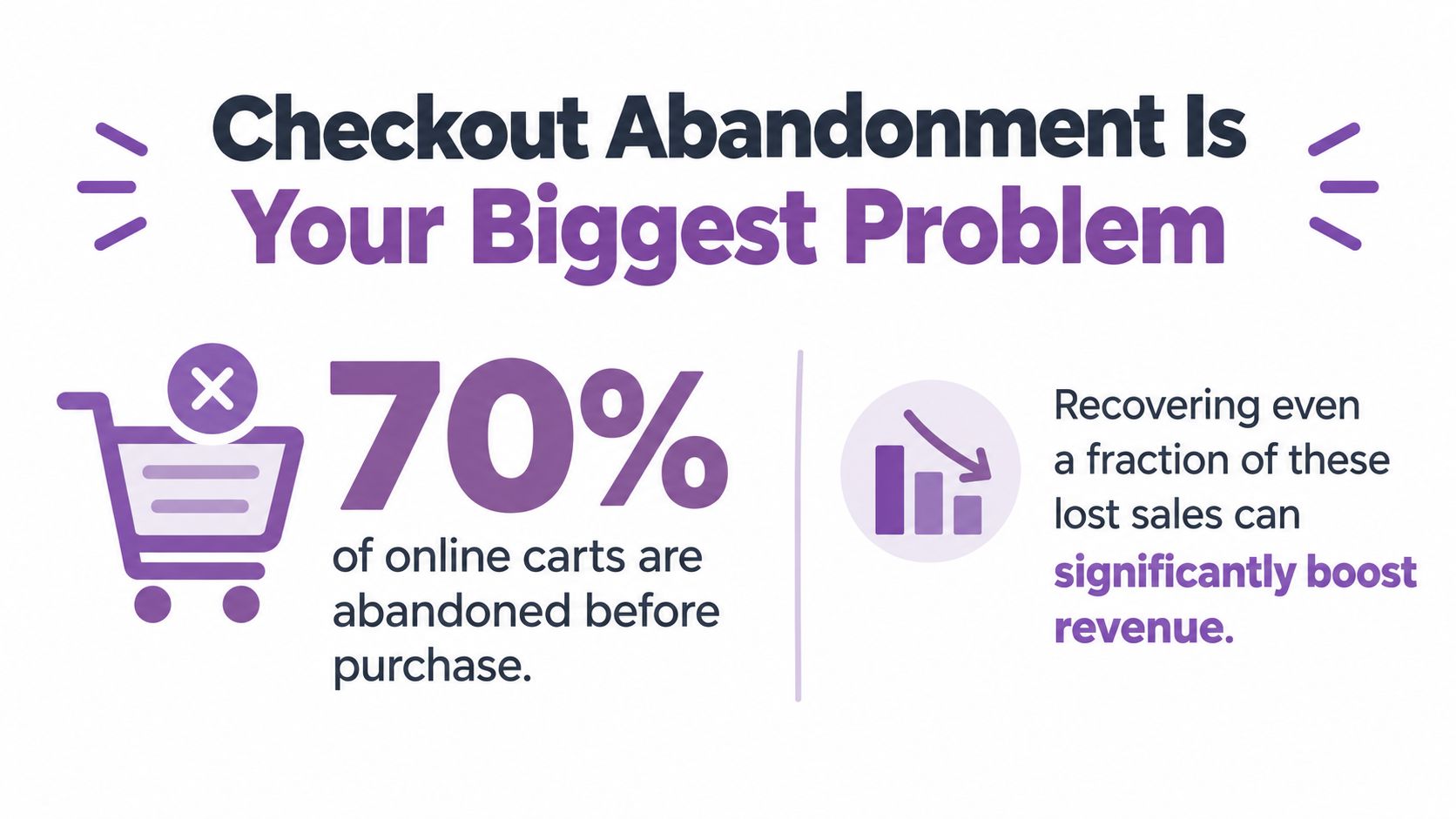
That headline needs context. Cart abandonment includes shoppers who are browsing, comparing prices, checking delivery details, or saving products for later. Checkout abandonment measures a narrower, higher-intent group: people who begin checkout, often by submitting contact or shipping information, but leave before the order is completed.
High intent makes late-stage loss more valuable
A high cart abandonment rate does not automatically show that checkout is broken. A high checkout abandonment rate gives you a more useful troubleshooting signal because the shopper has already moved closer to payment. If buyers disappear at the payment step, inspect the information, costs, delivery terms, and payment choices shown there before changing product pages or increasing ad spend.
Baymard's benchmark has remained near 70% for over a decade, showing that abandonment is a structural eCommerce problem rather than a short-lived seasonal anomaly. That consistency also points to a pool of potentially recoverable orders. You do not need to win back every shopper for targeted checkout fixes and timely SMS reminders to produce value.
Practical rule: Treat cart abandonment as a broad signal, but treat checkout abandonment as a troubleshooting queue.
Why traffic growth can't solve a leaking checkout
More visitors can temporarily hide a conversion leak, but they cannot repair it. If the final step requests too much information, reveals costs late, loads slowly, or lacks a trusted payment method, additional traffic sends more shoppers into the same obstacle.
Start with the stage that already contains purchase intent. Review the exact exit point, identify the friction, and match the recovery message to that stage. For broader conversion principles, the CRO sales boost guide from Cleffex Digital ltd. is a useful resource. Apply those ideas to the checkout behavior your data reveals, then use SMS to recover shoppers while their purchase intent is still fresh.
How to Calculate Checkout Abandonment Rate Correctly
Use this formula:
Checkout abandonment rate = (checkout sessions that don't become orders ÷ total checkout sessions) × 100
The denominator matters. Don't use all sessions, product views, or carts created if you want to measure late-stage checkout performance. Count shoppers who began checkout, then compare that group with completed orders from the same funnel and reporting period.
A Shopify example
Suppose a Shopify store records 1,000 checkout sessions during a reporting period. The store completes 300 orders from those sessions. The calculation is:
(1,000 minus 300) ÷ 1,000 × 100 = 70%
The store's checkout abandonment rate is therefore 70%. That doesn't mean 70% of all website visitors abandoned. It means 70% of the shoppers who reached the measured checkout stage didn't finish.
Shopify reporting can help you review checkout activity, conversion behavior, and order outcomes, but first confirm what each report counts. Events can differ depending on whether the platform records a checkout when a shopper submits contact details, reaches shipping, or proceeds to payment. Use a consistent definition across dates, devices, countries, and campaigns.
Keep cart and checkout metrics separate
A useful diagnostic table looks like this:
| Metric | What it measures | What it helps diagnose |
|---|---|---|
| Cart abandonment rate | Added-to-cart sessions without a completed order | Browsing intent, product-page uncertainty, pricing, or early friction |
| Checkout abandonment rate | Checkout sessions without a completed order | Shipping, payment, trust, form, delivery, or technical problems |
| Checkout completion rate | Completed orders divided by checkout sessions | How effectively late-stage traffic becomes revenue |
For deeper measurement practices, review digital commerce analytics guidance. Segment the result by device, payment method, location, and acquisition source before making a design change. A single store-wide average can hide a checkout that works on desktop but fails on mobile, or a payment option that performs poorly in one market.
Top Reasons Shoppers Leave at the Final Step
The most common reason is still unexpected extra cost. Stripe's checkout research reports that 39% cite unexpected extra costs, while other cited causes include 19% requiring account creation, 19% security distrust, 21% slow delivery, 18% a checkout that is too long or complicated, 15% website errors or crashes, and 10% insufficient payment methods (Stripe cart abandonment statistics).
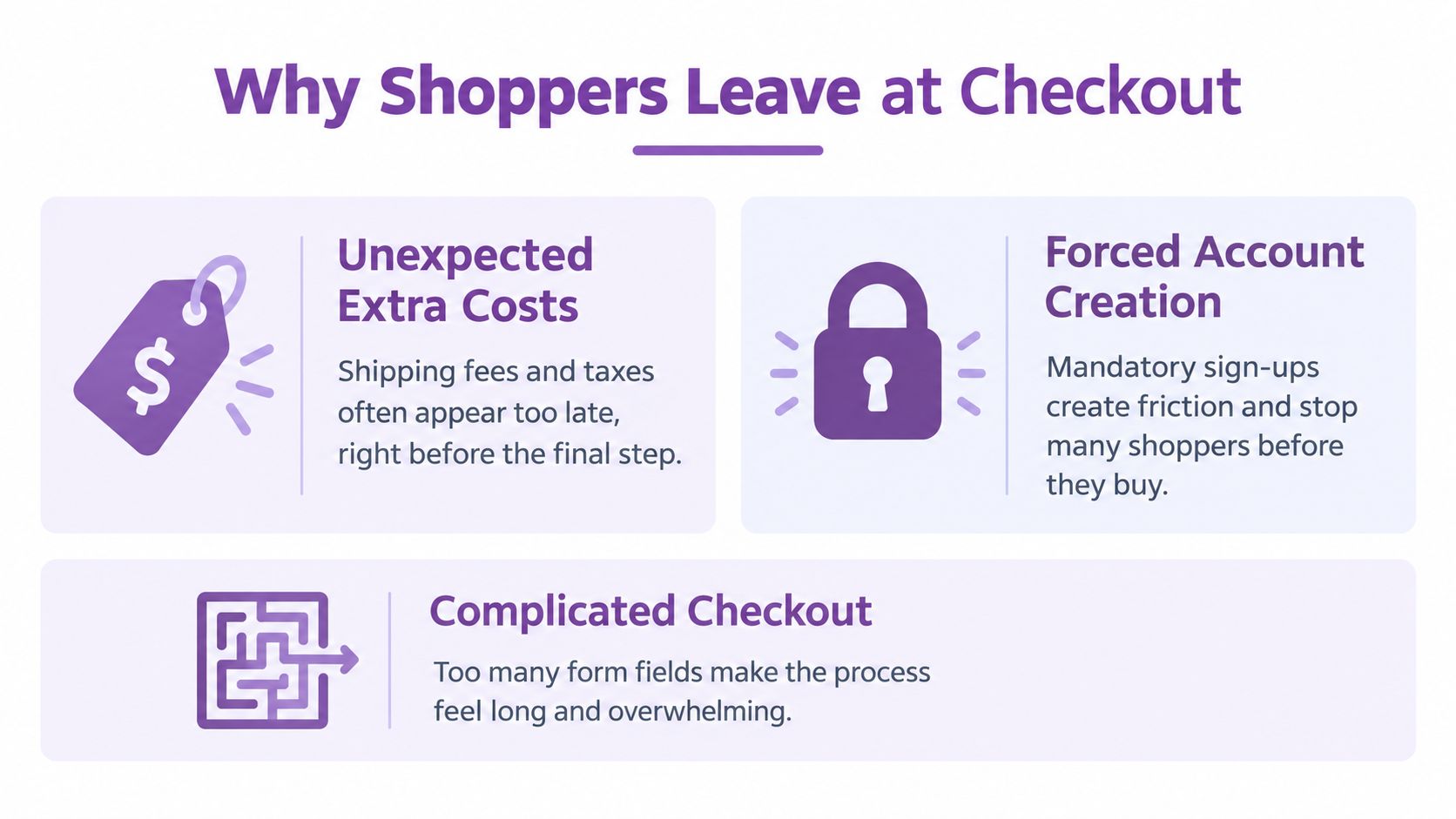
These reasons aren't interchangeable. Each points to a different fix, and applying the wrong fix wastes time.
Cost surprises create an immediate value mismatch
If shipping, taxes, or fees appear only after a shopper has invested effort in checkout, the final price can invalidate the decision they made on the product page. Show the estimated total as early as your operation allows, explain delivery charges clearly, and avoid making buyers hunt for the cost of fulfillment.
Discount popups won't reliably solve a transparency problem. A shopper who doubts the final price needs clarity first, not another promotion.
Account walls and long forms add avoidable work
Mandatory account creation makes a first purchase feel like a registration task. Offer guest checkout, then invite the customer to create an account after the order is complete. Keep the form focused on information required to process and deliver the order.
Mobile shoppers feel every unnecessary field more sharply. Address autofill, wallet payments, clear error messages, and large touch targets reduce effort without changing the product or offer.
Trust and delivery expectations decide the final click
Security distrust can stop a shopper even when the price is acceptable. Place recognizable payment indicators, explain returns in plain language, and make customer support easy to find. Don't hide policies in a footer when buyers are deciding whether to submit payment.
Slow delivery also matters because the product's usefulness depends on arrival time. Show a realistic delivery estimate before payment, not after the buyer has committed to the final step.
Diagnostic shortcut: If shoppers leave after seeing the total, investigate pricing transparency. If they leave after selecting payment, investigate payment coverage, errors, and trust signals.
The payment-method issue deserves more than a generic “add more options” recommendation. Stripe reports that insufficient payment methods account for 10% of cited abandonment reasons (Stripe checkout abandonment data). Decide which methods fit each market, device, and customer segment. Adding an option nobody uses can clutter the interface, while omitting a locally expected option can end the sale without producing a clear complaint.
Measuring and Reducing Abandonment in Shopify
Shopify's native analytics shows where checkout sessions stop. Compare checkout starts with completed orders, then segment performance by device, market, traffic source, and customer type. The report identifies the leak, but it rarely explains the late-stage trigger or provides a way to recover the shopper.
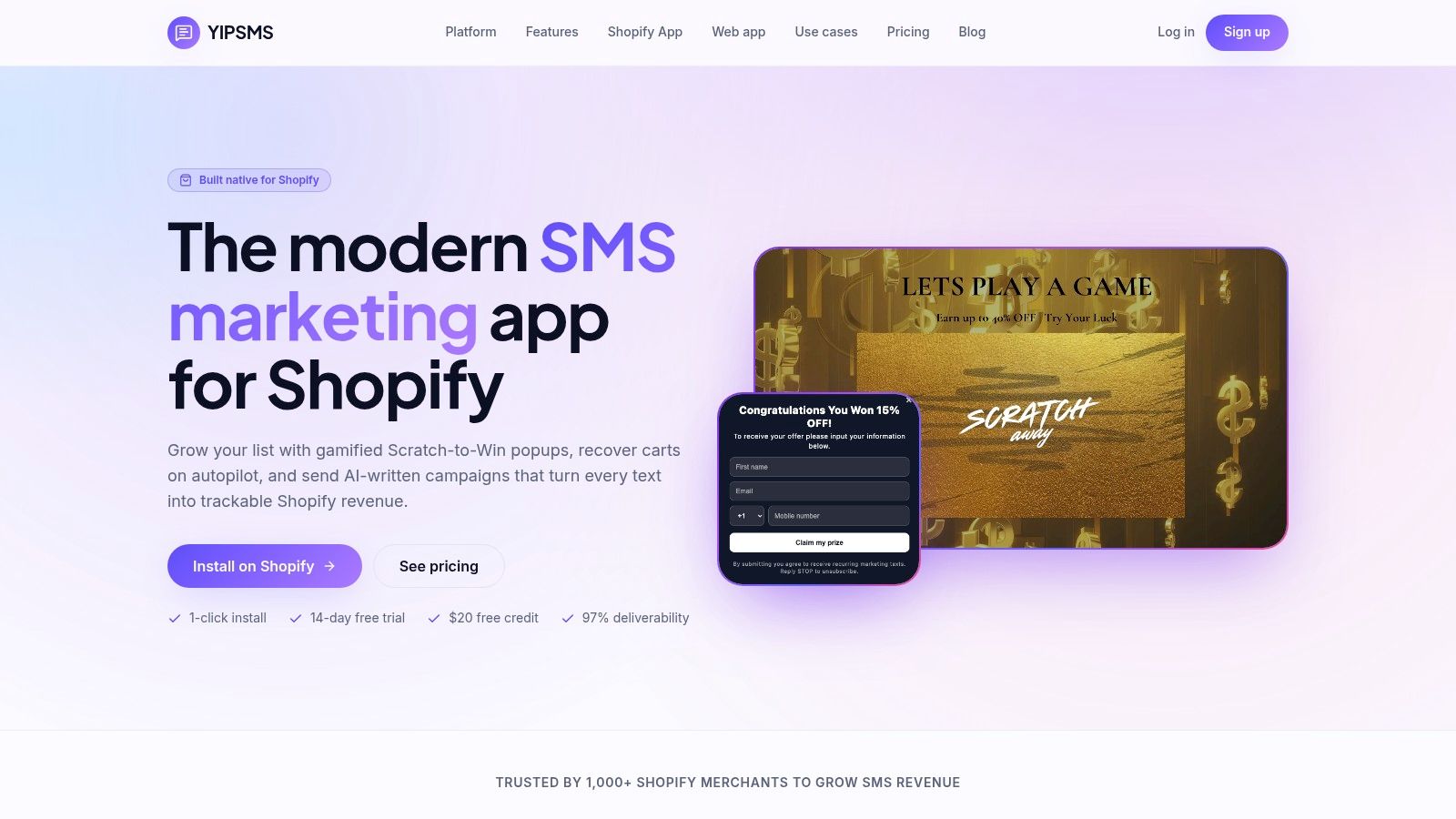
Use Shopify reporting as the measurement layer. Add session recordings, support tickets, checkout error logs, and payment reports to explain changes in behavior. A higher abandonment rate after a shipping-policy update points to a different problem than a rise following a payment integration change. The distinction matters because a reminder cannot repair a failed transaction.
Compare diagnosis with recovery
| Shopify analytics | SMS automation |
|---|---|
| Shows checkout starts and completed orders | Reaches eligible shoppers after abandonment |
| Helps segment devices, markets, and sources | Delivers a direct path back to checkout |
| Identifies patterns over time | Tests timing and message relevance |
| Doesn't recover a shopper by itself | Doesn't replace funnel measurement |
Analytics and SMS serve different jobs. Use analytics to isolate a high-friction segment, then send a consent-based text to qualified shoppers while the store team fixes the underlying issue. If customers return and fail at the same step, improve that step instead of extending the reminder sequence.
For a broader UX perspective, Bridge Global's guide to checkout UX that reduces cart abandonment covers ways to reduce unnecessary effort.
A practical review process looks like this:
- Define the event: Specify exactly when Shopify records a checkout start.
- Segment the rate: Compare mobile and desktop, new and returning buyers, markets, and payment methods.
- Find the failure step: Check whether sessions stop at shipping, delivery selection, payment, or another point.
- Fix the cause: Remove unnecessary fields, show costs earlier, clarify trust information, or add relevant payment coverage.
- Recover eligible sessions: Send a concise SMS with a direct checkout link after consent.
- Measure completed orders: Report recovered purchases separately from overall checkout conversion.
Review recovery alongside the funnel. That pairing shows whether SMS is helping qualified shoppers return, while the checkout fixes address why they left.
Using SMS to Recover Lost Sales
Independent reporting places average SMS opening at about 90 seconds, compared with about 90 minutes for email (Ringly's 2026 eCommerce statistics). Email still serves longer consideration cycles, product education, and post-purchase communication. SMS fits the narrower window after a shopper leaves the final checkout step, while the product, payment choice, and purchase decision remain familiar.
Speed alone will not repair a broken checkout. If a surprise delivery fee, payment error, or missing trust detail caused the exit, sending the same shopper back without addressing that friction just repeats the problem. Fix the information gap first, then use a direct SMS link to reconnect qualified buyers.
Write for recovery, not interruption
An abandoned-checkout message should answer three questions quickly:
- What is this about? Name the store or product context.
- What should the shopper do? Include one direct link to the saved checkout.
- Why act now? State a genuine benefit or useful reminder, without inventing a deadline.
Keep the message short. Product descriptions, several links, and vague urgency compete with the action you want the shopper to take. A useful reminder might clarify delivery information or point back to the saved order, but it should match the reason customers leave at that stage.
Independent SMS benchmark data reports 10.61% open rate, 19.11% click rate, 4.40% conversion rate, and $13.03 revenue per recipient for abandoned-cart SMS (Postscript SMS benchmarks). Treat these as benchmark results, not a forecast. Track delivered messages, clicks, recovered orders, and revenue per recipient in your own store.
Use a simple sequence
Start with one helpful reminder, then send a later message only while the shopper remains eligible. The first text should arrive while intent is still active. A later message can address a practical concern, such as delivery details or a saved checkout, without creating message fatigue.
For message structure and implementation ideas, use this guide to abandoned cart recovery. Report cart reminders and checkout reminders separately. That distinction shows whether SMS is recovering casual browsing or shoppers who reached the final purchase steps.
SMS requires consent and has a sending cost. Repeated messages can annoy customers and weaken trust. Its strongest use case is a high-intent shopper, a timely message, and a functional checkout link that returns them to the exact point they left.
Setting Up Automated SMS Flows with YipSMS
Fix eligibility before writing copy. An abandoned-checkout automation should target shoppers who started checkout, provided a usable phone number, gave the required marketing consent, and have not completed the order since the trigger fired.
Build the flow in a controlled sequence
- Connect Shopify: Pass checkout events, customer details, order status, and recovery links into the SMS platform. Follow the Shopify integration guide to configure the connection.
- Create the trigger: Choose checkout abandonment rather than a broad cart event. This keeps high-intent recovery separate from shoppers who only added a product.
- Add an order check: Before every send, confirm that payment has not been completed. A reminder sent after purchase creates confusion and unnecessary support work.
- Set the first delay: Send the first message soon after abandonment, while the product and checkout remain familiar. Independent reporting says SMS abandonment messages are opened within about 90 seconds on average, compared with 90 minutes for email (Ringly timing benchmark).
- Keep later messages conditional: Send another reminder only while checkout remains incomplete and the subscriber remains eligible. Stop the flow after conversion or unsubscribe.
- Test the destination: The link should open the saved checkout on mobile, preserve the cart, and avoid making the shopper repeat information.
YipSMS supports Shopify abandoned-checkout automations with sequences labeled “Abandoned Checkout, 2h / 24h / 48h”. These give merchants a structured starting point for testing timing. Separate cart and checkout triggers also help identify whether the leak occurs during early browsing or at the final purchase steps.
Treat compliance as part of the flow
In the United States, promotional SMS requires prior express written consent. Transactional or informational messages can rely on prior express consent. Promotional checkout recovery messages should use clear opt-in language, explain what subscribers will receive, and make replying STOP an easy unsubscribe method (Bloomreach's TCPA and CTIA compliance guide).
Do not move phone numbers from orders into a marketing audience without the required permission. Store consent records, identify the sender, disclose applicable message terms, and suppress opted-out contacts across every automation.
Judge the flow by recovered profit
Track delivered messages, clicks, completed checkouts, unsubscribes, and revenue attributed to each message. Compare those results with sending costs and email recovery performance. Clicks without completed orders may indicate a checkout problem rather than weak copy.
Start with one segment, one recovery link, and one clear message. After the flow operates without compliance or customer-service issues, test timing and language against a stable baseline.
YipSMS Inc. offers Shopify merchants automated cart and checkout abandonment flows, subscriber capture tools, campaign scheduling, and real-time analytics for SMS performance. Visit YipSMS Inc. to connect SMS recovery with Shopify checkout and test a faster path back to lost orders.
How this article was made: the YIPSMS team drafts some articles with AI writing tools, then checks pricing, compliance and product details against how YIPSMS actually works before publishing. Spotted something wrong? Tell us through your YIPSMS account.