Abandoned Cart App Shopify: SMS vs Email Compared
Roughly seven out of every ten shoppers who add products to an online cart never complete the purchase. Baymard Institute's 2026 benchmark puts average cart abandonment at 70.22%, based on an aggregation of 50 studies, while Shopify cites a similar 70.19% rate and estimates that abandoned carts represent about $260 billion in recoverable ecommerce revenue each year. Stripe's overview of cart abandonment benchmarks puts the scale of the problem in context.
That makes an abandoned cart app for Shopify more than a convenient marketing add-on. It's a revenue system. The hard part isn't finding an app with email, SMS, popups, discounts, and analytics. The hard part is choosing the right trigger, reaching the shopper without damaging trust, and staying inside the rules that govern abandoned-cart text messaging.
The practical choice usually comes down to three questions. Should SMS be the first recovery channel, or should it be reserved for high-intent carts? Is a third-party app justified, or does checkout friction need attention first? And can the app deliver a useful message within the narrow compliance window?
Table of Contents
- Why Abandoned Carts Decide Your Shopify Revenue
- What a Shopify Abandoned Cart App Actually Needs to Do
- SMS-First vs Email-First Cart Recovery Apps
- Timing, Compliance, and Deliverability Rules
- Recovery Apps vs Fixing Checkout Friction First
- Where YipSMS Fits for Cart Recovery
- Choosing Your Abandoned Cart App by Store Type
Why Abandoned Carts Decide Your Shopify Revenue
Shopify's cited benchmarks report abandonment at 73% on desktop, 80% on tablets, and 85% on mobile, while putting it around 93% in the Middle East and Africa, 87% in Asia Pacific and Latin America, and 76% in North America. Shopify's cart-abandonment guidance makes the operating problem clear: abandonment is persistent, varies by device and region, and cannot be addressed with a desktop-focused workflow.
That persistence explains the growth of cart-recovery apps in Shopify's ecosystem. Merchants are managing a recurring gap between product interest and completed orders, not repairing an occasional technical fault. A useful system can remind a shopper, answer a concern, restore a saved cart, or make checkout easier without requiring a team member to follow up manually.
Mobile increases the pressure. Other benchmark summaries also place mobile abandonment materially above desktop, so recovery flows need to work across smaller screens, slower connections, and different browsing habits. An app that performs well on desktop but sends awkward links or poorly formatted messages on mobile can add friction instead of removing it.
The revenue leak is behavioral
A shopper may leave when shipping costs appear late, a preferred payment method is unavailable, checkout feels slow, or the purchase needs more consideration. Each reason calls for a different response. A reminder may be appropriate for a high-intent checkout, while a shipping clarification or payment option could address the actual objection more effectively.
Discounts create another trade-off. A generic offer sent to every cart can recover some orders, but it may train customers to delay purchases until a promotion arrives. It can also make a premium brand sound desperate. SMS adds reach and urgency, yet sending it to every shopper can damage trust, especially when the customer did not clearly opt in or the message arrives too soon.
The practical question is whether the app can distinguish intent, apply channel and timing rules, and stop messages after purchase. Regional differences also require adaptable language, consent handling, and contact preferences rather than one universal automation.
A strong abandoned cart app should therefore measure more than recovered orders. It should show whether messages reached the right shoppers, whether recovery was incremental, and whether the workflow respects the brand as carefully as it pursues revenue. Feature count matters less than operational control.
What a Shopify Abandoned Cart App Actually Needs to Do
Start with the trigger. A shopper who adds a product to a cart but never starts checkout is different from someone who enters shipping details and leaves at payment. An app that only tracks abandoned checkout misses the earlier group, while an app that treats both groups identically loses useful behavioral context.
A capable tool should support both cart abandonment and checkout abandonment, or connect cleanly with Shopify's native events so you can create separate flows. It should also stop the automation when a purchase happens. Sending a reminder after an order has already been completed is a small operational mistake that quickly makes a brand look careless.
Evaluate the workflow, not the feature list
Use this checklist before installing an app:
- Trigger coverage: Confirm whether the tool captures carts before checkout, checkout sessions, and any relevant viewed-product behavior.
- Automation controls: Look for prebuilt flows, delay settings, message limits, suppression after purchase, and channel fallbacks.
- Subscriber capture: Check how the app collects email and SMS permission. A larger audience isn't useful if consent records are incomplete.
- Message infrastructure: Review delivery reporting, unsubscribe handling, quiet-hour controls, personalization, and direct cart or checkout links.
- Attribution: Make sure the app distinguishes delivered, opened, clicked, and recovered orders rather than presenting one inflated recovery number.
For practical implementation ideas, ECORN's cart recovery tips are useful because they focus on the mechanics merchants need to configure, not just the promise of recovering more sales.
Measure the funnel in stages
A recovery rate on its own can hide the core problem. Shopify-focused analytics commonly define abandonment as carts created minus completed purchases, divided by carts created. That number is useful, but it doesn't tell you whether shoppers fail before checkout, reject an offer, or ignore a message.
Track these operational metrics:
- Cart-to-checkout rate: How often cart users take the next step.
- Prevention conversion: How many shoppers complete without needing a recovery message.
- Offer acceptance rate: Whether a discount or incentive changes behavior.
- Recovery rate: Orders attributed to email, SMS, or another recovery channel.
- Revenue per recipient: The value generated by the people who received a message.
One Shopify analytics guide lists benchmark ranges of 60% to 80% abandonment, 30% to 50% cart-to-checkout, and 5% to 15% recovery from combined email and SMS. Its measurement framework is more useful than a single “recovered orders” total because it forces you to inspect the entire funnel.
SMS-First vs Email-First Cart Recovery Apps
Email-first apps fit stores that need one system for welcome flows, post-purchase education, promotions, win-back campaigns, segmentation, and cart recovery. SMS-first tools prioritize immediate attention and a direct return-to-cart link. That makes them useful for high-intent shoppers, but the channel also demands tighter consent controls and more restraint.
The economics differ by recipient. Klaviyo benchmark data reports average abandoned-cart revenue of $6.77 per email recipient and $4.48 per text recipient, figures included in Shopify's channel guidance. Those results vary with audience quality, consent, timing, product margins, and attribution. Treat them as directional benchmarks, not a forecast for your store.
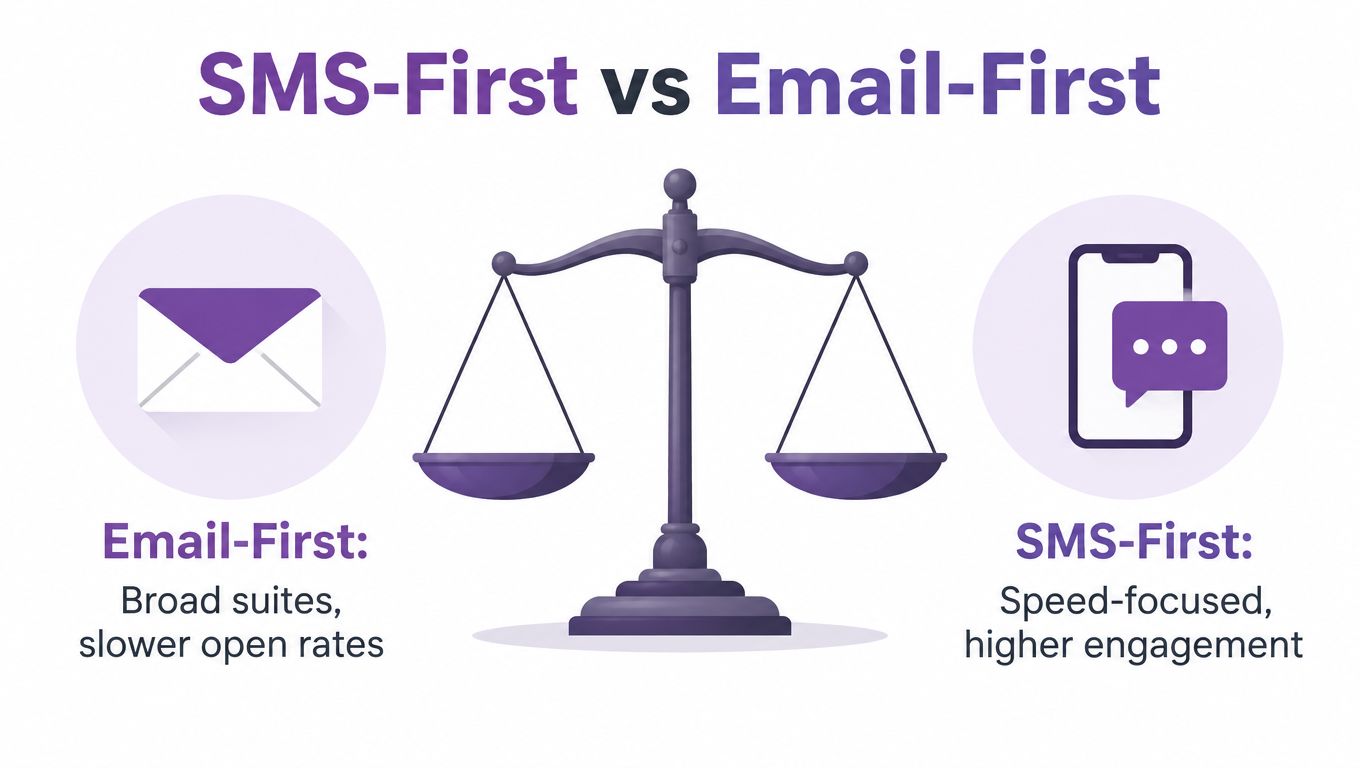
SMS vs Email Cart Recovery at a Glance
| Criteria | SMS-First Apps | Email-First Apps |
|---|---|---|
| Primary strength | Fast attention and direct return-to-cart action | Broad lifecycle automation and richer content |
| Engagement pattern | Immediate attention, with greater sensitivity to fatigue | Slower attention, with more room for education and product detail |
| Recovery fit | High-intent carts, urgent purchases, and shoppers who explicitly opted in | Broad cart audiences, considered purchases, and multi-message nurturing |
| Cost model | Usually tied to message volume and carrier requirements | Often tied to contacts, sends, or a broader platform plan |
| Creative flexibility | Short copy, direct CTA, concise personalization | Product blocks, longer explanations, reviews, recommendations, and design |
| Main risk | Intrusive timing, weak consent, or overuse | Messages being ignored, delayed, or buried in the inbox |
Independent Shopify benchmark coverage reports an SMS open rate of roughly 98% and average recovery conversion around 8.7%, with high-intent segments reaching 15% to 25% or more, according to the Shopify SMS benchmark analysis. A separate benchmark guide places structured abandoned-cart SMS sequences around 8% to 15% recovery conversion, with revenue per SMS sent ranging from $0.50 to $1.20 at baseline and $2.00 to $5.00 or more for top-quartile performers, as reported in YipSMS's abandoned-cart recovery guide. List quality, implementation, consent, and attribution affect every result.
SMS earns attention, but that does not make it appropriate for every abandonment. A text can feel intrusive when the purchase is exploratory, the product requires explanation, or the shopper has already received several promotional messages. Email gives merchants more space for shipping details, reviews, product education, recommendations, and reassurance without demanding an immediate response.
Use SMS first when the shopper has explicitly opted in, the cart indicates strong intent, and the message offers one clear next step. Use email first when the decision needs more information or a lower-pressure reminder. An email-led journey with SMS reserved for a narrower, higher-value segment often gives stores better control over brand trust, message costs, and compliance exposure.
Timing, Compliance, and Deliverability Rules
Timing determines whether a recovery message feels useful or intrusive. Send the first text 30 to 60 minutes after abandonment, while the shopper still remembers the product and the purchase decision. A second touch can follow 4 to 24 hours later, although another timing guide identifies one to four hours after abandonment as the strongest period. Waiting several days usually means giving up the warmest intent.
Keep the sequence short and match the channel to the customer's situation. Use the recipient's local hours, stop messages after purchase, and avoid building a complex SMS nurture flow because the app supports one. Extra touches create more opportunities for fatigue, opt-outs, and compliance errors.
Build around the one-touch rule
US carrier and platform rules often limit abandoned-cart SMS to one message per abandoned event, delivered within 48 hours of the trigger. The shopper must have provided express consent before abandonment, and the flow should respect normal waking hours when the event occurs during a quiet period. Retainful's abandoned-cart SMS guidance explains these operating limits.
Design that single message to do useful work. Include the product or cart context, a direct link back to the cart, recognizable brand identification, and a clear opt-out path. A discount should not be automatic. If a return link resolves the hesitation, adding an offer only trains customers to delay purchases.
Compliance rule: Treat abandoned-cart SMS as one focused recovery action inside the 48-hour window, not as a promotional sequence.
Email gives you more space to answer questions about shipping, product details, reviews, or returns. Presentation still affects clicks and deliverability. Compare plain text versus HTML for email before choosing a heavily designed template or a simpler reminder. Use the format that loads reliably, makes the abandoned products clear, and sends the shopper to the correct cart or checkout destination.
A recovery app should record consent, process opt-outs, apply quiet hours, restrict messages by abandoned event, and account for regional requirements. Check those controls in the setup and documentation before installing it. If they are absent or unclear, your team may need to manage them manually, which adds operational risk.
For US stores, this TCPA compliance checklist provides a practical reference alongside the app's documentation. Review compliance before the first campaign sends, not after a message reaches a customer who should never have received it.
Recovery Apps vs Fixing Checkout Friction First
58% of cart users never start checkout, while 43% of checkout starters still don't finish, according to independent 2026 data cited in Shopify's checkout optimization guidance. Those figures point to two different problems. A recovery app can reach some shoppers after they leave, but it cannot fix friction that prevents checkout from starting or completing.
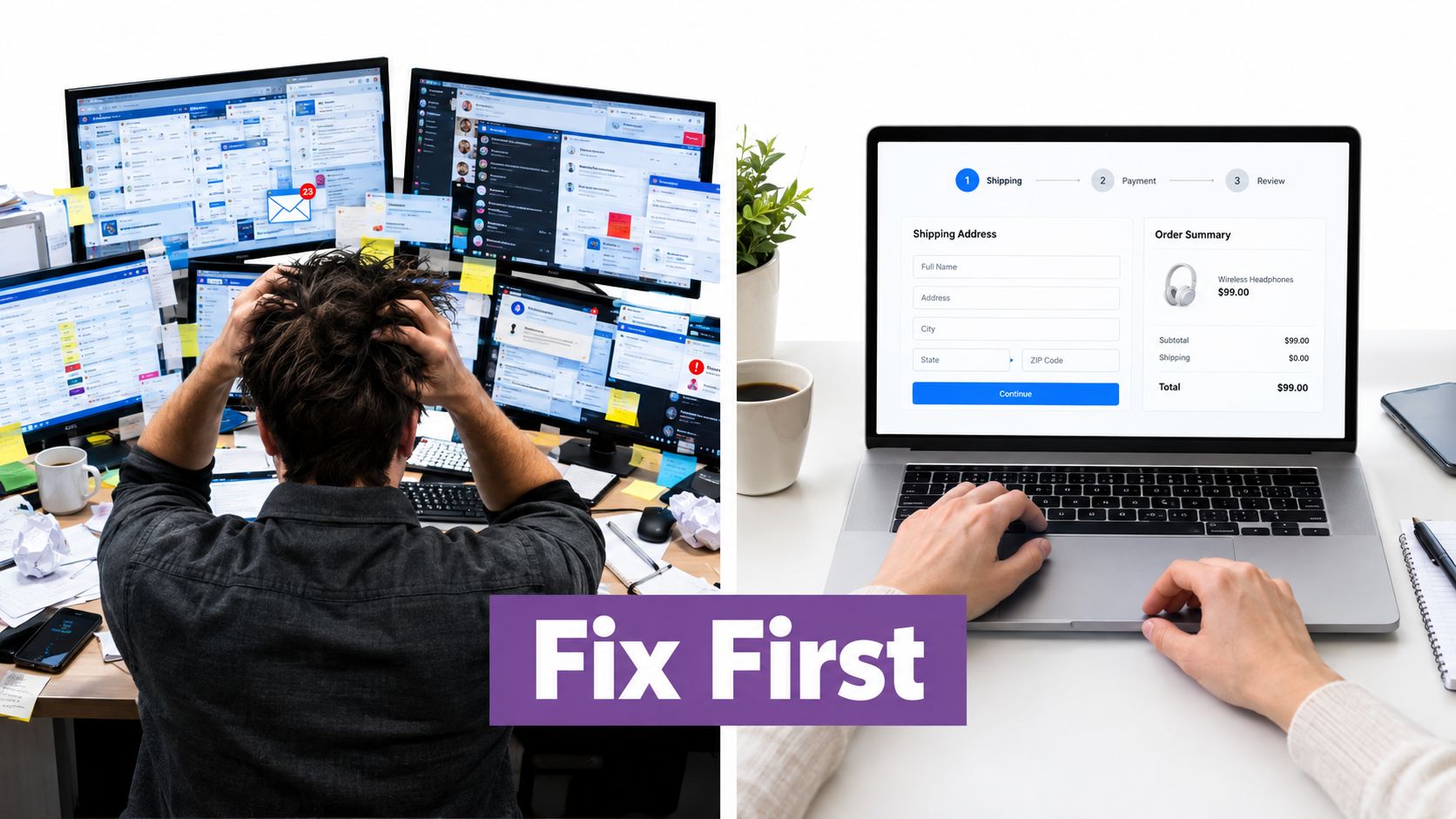
Audit the buying path before paying for another sequence. Test the first cart interaction on mobile, check when shipping costs appear, confirm that payment methods suit the target market, and remove fields that do not support the purchase. Use a structured checkout audit to reduce cart abandonment before adding another recovery workflow.
If shoppers abandon before checkout begins, prevention usually deserves priority. A message sent later cannot compensate for unclear delivery costs, missing payment options, slow pages, or a checkout that asks for unnecessary information.
Use Shopify's native automation as the baseline
Shopify includes a native SMS automation for customers who add products to a cart but do not start checkout. In the Shopify admin, open Apps, Messaging, Automations, Create automation, then select SMS. Shopify's automation instructions document the trigger and activation path.
Set up that workflow before buying a specialized abandoned cart app shopify merchants may not yet need. Compare its reach, attributed revenue, segmentation, consent controls, and reporting with your requirements. A third-party app is easier to justify when the native option misses a meaningful audience or lacks controls your team must operate daily.
A practical checkout review should cover payment options, trust signals, shipping visibility, speed, and step count. CRO strategies from DesignStack offer broader conversion ideas that support cart recovery without replacing it.
Fix preventable friction first. Then use recovery messaging for shoppers who still need a reminder.
Where YipSMS Fits for Cart Recovery
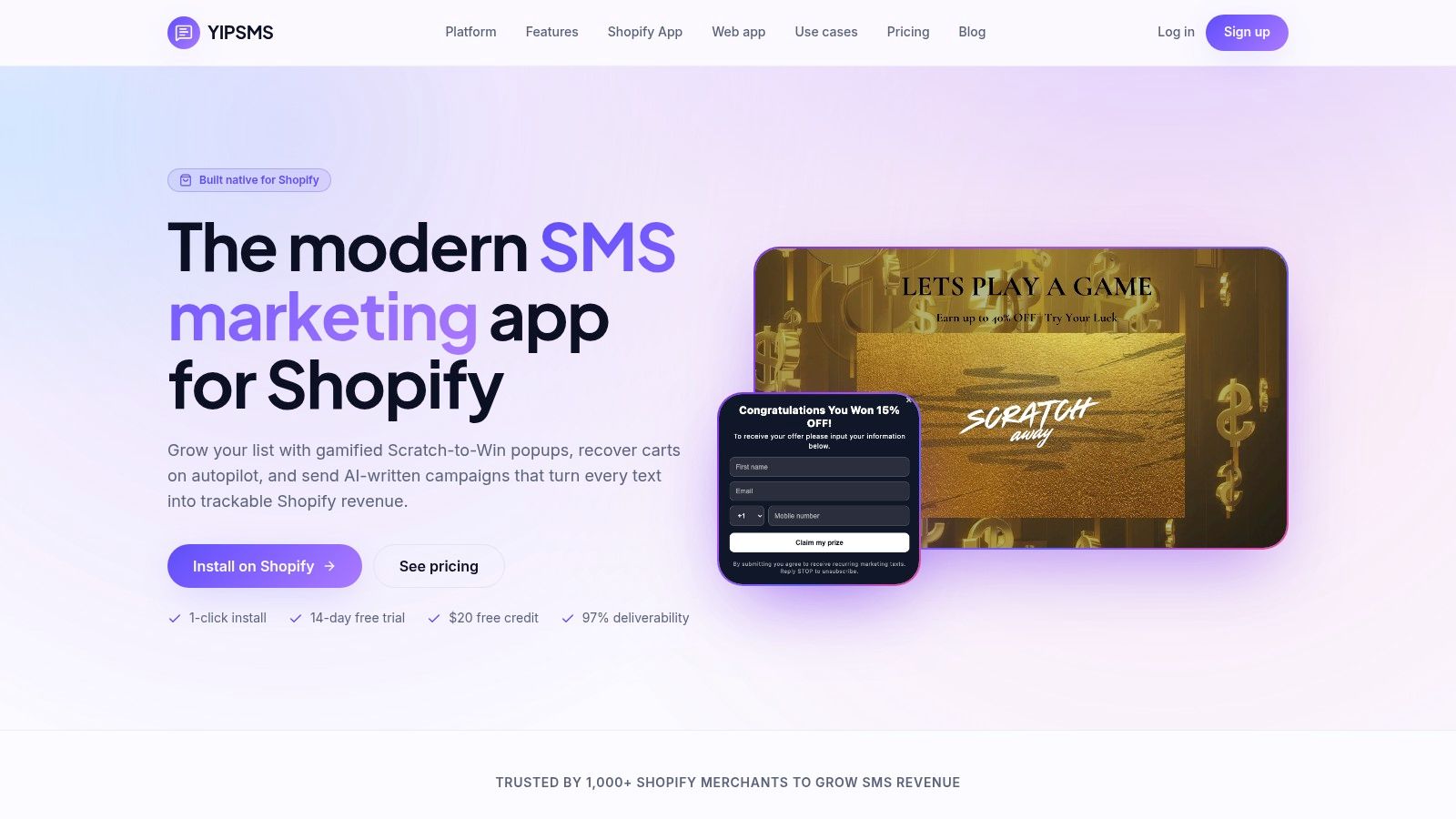
YipSMS is most relevant for Shopify merchants who want a focused SMS layer without adopting a large enterprise marketing suite. Its setup is designed around one-click Shopify installation, with a 14-day free trial and per-message pricing starting at $0.015 per SMS. That model is easier to evaluate against actual sending volume than a platform whose cost is difficult to separate from unrelated marketing features.
The app includes prebuilt automations for cart abandonment, checkout abandonment, and viewed-product follow-ups. It also supports a drag-and-drop popup for growing the subscriber list, which matters because SMS recovery depends on permissioned reach. A direct cart or checkout link keeps the action short, rather than forcing the shopper to search for the product again.
Where the tool fits well
The operational appeal is simplicity. A smaller Shopify store can test one compliant recovery flow, watch delivery and engagement, and decide whether SMS deserves a larger role. The product information describes 97% deliverability, real-time analytics, and user-reported 5x to 7x returns. Those returns are reported by users, not a guarantee, so merchants should validate them against their own attributed revenue and margin.
The broader automation set includes shipping and delivery notifications, personalized recommendations, bulk campaigns, and scheduled campaigns. That gives a merchant room to use SMS after the recovery event, but the abandoned-cart flow should remain restrained. More automation isn't automatically better if the customer receives messages that don't match their consent or buying context.
Where another platform may win
An email-first suite may be a better fit if your team needs detailed product education, complex segmentation, extensive email design, and a single system for the entire customer lifecycle. Agencies managing several brands may also prefer a broader reporting and permission structure, especially when clients use different channels and CRM systems.
The sensible evaluation is narrow. Install the app only if it captures the trigger you need, handles consent and opt-outs, provides the timing controls required for your market, and reports enough data to judge incremental revenue. For a budget-conscious store that wants direct SMS automation without enterprise complexity, those criteria can make a specialized option practical.
Choosing Your Abandoned Cart App by Store Type
There isn't one universal winner. The right abandoned cart app for Shopify depends on your traffic quality, consented audience, product consideration cycle, team capacity, and appetite for multi-channel complexity.
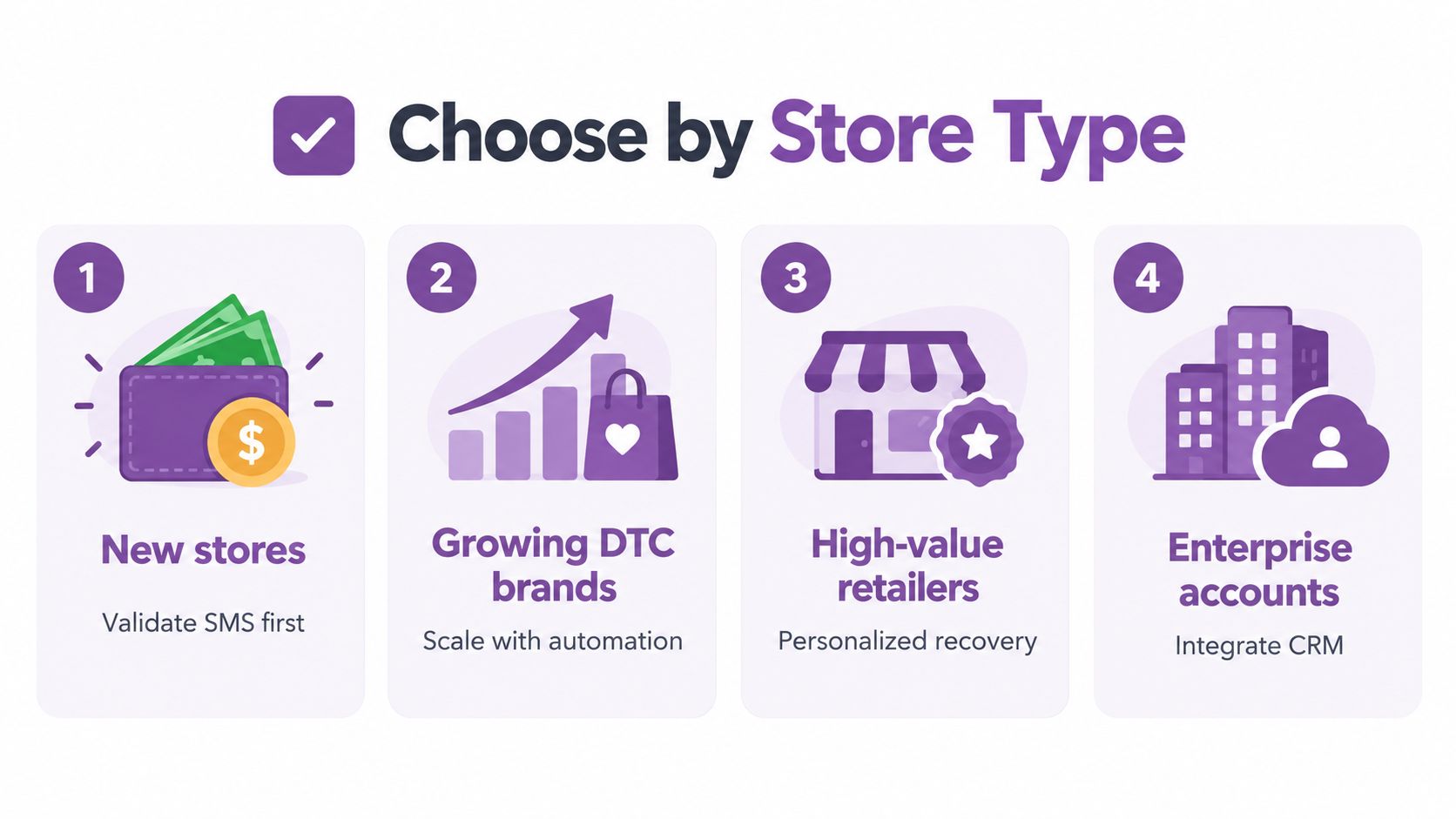
New stores validating SMS
Start with Shopify's native automation and a clean consent process. Don't add a paid app before you know whether shoppers respond to a direct recovery message or whether checkout friction is the bigger issue.
Your first actions should be:
- Test the cart and checkout experience on a mobile device.
- Activate the native cart trigger and confirm that the link returns shoppers to the right place.
- Review delivery, clicks, purchases, and opt-outs before expanding the flow.
Keep the message simple. A new store usually learns more from a reliable reminder and clear measurement than from a complex sequence with several incentives.
Growing DTC brands
A growing brand often needs separate treatment for cart and checkout abandonment, plus email for explanation and SMS for high-intent action. Use segmentation based on consent, cart context, product category, and customer status. Don't send SMS to every abandonment just because the channel receives attention quickly.
Run the first text inside 30 to 60 minutes, keep the flow within the 48-hour compliance window, and respect the one-message limit where it applies. After the initial test period, compare recovery by channel and inspect whether discounts are necessary or whether the direct cart link does most of the work.
High-value retailers
High-value products need more restraint. A shopper may need reassurance about delivery, returns, sizing, financing, or product suitability. Email can provide that detail, while a carefully selected SMS reminder can serve customers who have clearly opted in and reached a high-intent stage.
Use personalization that helps the customer make a decision, not personalization that merely proves the brand is watching. If the message feels intrusive, the short-term order isn't worth the damage to trust.
Agencies and enterprise accounts
Agencies should choose the platform that makes compliance, reporting, and account separation easy across clients. Enterprise teams may need CRM integration, regional consent controls, role-based access, and a consistent attribution model. A low per-message cost won't compensate for weak governance or unclear ownership of customer data.
Judge performance against the funnel, not a vendor's headline claim. Review cart-to-checkout movement, prevention conversion, offer acceptance, recovery rate, revenue per recipient, delivery, and opt-outs after the first reporting cycle. Keep the winning flow only if it improves the economics without creating unacceptable customer fatigue.
The decision is straightforward: fix checkout friction when shoppers leave before checkout, use native Shopify automation as the baseline, and add a specialized app when you need broader triggers, stronger analytics, or a controlled SMS program. YipSMS Inc. offers Shopify SMS automation, cart and checkout recovery flows, subscriber popups, scheduled campaigns, and real-time analytics, so visit YipSMS Inc. to evaluate whether its focused approach fits your store.
How this article was made: the YIPSMS team drafts some articles with AI writing tools, then checks pricing, compliance and product details against how YIPSMS actually works before publishing. Spotted something wrong? Tell us through your YIPSMS account.