10 SMS Marketing Ideas for Shopify Stores
The strongest SMS marketing ideas for Shopify stores are behavior-triggered campaigns, especially cart recovery, viewed-product follow-ups, shipping updates, VIP offers, and segmented promotions, because they reach customers at a relevant moment. That matters because one 2026 benchmark reports a 98% open rate, 95% of texts are read within 3 minutes, and ecommerce brands sent 321 million SMS messages in 2025 while volume rose 40% year over year.
Generic promo blasts still have a place, but they rarely beat a text that matches what the shopper just did. A cart reminder lands when intent is still warm. A shipping text answers a question before support gets it. A VIP early-access message feels earned instead of noisy.
That's the opportunity with SMS marketing ideas for Shopify brands. Turn ordinary store events into timely texts that feel useful, not interruptive. Across the customer lifecycle, that usually means starting with clean consent, then using browse intent, checkout intent, fulfillment milestones, loyalty status, and lapsing behavior to decide when a text deserves to be sent.
The ten ideas below follow that order. Each one includes sample copy, timing guidance, targeting notes, and a suggested YipSMS flow so you can build an SMS program that supports acquisition, conversion, retention, and post-purchase communication without texting too often or to the wrong people.
Table of Contents
- 1. Abandoned Cart Recovery with Time-Sensitive Urgency
- 2. Post-Purchase Shipping and Delivery Notifications
- 3. Personalized Product Recommendations via Viewed Items
- 4. VIP Customer Exclusive Offers and Early Access
- 5. Flash Sale and Limited-Time Offer Campaigns
- 6. Birthday and Anniversary Personalized Offers
- 7. Re-engagement Campaigns for Lapsed Customers
- 8. SMS Subscriber List Growth with Popup Campaigns
- 9. Scheduled Bulk SMS Campaigns for Promotions and Updates
- 10. Customer Review and Feedback Request SMS
- Comparison of 10 SMS Marketing Ideas
- Build a Smarter Shopify SMS Campaign Calendar
1. Abandoned Cart Recovery with Time-Sensitive Urgency
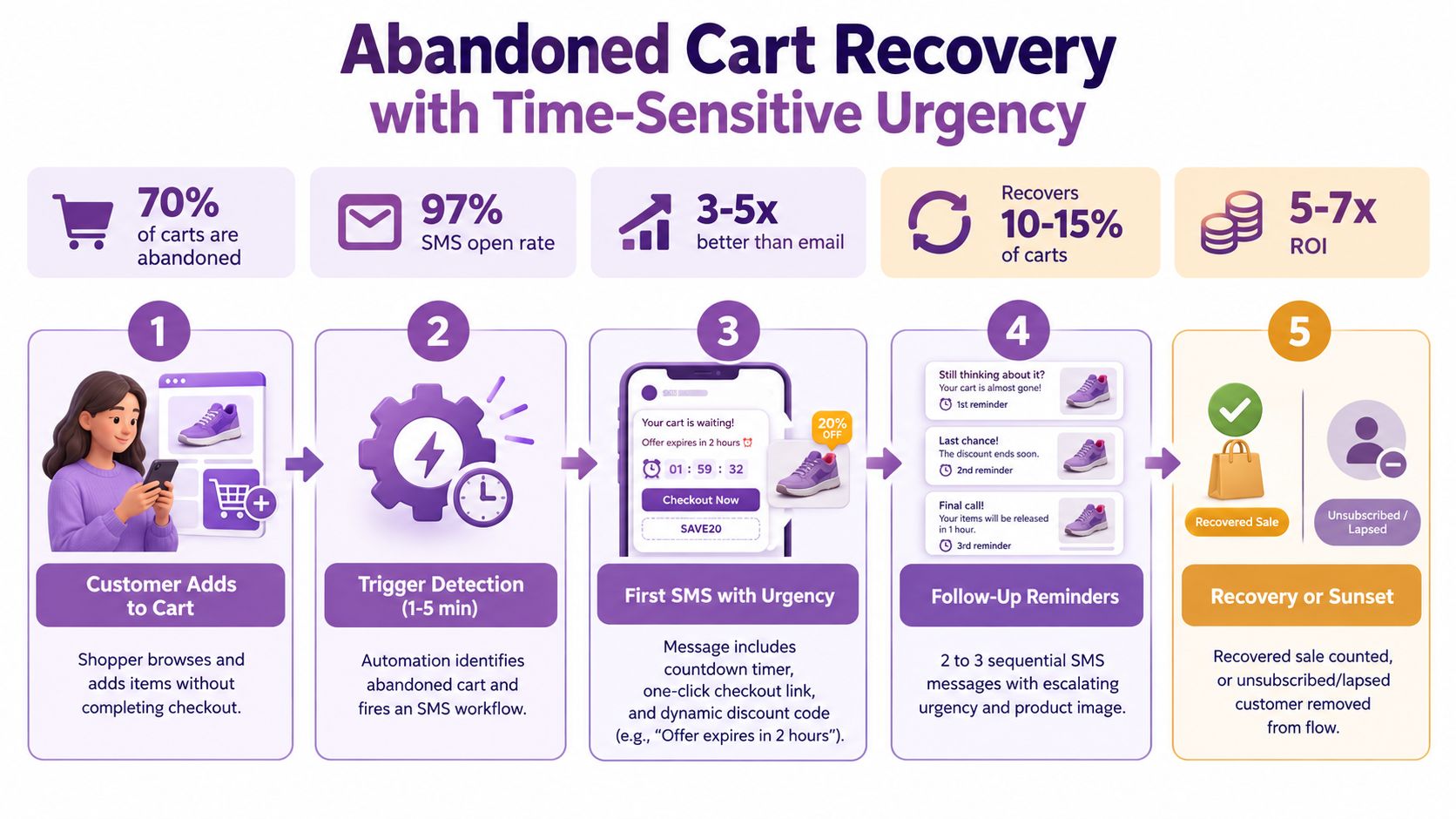
Cart recovery is still the first SMS automation I'd launch for most Shopify stores because intent is obvious. Independent industry aggregation puts average cart abandonment at 70.2%, meaning only 29.8 out of every 100 shoppers who add items to cart complete checkout, which makes cart-triggered recovery one of the highest-value SMS use cases for ecommerce (cart abandonment benchmark).
Don't treat this like a broad campaign. Treat it like a rescue message sent while the shopper still remembers the product, price, and friction point.
Timing and YipSMS flow
In YipSMS, build a cart abandonment flow with one fast reminder and one follow-up only if the shopper still hasn't converted. The first text should go out soon after abandonment. The second should add a stronger reason to return, such as limited inventory, free shipping, or support.
Practical rule: Urgency works only when it's credible. If every cart text says “last chance,” shoppers stop believing you.
Sample copy: “Still thinking it over? Your cart at [Brand] is saved. Complete checkout here: [link] Reply HELP if you have a question.”
Follow-up copy: “Your picks are still waiting at [Brand]. If sizing or shipping is holding you back, reply and we'll help: [link]”
A good build reference is this collection of abandoned cart SMS examples.
What works and what doesn't
A product-specific reminder usually beats a generic “you forgot something” text. Mention the category, color, or use case if you can. If the cart contains higher-consideration items, make the second text reply-friendly instead of discount-heavy.
What usually fails is stacking too many reminders, sending them days later, or offering a discount immediately to every shopper. That trains people to wait. Start with relevance, not bribery.
2. Post-Purchase Shipping and Delivery Notifications
Post-purchase SMS earns its keep fast. These messages reassure the buyer, cut down on “where is my order?” tickets, and keep your brand useful during the stretch between checkout and delivery.
They also sit at a different stage of the Shopify lifecycle than cart or browse flows. The job here is not persuasion. The job is clarity. Send the right update at the right order event, then save any revenue play for a separate branch after the package arrives.
Timing and YipSMS flow
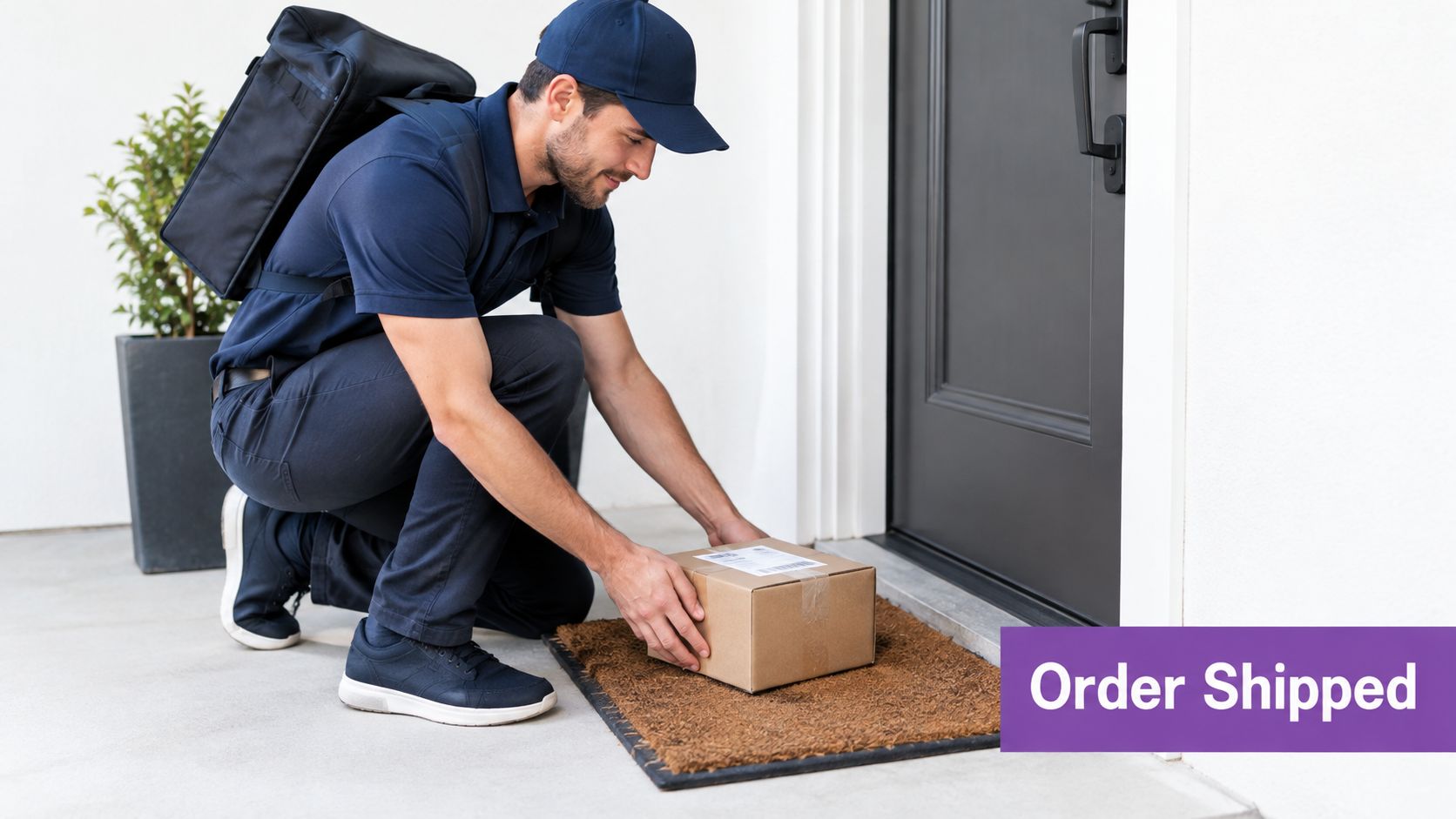
In YipSMS, tie this automation to Shopify order status updates. A clean version uses four events: order confirmed, shipped, out for delivery, and delivered. These are the moments customers care about without creating noise.
Sample copy for order confirmation: “Thanks for your order from [Brand]. We've got it and will text you when it ships.”
Shipped message: “Your [Brand] order is on the way. Track it here: [link]”
Out for delivery message: “Your [Brand] order is out for delivery today. Track updates here: [link]”
Delivered message: “Your [Brand] package was delivered. Reply if anything looks off and we'll help.”
If you want a working model, these SMS delivery notification examples and setup ideas show the structure well.
Trade-offs to watch
Operational texts get opened because customers expect them. That trust disappears if every shipping message tries to cross-sell. Keep the status texts purely useful, especially for delayed shipments, split shipments, or preorders where the customer already has some uncertainty.
The better place for revenue is a post-delivery branch inside the same lifecycle stage. After the delivered event, wait a bit, then send one follow-up based on the product. Ask for a review, suggest a refill window, or recommend a compatible accessory. That keeps the shipping flow clean while still giving you a path to repeat purchase.
One more practical point. Delivery notifications work best when replies route to support or a monitored inbox. If a customer reports a missing package and gets silence, the text creates more frustration, not less.
3. Personalized Product Recommendations via Viewed Items
Browse abandonment sits in the middle ground between awareness and purchase intent. The shopper didn't add to cart, so a hard-sell reminder is usually too aggressive. A better text feels like a nudge based on interest.
This channel has enough scale to matter. One 2026 benchmark reports that ecommerce brands sent 321 million SMS messages in 2025, with click rates more than doubling year over year, which reinforces SMS as a practical conversion channel for high-intent use cases like viewed-product follow-ups (2026 SMS engagement benchmark).
Timing and YipSMS flow
In YipSMS, trigger this flow when a known subscriber views a product or collection without adding to cart or checking out. Wait a bit instead of texting instantly. You want to look helpful, not watchful.
Sample copy: “Still comparing options? The [Product Name] you viewed is one of our most popular picks. See details and available options here: [link]”
If the shopper viewed several related products, send a curated comparison angle: “You looked at a few [category] options. We picked our best match for everyday use here: [link] Reply if you want help choosing.”
What works best
Recommendation texts work when they reduce decision friction. That can mean showing one best-fit product, one complementary item, or one reason to choose now. They fail when brands dump multiple links or turn the text into a miniature catalog.
If the customer is still deciding, your text should narrow the choice, not expand it.
A practical Shopify example is apparel sizing. If someone viewed the same item in multiple sizes, invite a reply for fit help. If they viewed multiple skin-care items, guide them to the simplest starter set. The message should act like a merchandiser, not a megaphone.
4. VIP Customer Exclusive Offers and Early Access
VIP SMS should feel reserved, not recycled. If everyone gets the same “exclusive” text, it stops feeling exclusive fast. This campaign works best when the segment is earned through repeat purchase behavior, high spend, or category loyalty.
The copy should acknowledge status clearly. The offer should arrive before the public launch, and the landing page should match that private-access feel.
Timing and YipSMS flow
Build a YipSMS segment for repeat buyers, high-value customers, or subscribers who consistently click but don't need frequent discounts. Then trigger early-access texts ahead of launches, restocks, limited drops, or private markdown windows.
Sample copy: “You're getting early access before the public launch. Shop the new drop now: [link]”
Another version: “VIP access is open. Your private window starts now at [Brand]. Shop before general release: [link]”
Trade-offs and practical use
VIP texts don't need the deepest discount. In many stores, priority access is the reward. That preserves margin and keeps your SMS program from becoming discount-dependent.
A solid real-world scenario is a cosmetics brand releasing a seasonal shade range. Text VIPs first, give them a short head start, and keep the landing page limited to that collection. If stock is tight, don't over-message. One launch text and one reminder are enough.
Use this when you want loyalty to feel tangible. Skip it if your segmentation is still too broad to support an actual VIP experience.
5. Flash Sale and Limited-Time Offer Campaigns
Flash-sale SMS can produce fast revenue, but only when the urgency is real and the audience is tight. In a Shopify lifecycle, this tactic fits after browse and purchase intent are already visible. Use it to convert known interest, clear specific inventory, or move a short-lived offer before demand fades.
Timing and YipSMS flow
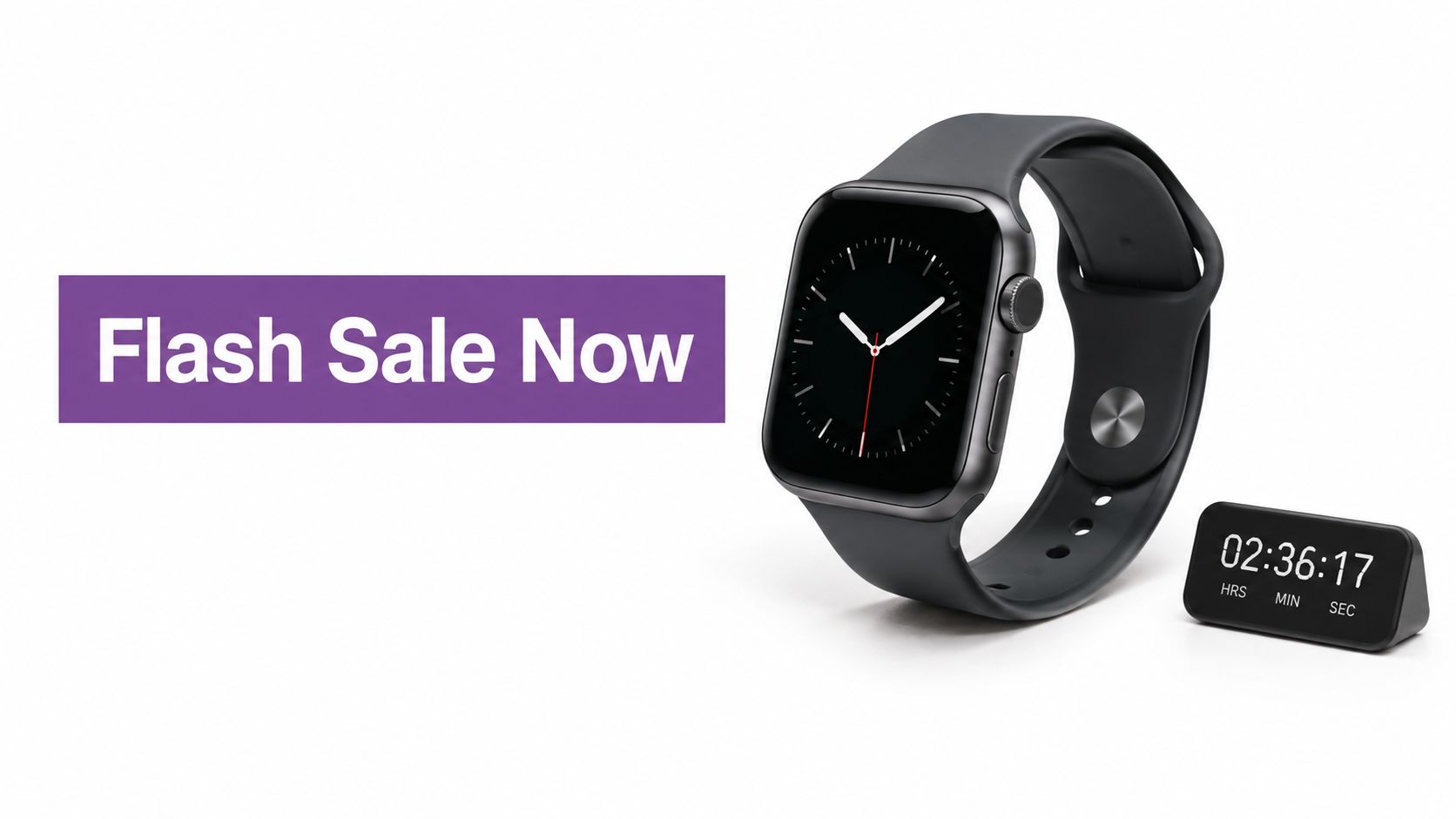
Set these up in YipSMS as campaign bursts, not a standing habit. Good triggers include excess stock in one collection, a same-day bundle offer, a weather-driven promotion, or a brief window before a seasonal cutoff. Build the audience from recent product viewers, cart abandoners who missed the first recovery sequence, or past buyers in the same category. Broad sends reduce credibility fast.
Sample copy: “4 hours only. Save on select [category] favorites before midnight: [link]”
Reminder copy: “Last call. The [category] flash sale ends tonight. Shop now: [link]”
A practical flow is simple. Send the first text when the sale opens. Send one reminder halfway through or near the close, only to people who did not click the first message. For very short windows, one message may be enough.
Trade-offs and practical use
Flash sales train behavior, for better or worse. If a store sends them every few days, customers learn to wait for the next markdown. That helps short-term conversion and hurts margin over time.
The stronger use case is selective pressure. A fashion brand can target shoppers who viewed outerwear and offer a six-hour clearance on remaining sizes. A consumables brand can text a replenishment segment with a limited bundle before a shipping cutoff. In both cases, the message matches existing intent.
Keep the landing page focused. One collection, one deadline, one clear path to checkout. If the offer needs too much explanation, it is better suited to email than SMS.
6. Birthday and Anniversary Personalized Offers
Birthday and anniversary texts are simple, but they work because the context is built in. The customer already understands why you're texting. That makes the message feel personal even when the automation is straightforward.
These campaigns also teach an important SMS lesson. Relevance can outperform novelty. You don't need a clever promotion if the timing itself already gives the shopper a reason to engage.
Timing and YipSMS flow
In YipSMS, collect birthday or anniversary data during signup or post-purchase preference capture. Then trigger a single celebratory message on the date, with a modest redemption window and a product path that matches the customer's history.
Sample copy: “Happy birthday from [Brand]. Your gift is ready. Use it on your next order here: [link]”
Anniversary version: “It's been one year since your first order with [Brand]. Thanks for being with us. Here's something to celebrate: [link]”
Where stores get this wrong
The biggest mistake is making the reward feel mechanical. “Here is your coupon” gets ignored. “Happy birthday, your gift is ready” feels warmer without getting long.
A practical example is a coffee or wellness brand that pairs the text with a curated “treat yourself” collection. Another is an eyewear or beauty brand using the anniversary text to bring customers back when replacement timing feels natural. Keep it light. This is a relationship text first, a conversion text second.
7. Re-engagement Campaigns for Lapsed Customers
Lapsed-customer SMS is where restraint matters most. If someone hasn't bought in a while, sending more of the same promo they ignored last month won't fix it. You need a reason that reconnects to what they used to care about.
This is a strong place to use a conversational branch instead of a one-way discount. Recent trend coverage points to reply-based flows, concierge-style support, and AI-assisted conversations in the text thread as an underused growth angle for ecommerce brands (conversational SMS trends in 2026).
Timing and YipSMS flow
Create a YipSMS win-back segment based on time since purchase, then split the flow by customer type. Past loyal buyers may respond to early access or a relevant restock. One-time discount seekers may need a straightforward offer. Unsure segments can get a reply invitation.
Sample copy: “We haven't seen you in a while. Want help finding a good next pick? Reply and we'll recommend one.”
Offer-led version: “You still have access to subscriber-only offers at [Brand]. Take another look here: [link]”
A useful test: Start with relevance or assistance before increasing the discount. If the customer still likes the category, support can win where markdowns won't.
What works versus what annoys
Win-back texts work when they sound specific. Mention new arrivals in the category they bought before. Mention replenishment if the product naturally runs out. Mention support if choice was the likely barrier.
What annoys people is desperation. Three escalating discount texts in a week tell the customer your segmentation is weak. One good message with a clear reason to return is better than a noisy sequence.
8. SMS Subscriber List Growth with Popup Campaigns
Every SMS program gets better when list growth is honest and expectation-setting is clear. More phone numbers won't help if the opt-in is vague, incomplete, or non-compliant.
For marketing texts to U.S. mobile phones, prior express written consent is generally required under the TCPA, and the agreement must clearly authorize marketing messages and identify the seller (TCPA consent requirement overview). Opt-in language should also be explicit about sender identity, message and data rates, and opt-out instructions such as replying STOP, while pre-checked boxes and implied consent don't qualify (SMS opt-in compliance basics).
Here's a walkthrough you can use when setting the capture layer up:
Timing and YipSMS flow
Use YipSMS popups on high-intent pages like product pages, collection pages, and exit moments. Keep the value proposition simple. Then route new subscribers into a welcome flow that delivers the promised incentive and asks for one preference if you want better segmentation later.
Sample popup copy: “Get first access to launches, restocks, and private offers by text.”
Welcome SMS: “You're in. Thanks for joining [Brand] texts. Shop subscriber perks here: [link] Reply STOP to opt out.”
For more practical setup ideas, review these text message sign-up examples.
What good list growth looks like
The best popups lead with value and set frequency expectations clearly. The worst ones hide the compliance language, overpromise savings, or ask for a phone number before earning trust.
A store selling replenishable goods might offer first dibs on stock alerts. A fashion brand might offer early-access drops. Match the signup promise to the kinds of texts you'll send later.
9. Scheduled Bulk SMS Campaigns for Promotions and Updates
Bulk campaigns still matter. They just need more discipline than most brands give them. If automations handle high-intent moments, bulk sends should cover planned launches, major seasonal pushes, and updates that are relevant to a segment.
Many SMS marketing ideas go wrong. They focus on what to send next instead of whether a campaign deserves SMS at all. Recent industry coverage notes that send volumes keep rising while the smarter strategy is to text less, but smarter, with tighter segmentation and stronger trigger logic (send-frequency and profitability angle).
Timing and YipSMS flow
Use YipSMS scheduling for product drops, launch reminders, restocks, holiday windows, and region-specific promos. Segment by category interest, purchase history, or lifecycle stage before writing the copy.
Sample copy: “New arrivals just landed in [category]. Shop the latest picks from [Brand]: [link]”
Promotional update: “Subscribers get first access to this week's featured offer. See what's live now: [link]”
How to decide if a bulk send is worth it
Ask one blunt question. Would this message still feel useful if the customer received only two marketing texts from you this month? If the answer is no, don't send it.
A good example is a planned new-collection release to shoppers who have bought that category before. A bad example is a store-wide promo to everyone because the calendar looked empty. SMS performs best when the campaign has a clear audience and a reason to exist.
10. Customer Review and Feedback Request SMS
Review requests belong after the product has arrived and the customer has had time to use it. Send them too early and the text creates work instead of insight. Send them at the right moment and they can improve both social proof and service recovery.
They also benefit from being conversational. A review request that allows a quick reply can surface problems before they turn into public complaints. If your team uses AI support tools elsewhere, it's worth occasionally browse AI tools for marketing teams and see how feedback routing is evolving.
Timing and YipSMS flow
In YipSMS, trigger this after delivery with a short delay based on product type. Then branch the flow. Positive responses can go to a review page. Negative responses can route to support.
Sample copy: “How's your new [product] from [Brand]? Reply with a quick rating or leave a review here: [link]”
Support-first version: “Your feedback helps us improve. If anything's off with your order, reply here and we'll make it right.”
Why this performs well
When the text sounds human, customers answer. “Leave a review” is fine, but “how's it working for you?” opens the door wider. For products with sizing, setup, or usage friction, that difference matters.
This is also one of the cleaner places to test two-way SMS at scale. Let people reply with praise, confusion, or an issue. Then decide what gets automated, what gets routed to support, and what earns a follow-up offer later.
Comparison of 10 SMS Marketing Ideas
| Item | Implementation (🔄) | Resources (⚡) | Expected outcomes (📊) | Ideal use cases (💡) | Key advantages (⭐) |
|---|---|---|---|---|---|
| Abandoned Cart Recovery with Time-Sensitive Urgency | 🔄 Low, pre-built abandonment flows | ⚡ Low, SMS credits, checkout links, dynamic codes | 📊 Recovers ~10–15% carts; 5–7x ROI reported | 💡 Immediate post-abandon re-engagement (minutes–hours) | ⭐ High conversion vs email; near-instant visibility |
| Post-Purchase Shipping and Delivery Notifications | 🔄 Medium, carrier/fulfillment API integration | ⚡ Medium, tracking feeds, fulfillment data, transactional sender | 📊 Reduces support inquiries 30–40%; 2–3x ROI via retention/cost savings | 💡 Transactional order status, high-volume fulfillment shops | ⭐ Builds trust; lowers support load; reliable delivery |
| Personalized Product Recommendations via Viewed Items | 🔄 Medium, product tracking + recommendation engine | ⚡ Medium, behavioral data, AI/recommendation tooling | 📊 Increases AOV 15–30%; 4–6x ROI from upsells | 💡 High-intent browsing moments, cross-sell/upsell scenarios | ⭐ Highly relevant messaging; boosts AOV and engagement |
| VIP Customer Exclusive Offers and Early Access | 🔄 Medium, segmentation + conditional automations | ⚡ Medium, LTV data, tier rules, exclusive inventory | 📊 Increases LTV 30–50%; 6–8x ROI from repeat purchases | 💡 Rewarding top customers; launches and limited drops | ⭐ Drives loyalty and higher conversion from top spenders |
| Flash Sale and Limited-Time Offer Campaigns | 🔄 Medium, inventory sync + precise timing | ⚡ Medium, real-time inventory, creative, surge support | 📊 Short-term spikes (2–4x daily); 7–10x ROI during events | 💡 Clearing inventory, seasonal promos, urgent discounts | ⭐ Rapid revenue lift; excellent for time-limited moves |
| Birthday and Anniversary Personalized Offers | 🔄 Low, date capture + scheduled automation | ⚡ Low, customer date fields, creative offers | 📊 High engagement (30–40%+ opens); 4–5x ROI via repeat buys | 💡 Loyalty & emotional touchpoints (birthdays/anniversaries) | ⭐ Personal, predictable, strong retention signal |
| Re-engagement Campaigns for Lapsed Customers | 🔄 Low–Medium, segmentation and progressive offers | ⚡ Low, incentives, segmented workflows | 📊 Recovers ~10–15% lapsed customers; 3–4x ROI | 💡 Win-back sequences for 90+ day inactive cohorts | ⭐ Cost-efficient retention vs new acquisition |
| SMS Subscriber List Growth with Popup Campaigns | 🔄 Low, drag-and-drop popup builder | ⚡ Low, creative assets, incentive offers, CRO testing | 📊 Grows list 20–40% in weeks; 4–6x ROI from larger reach | 💡 Sitewide acquisition points (exit-intent, time-on-page) | ⭐ Rapid subscriber growth; non-technical setup |
| Scheduled Bulk SMS Campaigns for Promotions and Updates | 🔄 Low, templates + scheduler | ⚡ Low, planning, segmentation, copy resources | 📊 Broad reach with 3–5x ROI when optimized by timing | 💡 Seasonal campaigns, product launches, announcements | ⭐ Scalable, coordinated marketing with analytics |
| Customer Review and Feedback Request SMS | 🔄 Medium, review platform API + conditional flows | ⚡ Medium, review links, monitoring team, incentives | 📊 25–40% more reviews vs email; 2–3x ROI via social proof | 💡 Post-delivery feedback capture (3–7 days after delivery) | ⭐ Increases review volume and actionable feedback |
Build a Smarter Shopify SMS Campaign Calendar
A strong Shopify SMS program doesn't start with blasting offers. It starts with permission and timing. First, grow the list with explicit consent and clear expectations. Then launch the highest-intent automations: cart recovery and viewed-product follow-ups. Those flows connect SMS to behavior shoppers already showed, which is why they usually outperform generic campaigns.
After that, automate shipping and delivery communication. These texts keep the channel useful, not just promotional. They also train customers to expect timely updates from your brand, which makes future marketing texts feel less random. Once those foundations are working, layer in scheduled promotions, VIP early access, birthday or anniversary touches, review requests, and win-back flows for lapsed buyers.
Keep the review process operational, not theoretical. Watch delivery first, because a text that never reaches the handset can't do anything. Industry benchmark summaries describe 95%+ delivery as strong, and one 2026 benchmark reported 96.6% deliverability for campaigns versus 92.8% for automations, with automation bounces split into 6.7% hard bounces and 5.2% soft bounces, which is a useful reminder to monitor list hygiene, route quality, retry logic, and carrier filtering separately for campaigns and flows (SMS deliverability benchmark details).
From there, review clicks, conversions, revenue contribution, and unsubscribes before expanding your calendar. If an automation is getting engagement but poor conversion, fix the landing page, offer, or timing before adding more sends. If a campaign performs only when heavily discounted, the problem may be audience selection rather than copy.
The best SMS marketing ideas usually look simple from the outside. A saved cart reminder. A delivery update. A VIP launch text. A win-back nudge. What makes them work is the system behind them: clean consent, clear segmentation, tight timing, and enough restraint that every text still feels earned.
If you want a practical rollout, go in this order: list growth, cart recovery, browse recovery, shipping communication, then promotions and retention. A platform like YipSMS Inc. can fit naturally into that sequence because the channel works best when automations and scheduled sends live in one workflow instead of being improvised campaign by campaign.
Keep consent, frequency, timing, and relevance at the center of every message. SMS is powerful because it's immediate. That's also why sloppy SMS gets punished fast.
YipSMS Inc. gives Shopify brands tools for exactly the kinds of programs above, including popup-based subscriber growth, abandoned cart and viewed-product automations, shipping notifications, and scheduled promotional sends. If you want to turn these SMS marketing ideas into live Shopify flows without building everything from scratch, visit YipSMS Inc..