7 Text Lists to Sign Up for in Ecommerce
About 84% of consumers now report being opted in to receive SMS from at least one business, and SMS campaign benchmarks report 96.6% deliverability with a 12.39% click-through rate. The strongest starting set for most ecommerce stores is promotional, restock, shipping, VIP, and educational lists, but each one only works when the signup promise matches the customer's expectation and permission.
Most stores make the same mistake with text lists to sign up for. They collect one phone number, push every subscriber into one bucket, then wonder why engagement slips or unsubscribes spike. That approach ignores why people joined in the first place.
A shopper who wants a discount is different from someone waiting for a sold-out product. A buyer who wants delivery updates didn't necessarily ask for promotions. A VIP customer expects priority access, not generic blasts. Someone who wants care tips or usage guidance needs a slower, more helpful cadence.
That's why the best SMS list starts with intent. Your signup form, consent language, automation, and offer should all line up with a specific reason to subscribe. For stores building practical SMS programs, the highest-value lists usually include promotional alerts, back-in-stock alerts, shipping and delivery updates, VIP access, educational content, cart recovery, and post-purchase replenishment.
The goal isn't maximum collection alone. It's useful consent that supports engagement, retention, and measurable revenue. If you're already tightening customer data quality in other channels, tools like an Email Validation API show the same principle. Clean inputs make downstream automation work better.
Table of Contents
- 1. YipSMS
- 2. Postscript
- 3. Attentive
- 4. Klaviyo SMS
- 5. Omnisend
- 6. SimpleTexting
- 7. SlickText
- Top 7 SMS Sign-Up Tools Comparison
- Turn Signup Intent Into a Smarter SMS Program
1. YipSMS
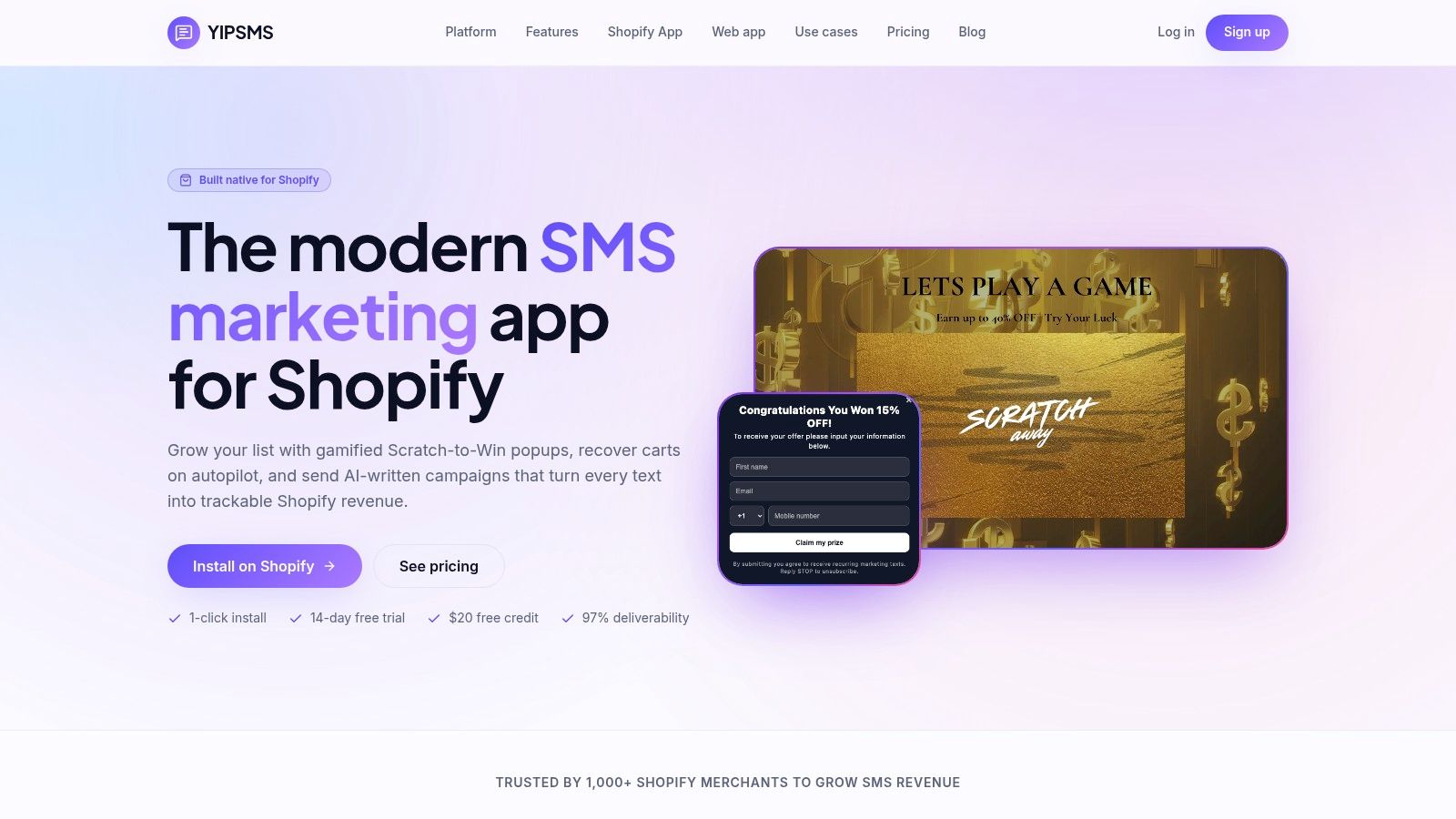
YipSMS fits stores that want SMS to stand on its own instead of getting buried inside a bigger suite. For Shopify merchants, that matters when you already like your email stack and just need fast SMS deployment, clear list growth tools, and basic automations that make money quickly.
Its best use case is the high-intent list set most stores need first. Promotional subscribers, restock subscribers, shipping subscribers, and cart recovery contacts. Those lists map neatly to what Shopify stores send every week.
Where YipSMS fits best
YipSMS is purpose-built for Shopify, with one-click install, Shopify customer sync, theme blocks, popup capture, product alerts, shipping notifications, and abandoned cart or checkout flows. The drag-and-drop popup builder and gamified scratch-to-win style capture are useful when the main job is to turn site traffic into explicit SMS consent, not just collect a number loosely.
One thing I like in SMS-only tools is operational clarity. YipSMS keeps that simple with pay-as-you-go pricing and a live cost calculator, so you can estimate cost by segment before you launch a campaign instead of reverse-engineering spend later. You can see more of its practical signup approach in this guide to text message sign-up.
Practical rule: Use YipSMS when your first priority is launching clean Shopify SMS flows fast, without replacing your email platform.
A few trade-offs are real. It's SMS-only, so it won't replace a broader email platform. And compared with larger suites, the integration catalog is narrower. But that's also why setup tends to be lighter. For many stores, less platform sprawl beats more features.
For customer intent, I'd use YipSMS to build:
- Promo lists: Welcome offer, flash sale, category drops.
- Restock lists: Product-specific alerts for sold-out items.
- Shipping lists: Separate opt-in where needed for operational updates.
- VIP lists: Early access for repeat buyers or loyalty segments.
You can visit YipSMS directly if that leaner Shopify-first setup is what you need.
2. Postscript
Postscript fits stores that already know one SMS signup promise is not enough. If a brand wants separate paths for discount seekers, checkout joiners, recent buyers, and lapsed customers, Postscript gives the team enough control to build that structure inside Shopify without stitching together a lot of extra tools.
I usually look at Postscript through an intent lens first, not a feature lens. The useful question is simple. Why did this person opt in?
A shopper who signs up for 10% off should get a short welcome series with a purchase deadline. A shopper who opts in after starting checkout should get fewer messages, tighter timing, and stronger conversion logic. A recent buyer who joins for order updates or product education belongs in a different flow again. Postscript handles those distinctions well because its capture points and automations map closely to Shopify behavior.
That matters more than having another popup.
Postscript is strongest for merchants that want to connect the signup promise to the next operational decision:
- Discount-led signup promise. Route into welcome, cart recovery, and first-purchase follow-up.
- Product-interest signup promise. Trigger viewed product reminders or category-specific campaigns.
- Checkout-intent signup promise. Keep the sequence short, conversion-focused, and tied to abandoned checkout events.
- Customer-account or buyer signup promise. Send post-purchase cross-sell, replenishment, or win-back messages based on order history.
For Shopify teams comparing tools at that level, this guide to the best SMS marketing platform for ecommerce brands is a useful side-by-side reference.
The trade-off is planning overhead. Postscript can support a more segmented SMS program, but that also means the team has to define list logic, naming conventions, suppression rules, and message timing with more care. Brands with enough traffic and repeat purchase volume usually benefit from that extra control. Smaller stores may feel the weight before they see the return.
One practical example. If someone joins from a product page, I would keep the first text close to that intent: “You're in for back-in-stock and drop alerts for our Running Collection. Reply YES to confirm.” If someone joins at checkout, I would switch the message and the KPI: “You're signed up for order texts and occasional offers. Complete your order here: [link].” Same platform, different promise, different automation, different measurement.
You can evaluate the platform directly at Postscript.
3. Attentive
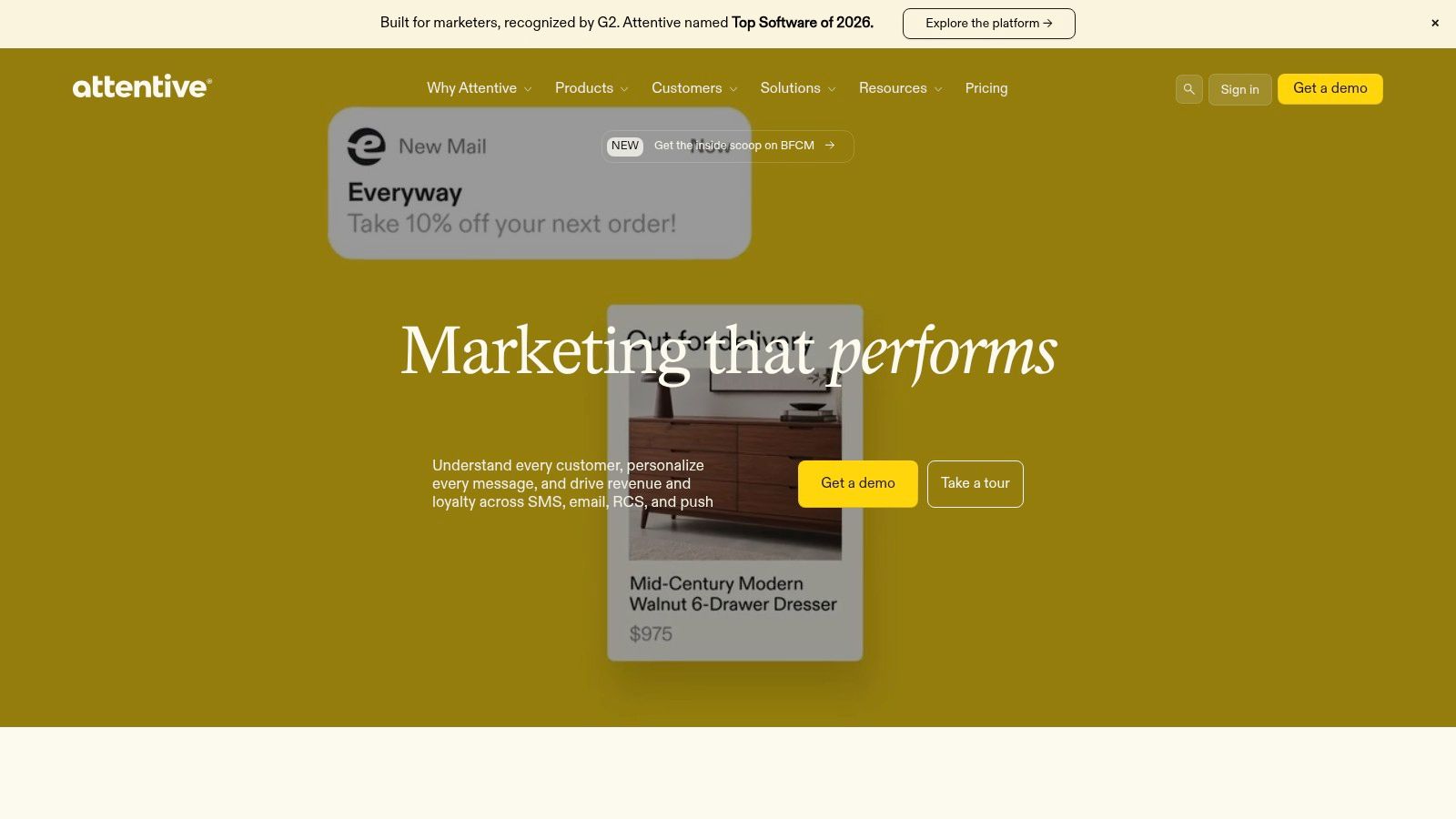
Attentive is the option I'd shortlist for larger teams that want a managed, cross-channel program rather than a narrowly defined SMS tool. It suits mid-market and enterprise brands that need SMS and email journeys working together, plus onboarding help, compliance support, and deeper reporting.
The biggest advantage is strategic structure. If your store has multiple signup promises across channels, Attentive can support them without forcing the team to improvise the whole system.
Strong for VIP and lifecycle segmentation
Attentive works best when your text lists to sign up for are tied to lifecycle value. Think VIP access, loyalty early entry, new collection alerts, replenishment reminders, and post-purchase education that also branches into email.
That kind of setup matters because consent quality is more important than list size. For ecommerce SMS sign-up forms, consent must be explicit, written, and separate from email consent, with no pre-checked boxes, and disclosure should clearly state who is texting, what messages will be sent, how often, and that message and data rates may apply, as outlined in Nord Media's SMS compliance guidance.
Attentive's compliance tooling and support around registration options help here, especially if your team manages complexity across regions or brands.
Operational note: Attentive makes more sense when someone on the team will actually use cross-channel journeys, analytics, and service support. Otherwise you're paying for headroom you may not need.
The trade-off is straightforward. Pricing is quote-based and often better suited to teams with established volume, internal operators, or agency support. For a smaller Shopify store that just wants back-in-stock texts and campaigns, it can be too much platform.
If your SMS strategy starts with premium customer intent rather than broad discounting, Attentive is worth a look.
4. Klaviyo SMS
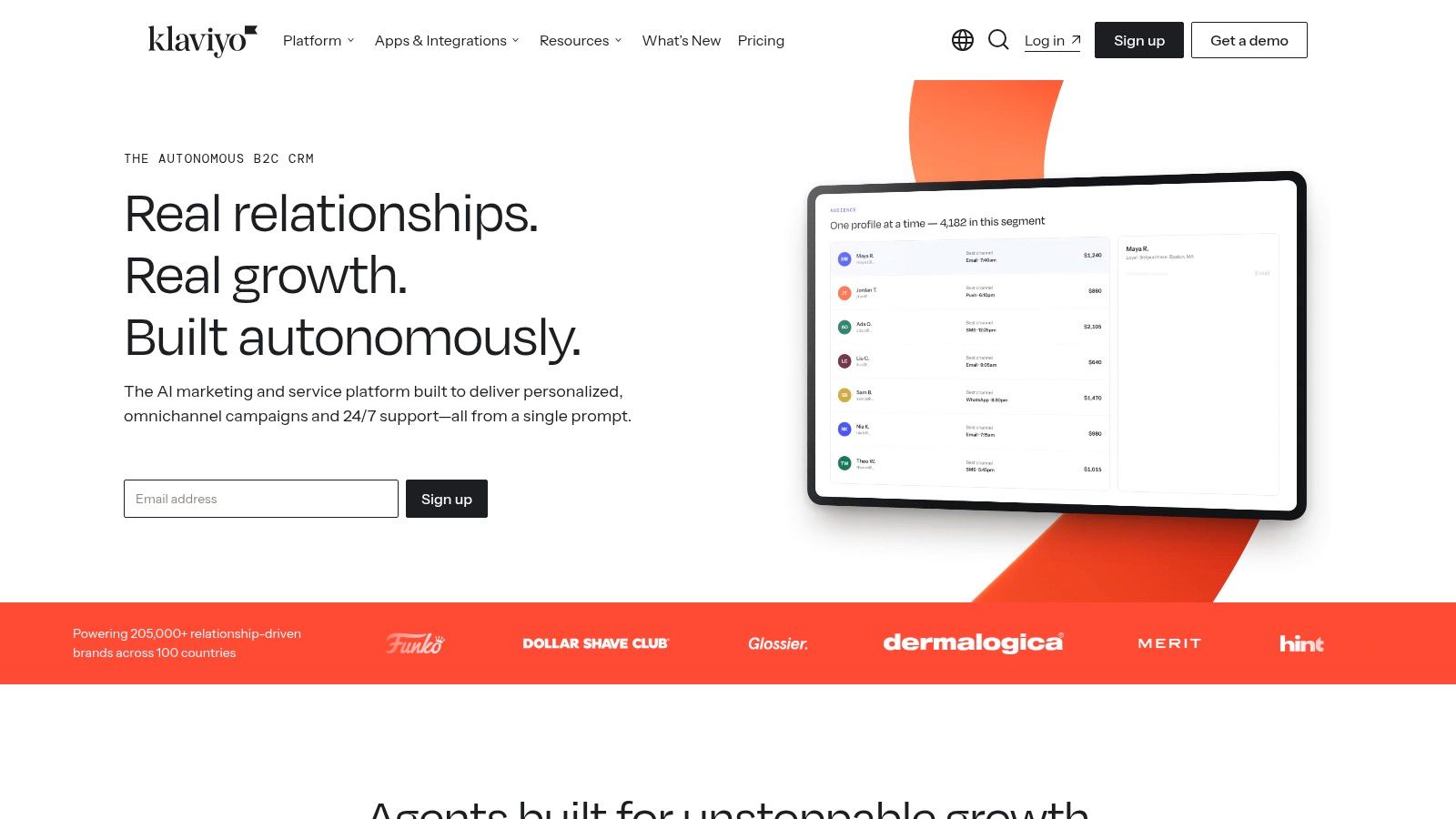
Klaviyo SMS makes the most sense when the question is not "should this customer get a text?" but "which channel fits this moment?" If your store already runs email in Klaviyo, keeping SMS in the same customer record usually leads to better signup promises, cleaner automations, and fewer segmentation mistakes.
That matters for intent-based list building. A "get restock texts" subscriber should not receive the same cadence as a "VIP early access" subscriber or a "how to use your product" subscriber. Klaviyo is strong when each intent maps to a different flow, but all of them still share purchase history, browse behavior, and email engagement.
A practical setup often looks like this:
- A shopper opts into back-in-stock or replenishment texts and gets fast, trigger-based messages like: "Your daily greens are almost gone. Reorder here: [link]"
- A new buyer joins an education list and gets a short post-purchase series with setup tips, usage reminders, and a handoff to email for longer content
- A loyal customer opts into VIP drop alerts and gets early access texts tied to spend thresholds or past category purchases
- A discount-driven subscriber joins promo alerts and stays under tighter frequency rules so SMS revenue does not come at the cost of unsubscribes
That shared profile is the advantage. Teams can suppress recent purchasers from promo blasts, route lower-urgency content to email, and reserve SMS for moments with stronger buying intent.
There is a trade-off. Klaviyo is convenient, but convenience can hide spend. Once email and SMS live in one platform, it becomes easy to add another flow, another triggered text, another segment-specific campaign, and watch costs climb without much friction. International pricing also varies, so stores with meaningful non-US volume need to check actual rates and number options inside the account before rolling out signup forms broadly.
I usually recommend Klaviyo SMS for merchants who already know their first few text lists by intent. Start with two or three clear promises, such as replenishment, VIP access, and promotional alerts. Then build automations around those promises instead of collecting one large SMS list and sending everyone the same thing. If that matches how your team already works, Klaviyo SMS is a practical fit.
5. Omnisend
Omnisend is a sensible middle path for stores that want email, SMS, and push in one place but still care about transparent SMS costing. I tend to like it for merchants who aren't trying to build a highly custom SMS operation. They want predictable automations and clear spend.
That makes Omnisend a good fit for practical intent buckets rather than edge-case segmentation. Promotional alerts, browse abandonment, cart recovery, and post-purchase follow-ups sit comfortably here.
Where transparent costing helps
Omnisend publishes SMS credit pricing, offers per-country visibility, and provides a public price calculator. That's useful when you're deciding which lists deserve paid SMS attention and which are better left to email or push.
In real operations, not every signup promise should become a heavy-send list. Shipping texts may need urgency. Educational texts may need restraint. Promotions may need tighter suppression rules. Cost visibility helps you make those choices before the list gets large.
One under-covered angle in signup strategy is list quality versus raw volume. Consumer data summarized by EZ Texting's 2025 consumer texting behavior report noted that 86% of consumers are more likely to purchase when subscribed, 79% text businesses more often, and 52% have taken action after receiving a text. That's why your signup promise matters. The right people on the right list outperform a bigger, muddier file.
The stores that use Omnisend well usually keep their SMS promise simple. Offer, reminder, update, repeat.
The trade-off is platform scope. If you only want SMS, Omnisend may feel broader than necessary. Still, for teams that want one dashboard and straightforward automations, Omnisend is a practical option.
6. SimpleTexting
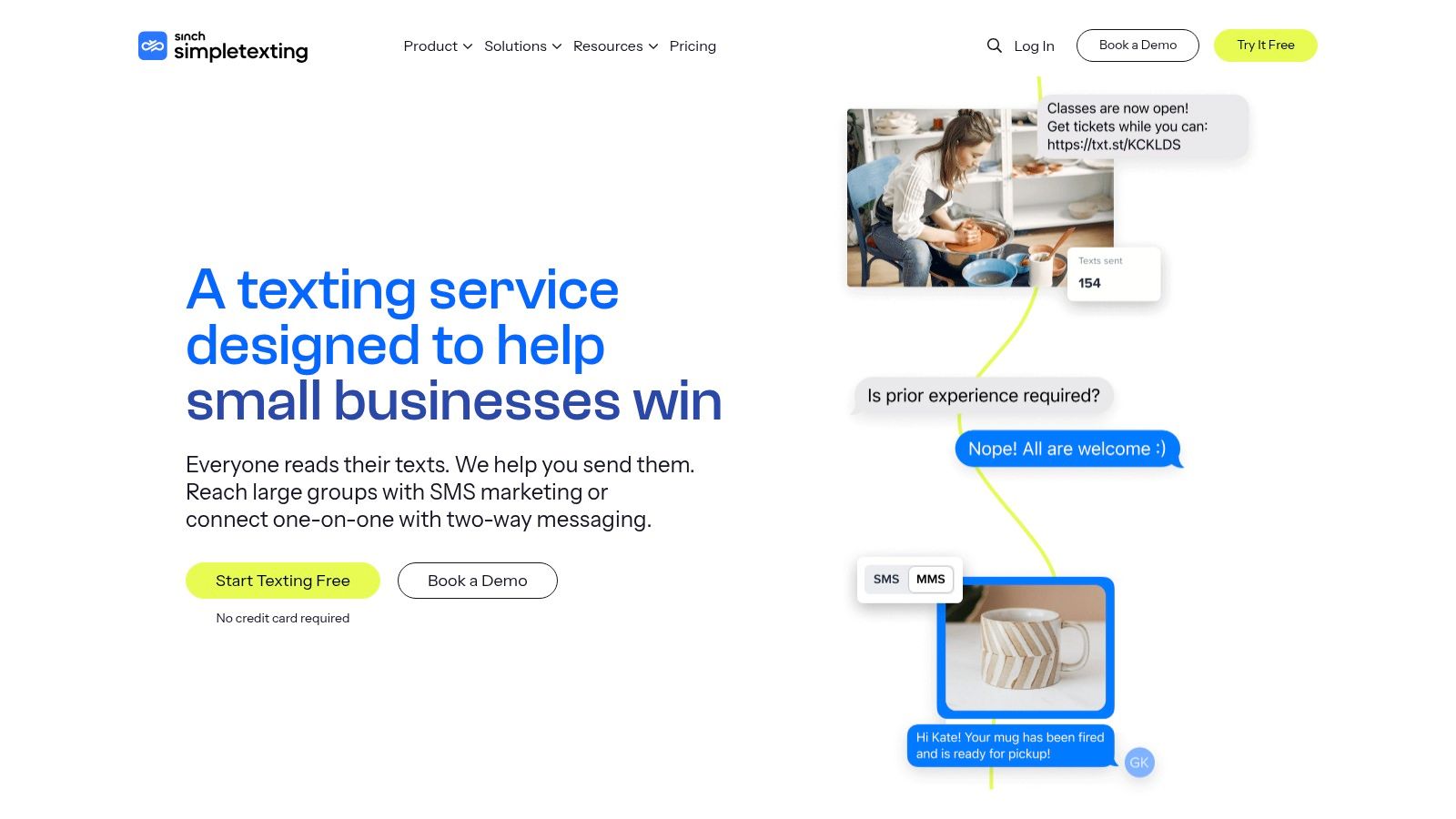
SimpleTexting fits stores that collect subscribers from real-world intent, not just onsite popups. A customer texting in from a sign at the register wants something different from a customer opting in during checkout. SimpleTexting is useful because it keeps those entry points easy to build and easy to manage.
That matters if your SMS program starts with the signup promise. “Text for event reminders” needs a different flow from “Text for weekly specials” or “Text for customer support.” SimpleTexting gives you the basics to set that up cleanly: keywords, web forms, autoresponders, scheduling, and two-way conversations.
A practical setup often looks like this:
- A keyword list for in-store or packaging-driven joins, such as “Text JOIN to get launch alerts”
- A service list for appointment reminders or support follow-up
- A local promo list for store-specific offers, event notices, or short-term sales
The platform is strongest when the join method is part of the offer. If the customer sees a QR code at an event, hears a creator mention a keyword, or reads a prompt on packaging, keyword opt-in is usually the shortest path from interest to consent. Stores building those flows can borrow ideas from this guide to text-to-subscribe keywords and enrollment flows.
SimpleTexting also changes how you should think about automation. Instead of building heavy ecommerce branching first, start with a fast confirmation text, a clear expectation, and one useful follow-up. For example: “You're in for weekend drops from our Austin store. Expect 1 to 2 texts per week. Reply STOP to opt out.” That message sets list intent better than a generic discount welcome.
The trade-off is clear. Stores that depend on browse abandonment, checkout events, product feeds, and revenue attribution by flow will usually want a deeper ecommerce setup than SimpleTexting is built for. Credit-based pricing can also get expensive if a list shifts from occasional reminders into frequent promotional sending.
For hybrid brands, local retailers, and service-led businesses with ecommerce on the side, SimpleTexting is often a good fit because it handles high-intent signup sources well and keeps two-way SMS practical.
7. SlickText
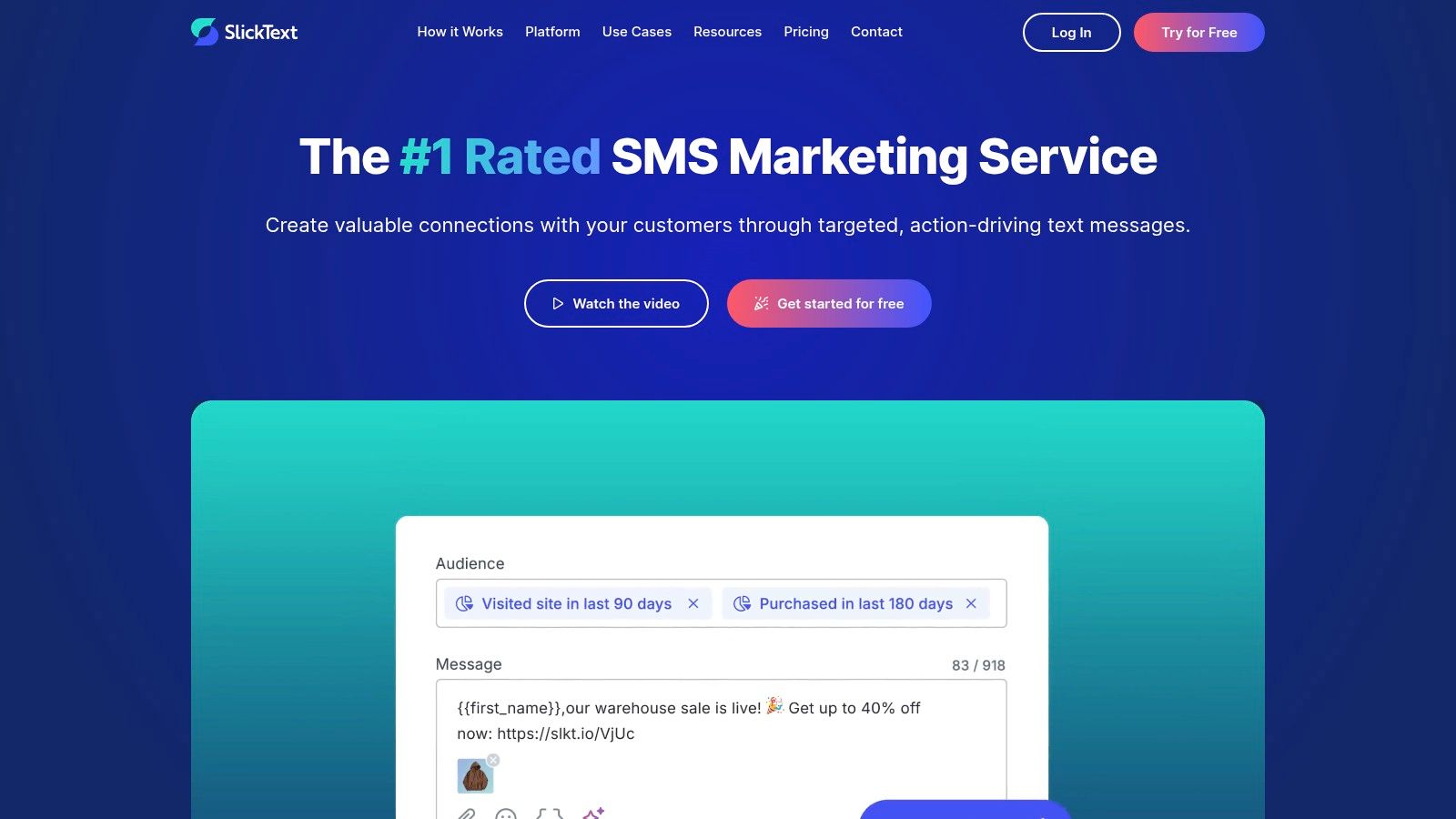
SlickText is one of the more practical tools for businesses that grow lists outside the classic online popup flow. If your customer acquisition happens in stores, on packaging, at the counter, through QR codes, or across multiple locations, SlickText is set up for that style of subscriber collection.
That makes it especially relevant for brick-and-mortar retail, franchise-style businesses, and service brands adding ecommerce rather than leading with it.
Good for on-site capture and team workflows
SlickText supports keywords, web forms, QR codes, widgets, drip campaigns, scheduled sends, and team features. Those are useful when store staff, local managers, or multiple operators need to contribute to list growth and sending.
This also pairs well with double opt-in logic. Guidance summarized by Attentive's SMS compliance overview recommends a separate, explicit permission layer and notes that two-step or double opt-in workflows can reduce compliance risk while improving list quality. For multi-location businesses, that's a practical safeguard.
A QR code on packaging should not funnel into the same messaging path as a checkout opt-in. SlickText gives you enough list-growth structure to keep those sources separated.
The trade-off is ecommerce depth. It isn't Shopify-specialized, so advanced abandoned-cart or viewed-product flows usually need more integration work than they would in Shopify-native platforms. As lists grow, message allotments may also force plan changes.
SlickText works best when your highest-intent lists begin in the physical world, then continue digitally. If that's your model, SlickText deserves consideration.
Top 7 SMS Sign-Up Tools Comparison
| Platform | 🔄 Implementation complexity | ⚡ Resource requirements | 📊 Expected outcomes | 💡 Ideal use cases | ⭐ Key advantages |
|---|---|---|---|---|---|
| YipSMS | 🔄 Low, one‑click Shopify install, minimal setup | ⚡ Low, pay‑as‑you‑go messaging; little dev work | 📊 ⭐⭐⭐⭐, strong SMS ROI for focused campaigns | 💡 Shopify merchants wanting SMS-only without changing email stack | ⭐ Fast deployment, transparent per-message pricing, Shopify-native |
| Postscript | 🔄 Medium, robust workflows; moderate setup for advanced flows | ⚡ Medium, plan + per‑message + carrier fees; migration support available | 📊 ⭐⭐⭐⭐, scalable results for DTC and Plus stores | 💡 DTC brands/Shopify Plus needing deep native workflows and scalability | ⭐ Deep Shopify integrations, mature playbooks and partner ecosystem |
| Attentive | 🔄 High, enterprise onboarding and managed services | ⚡ High, custom pricing, dedicated resources and services | 📊 ⭐⭐⭐⭐⭐, high-touch programs with strategic lift and AI optimization | 💡 Mid‑market and enterprise brands seeking managed growth & AI features | ⭐ Cross‑channel journeys, AI features, strong compliance & services |
| Klaviyo SMS | 🔄 Medium, easiest when Klaviyo is already in use | ⚡ Medium‑High, unified platform costs; per‑message rates vary by region | 📊 ⭐⭐⭐⭐, strong cross‑channel performance with unified profiles | 💡 Brands already using Klaviyo for email wanting unified orchestration | ⭐ Single customer profiles, unified flows and deliverability guidance |
| Omnisend | 🔄 Medium, standard setup for unified campaigns | ⚡ Medium, SMS credit model with public pricing calculator | 📊 ⭐⭐⭐⭐, predictable impact for merchants using multiple channels | 💡 Merchants wanting an all‑in‑one email+SMS tool with predictable costs | ⭐ Transparent SMS credits, published pricing, integrated automations |
| SimpleTexting | 🔄 Low, straightforward UI, quick onboarding | ⚡ Low, credit‑based plans and accessible API | 📊 ⭐⭐⭐, effective for SMBs, events, and 1:1 engagement | 💡 Non‑Shopify businesses, local services, events, and SMBs | ⭐ Easy to use, two‑way messaging, well‑documented API |
| SlickText | 🔄 Low‑Medium, easy subscriber growth tools, some setup for automations | ⚡ Low‑Medium, tiered message allotments; predictable plans | 📊 ⭐⭐⭐, solid for local/multi‑location reach and engagement | 💡 Brick‑and‑mortar, multi‑location businesses, agencies/resellers | ⭐ Transparent tiers, strong list‑growth tooling, agency support |
Turn Signup Intent Into a Smarter SMS Program
The best SMS setup usually starts smaller than merchants expect. Pick the list that matches the strongest customer need in your store right now, then write a signup promise that is specific enough to filter intent. “Get texts” is weak. “Text me when this item is back” or “Get early access to Friday drops” is much better.
Then connect that promise to one automation. If the promise is promotional, trigger a welcome offer and a limited campaign cadence. If it's restock, trigger product-specific alerts. If it's shipping, keep that consent and message path operational. If it's education, slow the pace and make the content useful.
Compliance matters just as much as conversion. A recent compliance summary noted that SMS consent must be explicit and separately captured, and also highlighted that the U.S. one-to-one consent rule was vacated in January 2025 while the revoke-all provision is delayed until January 31, 2027, which affects how merchants should approach consent UX and recordkeeping, as explained in Vibe Mobile's global SMS opt-in consent overview. In practice, that means your best list is the one with clear permission, clean records, and a message stream the subscriber expected.
Testing should stay disciplined. Change placement, incentive, timing, or frequency one at a time. Don't change everything at once or you won't know why results moved. This matters even more in recovery flows. Across 3,511,850 abandoned carts tracked from February 2024 to January 2025, 26.8% of delivered cart-recovery messages were clicked, 12.3% of those clicks became a recovered order, and the end-to-end recovery rate was 3.3% of delivered messages, according to CartBoss abandoned-cart SMS benchmarks. Subscriber capture before abandonment directly affects what you can recover later.
For Shopify merchants who want quick setup, SMS-focused workflows, list-growth popups, transparent pricing, and analytics without replacing the rest of their stack, YipSMS is one relevant option. But the better decision is always the platform and list mix that match your store's real operating model.
YipSMS Inc. gives Shopify stores a focused way to build the exact text lists covered here, from promotional and VIP signups to restock, cart, and shipping flows, without adding a bulky marketing stack. If you want one-click Shopify setup, list-growth popups, SMS automations, and transparent pricing built around ecommerce use cases, visit YipSMS Inc..