Best SMS Campaign Tool Picks for Shopify Stores in 2026
An SMS campaign tool earns its keep the day it can tell an abandoned cart from a repeat buyer. A blast tool can hit send and never see either one, and that blind spot is where texting either pays for itself or trains people to reply STOP. The reach is not theoretical. Text messages get read far more reliably than most marketing email, which is exactly why a dumb broadcast burns a channel people look at.
What fails is the software around the text. A real campaign tool has to sync Shopify data, grow a consented list, run recovery flows, keep delivery clean, and show a true cost per message after plan fees. If a platform cannot name the checkout someone left behind, it is a phone book with a send button.
This guide scores 10 options the way a store owner should: Shopify depth, list-building, automation, deliverability, and what you pay per text. I would rather you pick once than migrate a list after a bad contract. New stores should prove one abandoned-cart flow before any monthly commitment. Heavier brands can justify a suite.
Table of Contents
- 1. YipSMS Inc.
- 2. Postscript
- 3. Klaviyo
- 4. Omnisend
- 5. Yotpo SMS
- 6. Attentive
- 7. Shopify Messaging
- 8. SimpleTexting
- 9. SlickText
- 10. EZ Texting
- SMS Campaign Tools Compared
- Pick the Tool That Matches Your Sending Volume
1. YipSMS Inc.
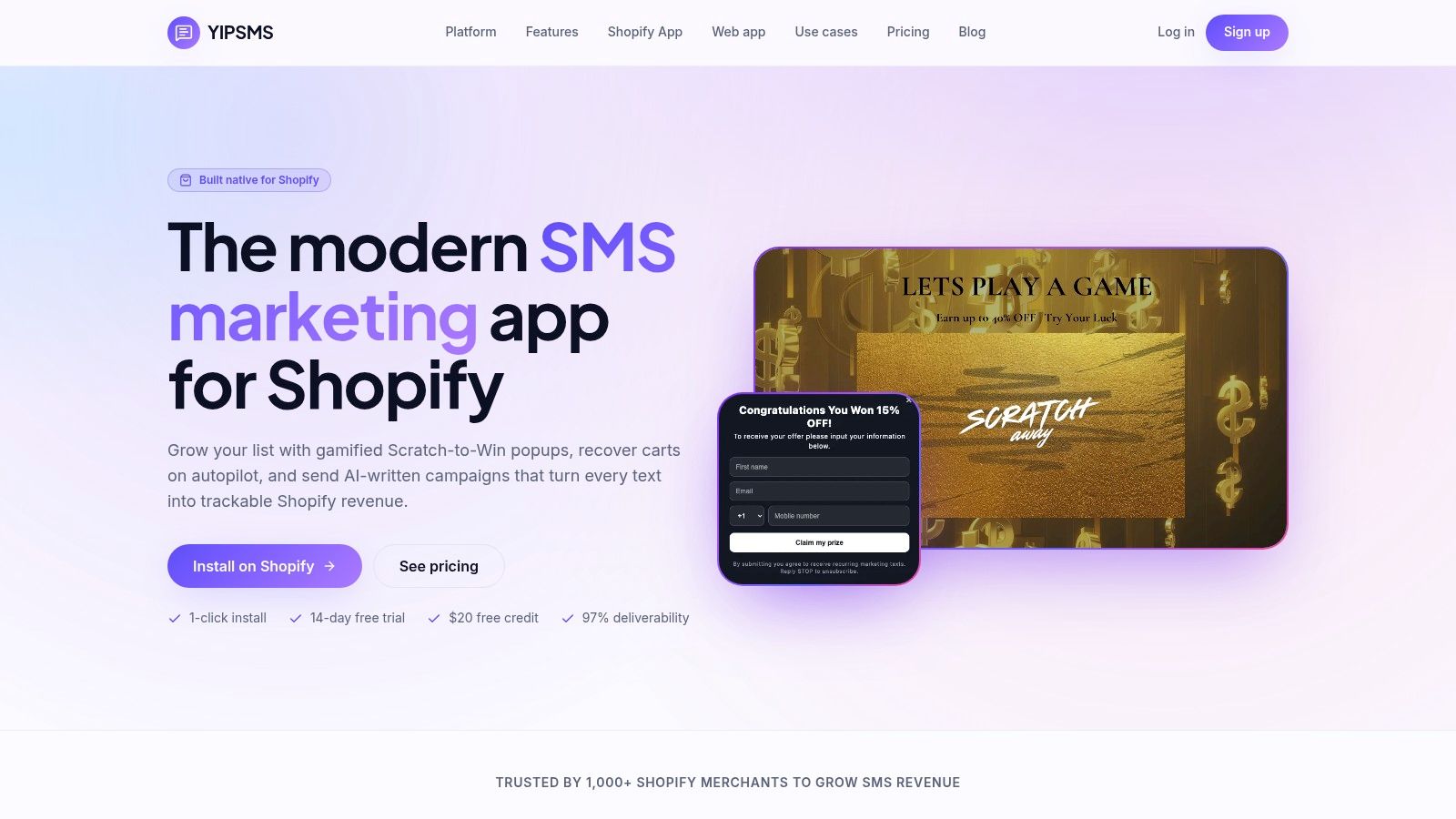
For a Shopify store that wants texts without a six-week build, this is the app I would install first. Installation is one click, and a first Scratch-to-Win popup plus an abandoned-cart automation can be live in under 10 minutes. You get a 14-day free trial, and new merchants receive $20 in free credit after a first review. There is no monthly app fee on top of message costs.
What you can actually run
List growth is not one popup. Standard popups and Scratch-to-Win popups capture phone, email, and name in one tap, with TCPA-compliant consent language and a privacy link built in. Scratch-to-Win generates Shopify discount codes on its own. Keywords, QR codes, AI chat, and a CSV import cover the rest, and every opt-in dual-writes into a master All Customers list.
Ten prebuilt revenue automations turn on with one click. That set covers cart and checkout recovery, a popup welcome, shipped and delivered notifications, an AI chat response, keyword opt-in replies, and entry into a Shopify segment. Campaigns can be SMS or MMS, with images, GIFs, or short video, and bulk sends reach thousands of contacts with personalization and dynamic fields. You can draft or tighten copy with AI in your brand tone, schedule by time zone, and send with trackable short links plus a one-off discount code written inline. STOP and HELP are handled for you, and opt-out language is added on every campaign.
The dashboard rolls campaigns, automations, and list growth into one revenue view. A conversion tracking pixel attributes revenue back to the campaign that drove it, and auto-shortened links give per-campaign click attribution. On cost: messaging is pay-as-you-go from an auto top-up wallet, with no contracts or surprise overages, and bulk SMS runs a flat $0.032 per segment. The Premium plan costs $299 a month and cuts SMS to $0.015 per message and MMS to $0.030, a 40% saving. YipSMS advertises 97% deliverability and says users report 5x to 7x returns with engagement lifts over 30%. Those are the company's figures, so prove your own on the trial.
Practical rule: Prove the cart flow on the trial credit before you step up to Premium just to chase the lowest per-text rate.
- Shopify data in one place: Segments, discount codes, and the master customer list sit inside the same workflow.
- Several list doors: Popups, scratch cards, QR codes, keywords, AI chat, and CSV import.
- Recovery without a builder marathon: Cart, checkout, welcome, and shipping flows are prebuilt.
- Cheapest per-text rate sits on Premium: The $299 plan buys $0.015 SMS and $0.030 MMS; standard bulk sends pay $0.032 a segment.
2. Postscript
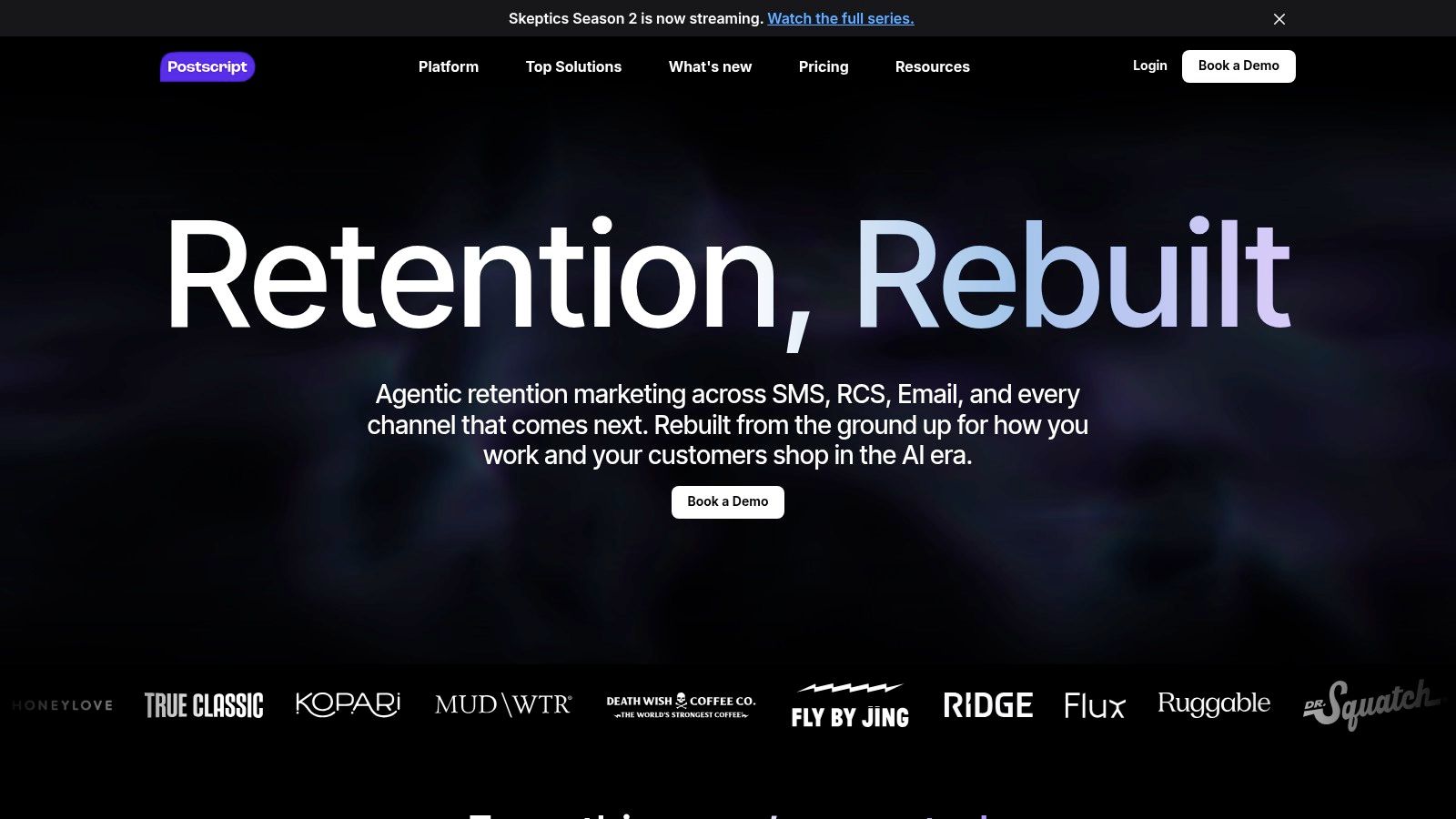
Postscript is an SMS product built around Shopify, not an email suite with text bolted on. Promotional campaigns and store-triggered flows live in the same place.
The useful part is depth inside Shopify: subscriber capture, store-behavior segments, scheduled sends, and two-way replies when someone texts back about a size or a delivery date. Reporting aims at conversions and ROI, which is the scoreboard that matters if you judge texts against orders rather than clicks.
I would look here when the shop already runs on Shopify events and you want those triggers native. The trade-off is narrowness. A Shopify-only text platform is strong while your list, offers, and replies stay inside that store, but it will not give you the shared email-and-SMS profile a suite gives you.
Public pricing makes the starting bill easier to inspect than a custom quote, but the Starter tier carries a monthly minimum spend and carrier fees sit on top, so model the full monthly invoice rather than the per-message rate. Hands-on onboarding is tied to higher tiers, so a one-person team may pay for support it will not use.
A Shopify-only text platform is a strength until you also need email on the same profile. Then you are funding a second system.
- Ecommerce is the job, not a template pack. Campaigns, automations, and list growth ship together.
- The full invoice is higher than the headline rate. Minimum spend and carrier fees both count.
- Support depth follows the tier. Confirm what you get before you outgrow Starter.
See the product at Postscript.
3. Klaviyo
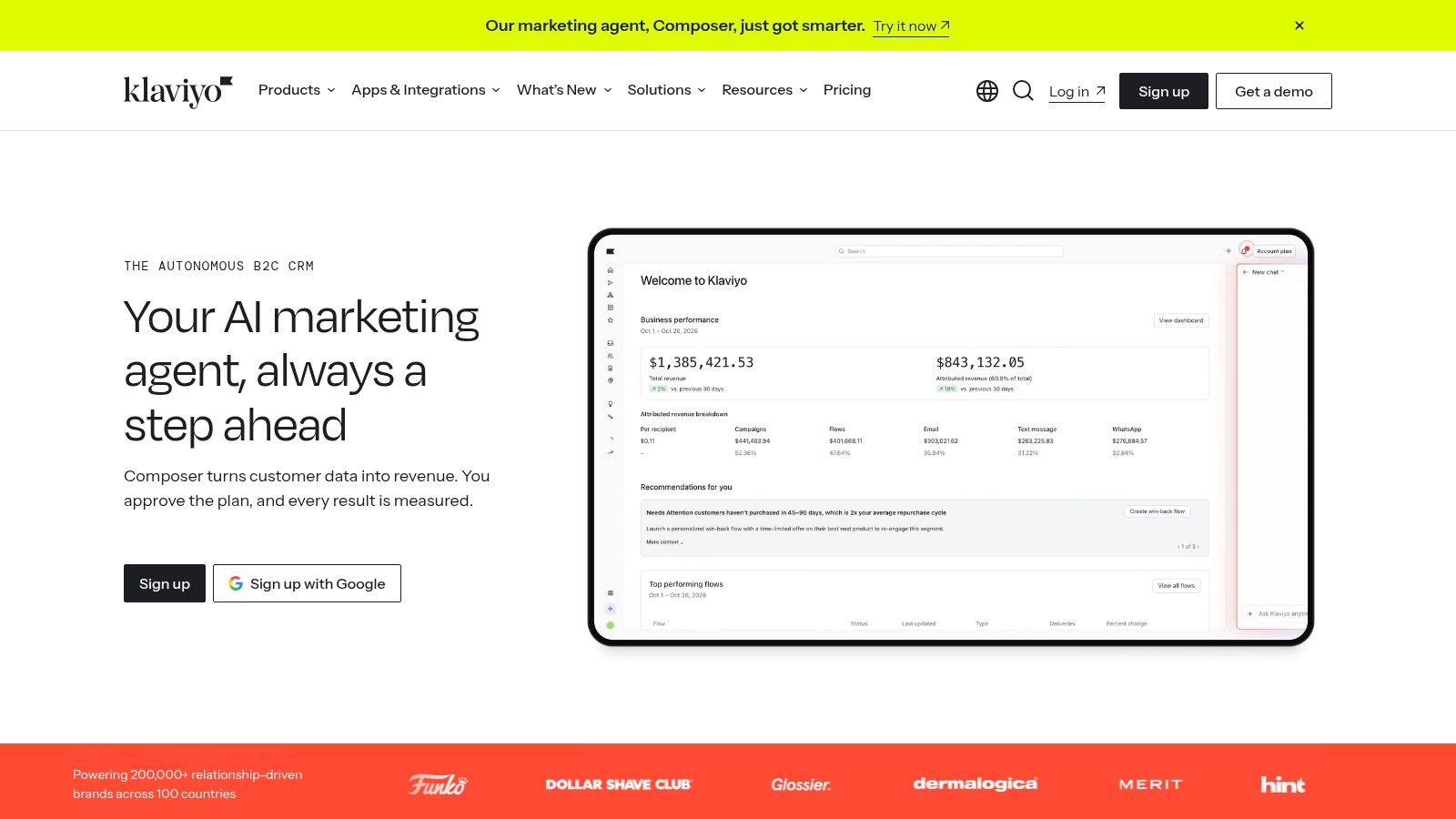
If email already runs in Klaviyo, adding SMS there is often smarter than teaching a second tool your purchase history.
Shared profiles mean a cart-recovery text and a later email can see the same orders, without a Monday CSV export. Signup forms and the Shopify integration feed that profile. Flows, campaigns, and reports live in one system. A free plan exists, with limited included messaging, which is enough to test tone before you fund a real send.
SMS spend is separate from email and changes with destination and message type. If you only want occasional blasts, the platform is heavier than the job. The learning curve shows up when you build advanced segments. For a team that already lives in email tools built for high-growth brands, that curve is the price of keeping channels from contradicting each other. I would not buy Klaviyo for SMS alone.
- One customer record drives both email and text.
- Purchase history can target replenishment and win-back without a second database.
- A second meter still applies, so model SMS cost apart from the email plan.
Start at Klaviyo if the shared profile is the point.
4. Omnisend
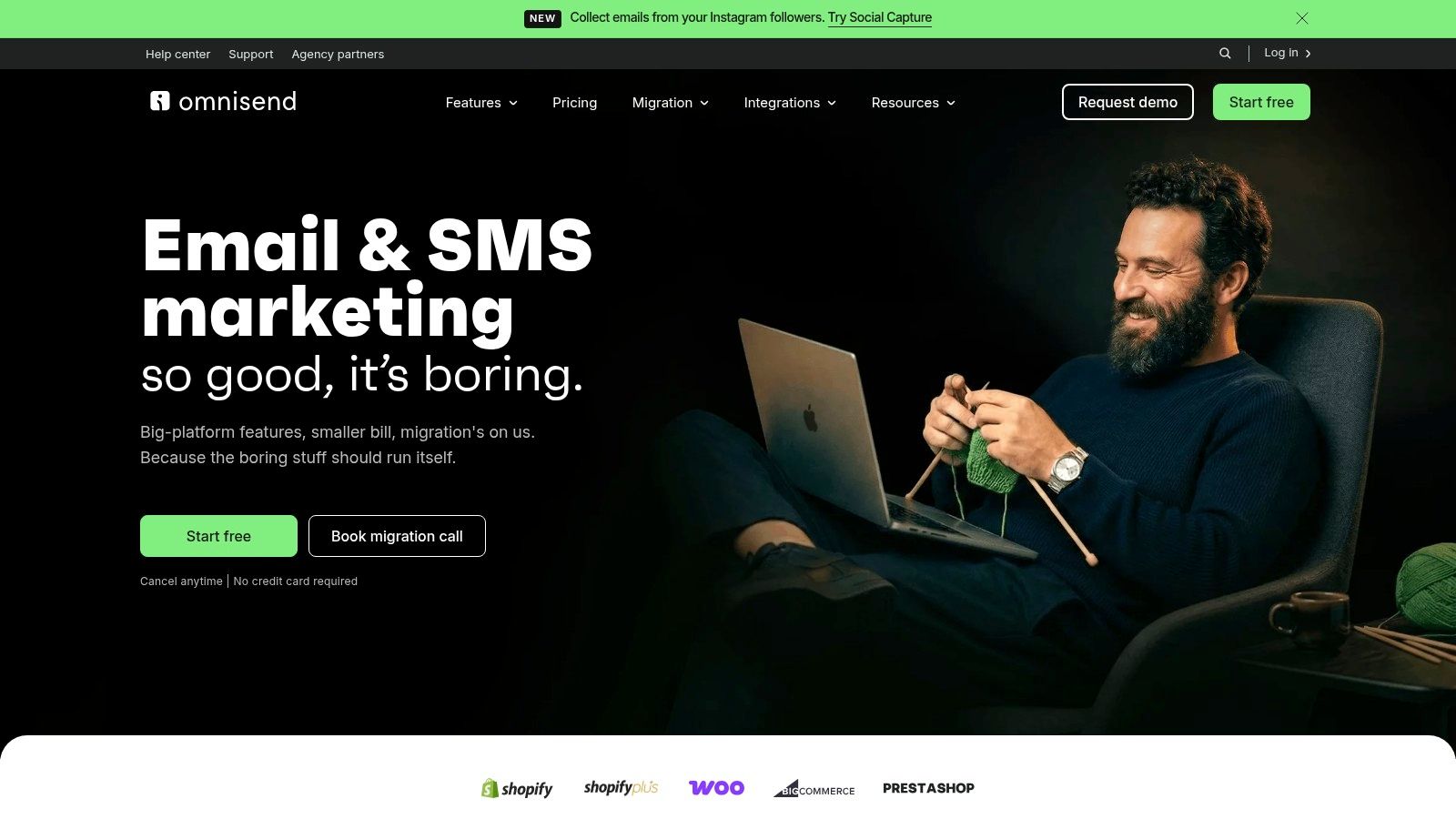
Say you already send a post-purchase email, a browse reminder, and a web push from the same calendar. Omnisend is built for that shared workflow, with SMS as one channel rather than the whole product.
Campaigns, scheduling, segmentation, signup forms, tracked links, and reporting are all there. Ecommerce automations and templates assume orders, not generic newsletters. You can test messages and drop SMS into a multichannel flow instead of running a separate blast calendar. Public SMS rates help you estimate cost before the first send, which many suites hide behind a sales call.
The catch is volume and destination. Rates change by country and by how much you send. The lowest advertised US rate applies only at higher volumes and only on the Pro plan, so a small list will not see that number. If you text twice a month and do nothing else, the broader platform is overhead. Use it when email, SMS, and push should share one suppression story.
Details are on Omnisend.
5. Yotpo SMS
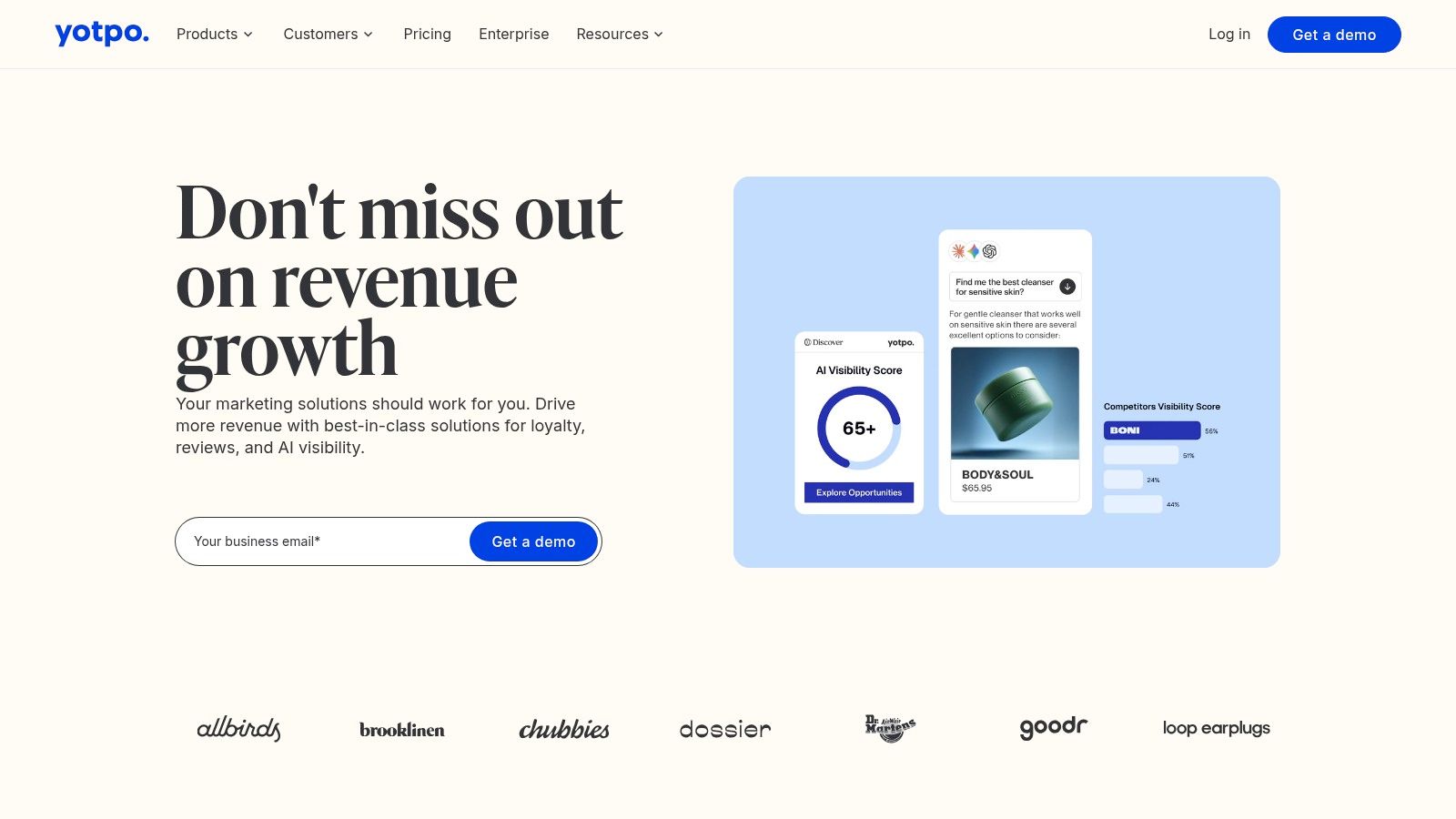
Yotpo SMS makes sense when reviews or loyalty already sit in Yotpo and you are tired of stitching another login onto retention.
SMS and email marketing for ecommerce share a Shopify sync, so campaign audiences can draw on customer data you already store. The fit is retention, not a generic inbox: reviews, loyalty, and texts can point at the same buyer if you use those products. A connected suite can mean fewer exports between tools.
The value drops if you only own one Yotpo product. SMS plan and usage costs should be confirmed with the vendor before you model margin, because a suite quote is not a per-text rate you can read off a public page. A multi-product platform is also more to learn than a standalone Shopify SMS app. I would choose it to reduce fragmentation, not to send a first broadcast.
Look at Yotpo SMS only after you list which Yotpo products you will turn on.
6. Attentive
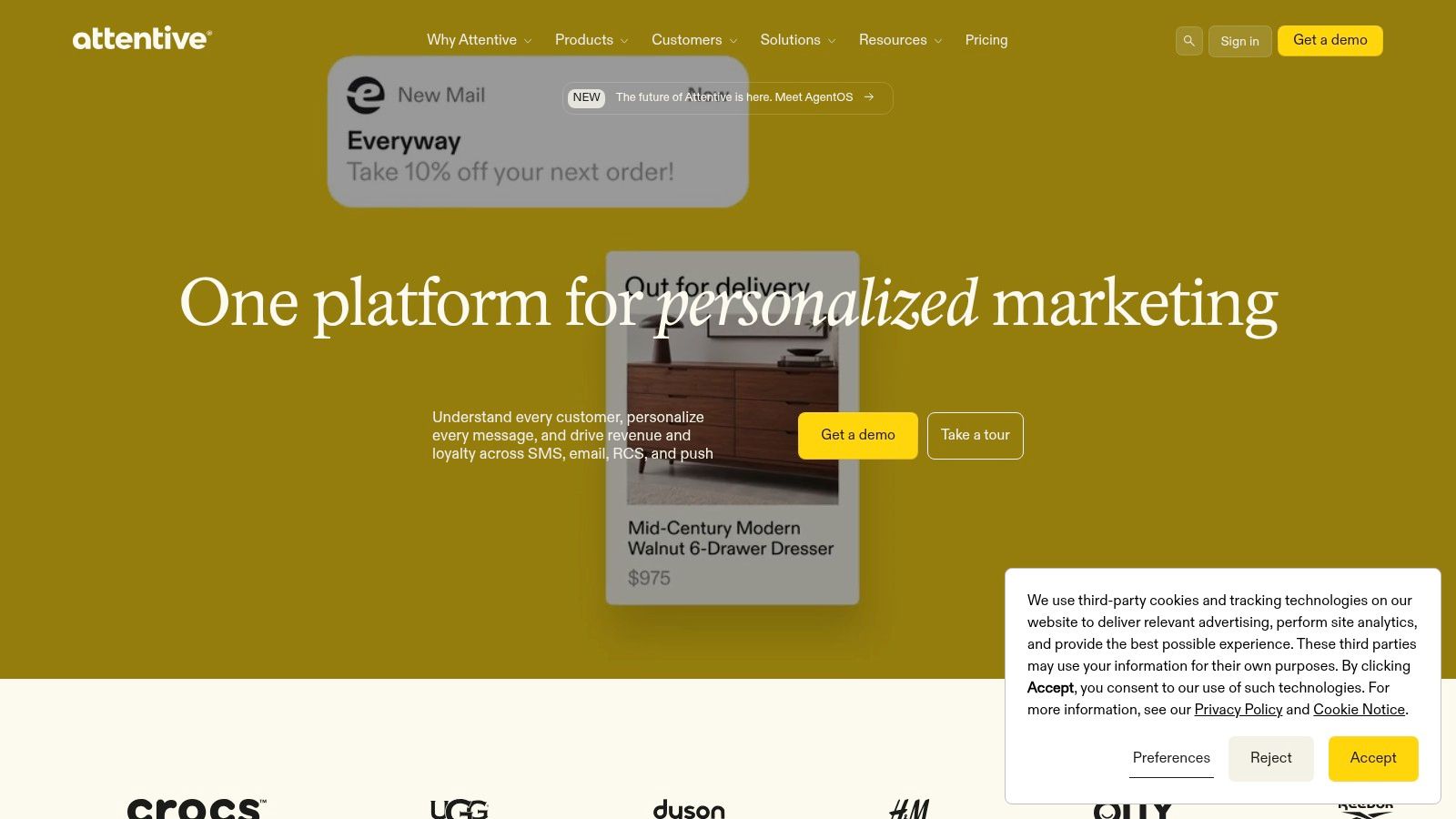
Attentive is aimed at brands that already treat mobile as a program, not a side test. The Shopify integration syncs subscribers and consent, builds segments from store data, runs transactional journeys, and replenishes discount codes so a code is not reused until it breaks.
That is the right shape when you send enough that targeting and onboarding matter more than a self-serve toggle. Subscriber growth and transactional texts are first-class, which helps if order updates and promos must stay on different consent rules. A small or new list will not use most of that depth.
Attentive's pricing is quote-based, so request a quote before you compare it with other options. Before you sit through that call, read a plain breakdown of SMS marketing cost and write down your monthly volume, MMS share, and country mix. Ask about onboarding time and contract minimums in the sales process, not after the list is migrated.
The site is Attentive.
7. Shopify Messaging
Shopify Messaging keeps campaign setup inside the Shopify admin. You can schedule promotional texts and automate messages for abandoned checkout, cart, or product browse. Sends go to customers who opted in, and only in supported regions. Opt-out details are built in, and you can use Shopify customer segments instead of rebuilding audiences.
It is a fair way to learn whether texts move orders without adopting another marketing platform. Common abandonment cases are covered. You are not waiting on a vendor to map your checkout.
Limits show up fast. Available countries and message pricing follow Shopify's current rules, so check both before you promise a launch date to a client in another market. Campaign and automation depth will not match a dedicated SMS campaign tool once you want win-back logic, MMS creative, or a shared inbox. Explicit SMS opt-in is required. Email consent does not substitute.
If you outgrow the admin tools, compare them with a Shopify SMS app that still reads the same store data. The native option lives at Shopify Messaging.
8. SimpleTexting
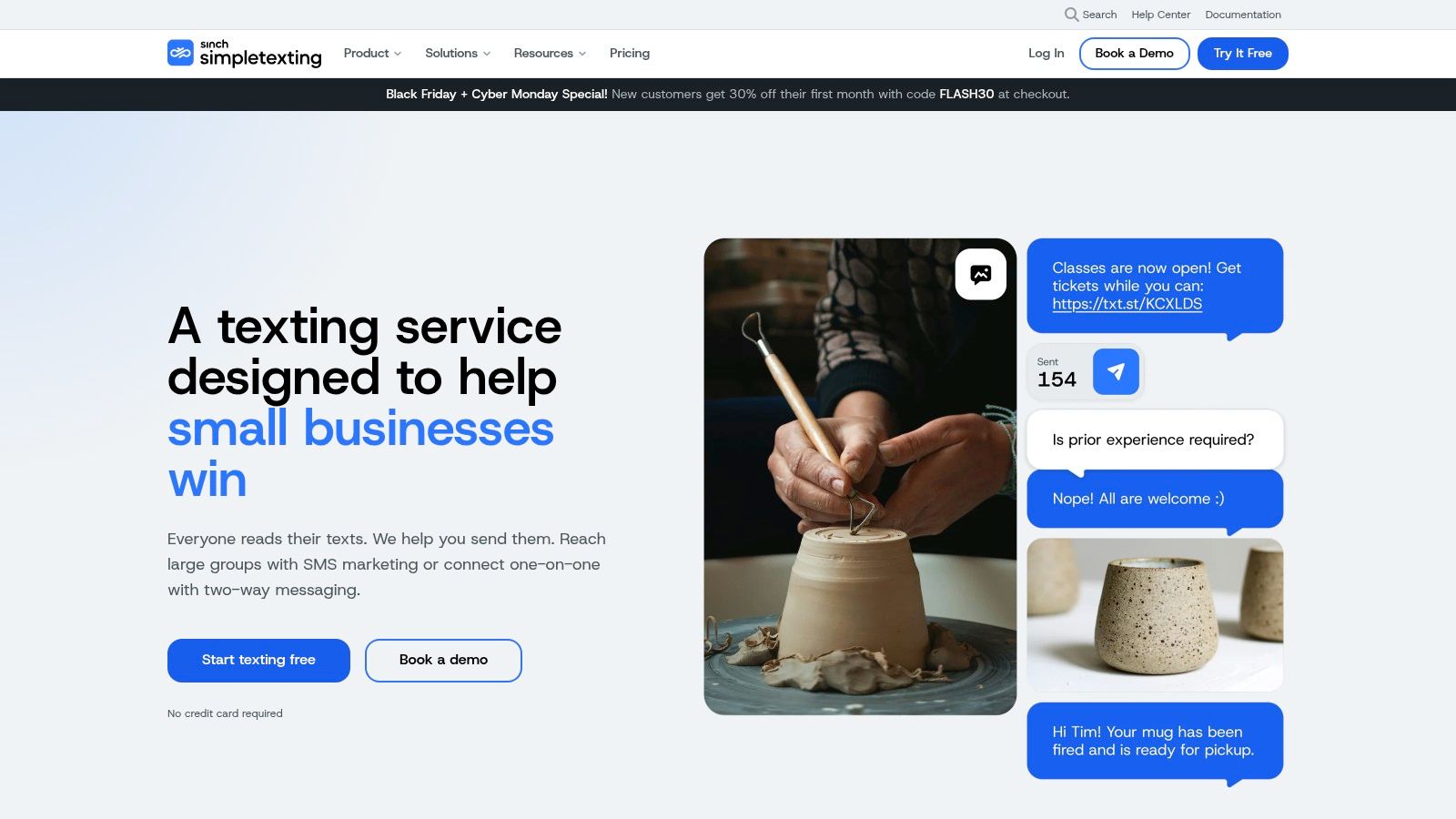
SimpleTexting fits a small team that wants broadcasts, replies, and a clean contact list more than a Shopify journey map.
You get mass texting, two-way threads, auto-replies, drip campaigns, and MMS. Keywords, signup forms, and segments handle list growth. Analytics and API access are there if a developer later connects another system, including tools such as Zapier. A free trial does not require a credit card, so you can send to yourself before finance approves a plan.
It is less Shopify-centered than Postscript or Omnisend. Abandoned checkout will not appear as a native trigger the way it does in a store app. MMS, long messages, extra numbers, and carrier fees all move the cost per delivered text. Deeper automations can mean extra setup. Use it when conversation and simple campaigns are the job, and Shopify events are occasional.
Try it at SimpleTexting.
9. SlickText
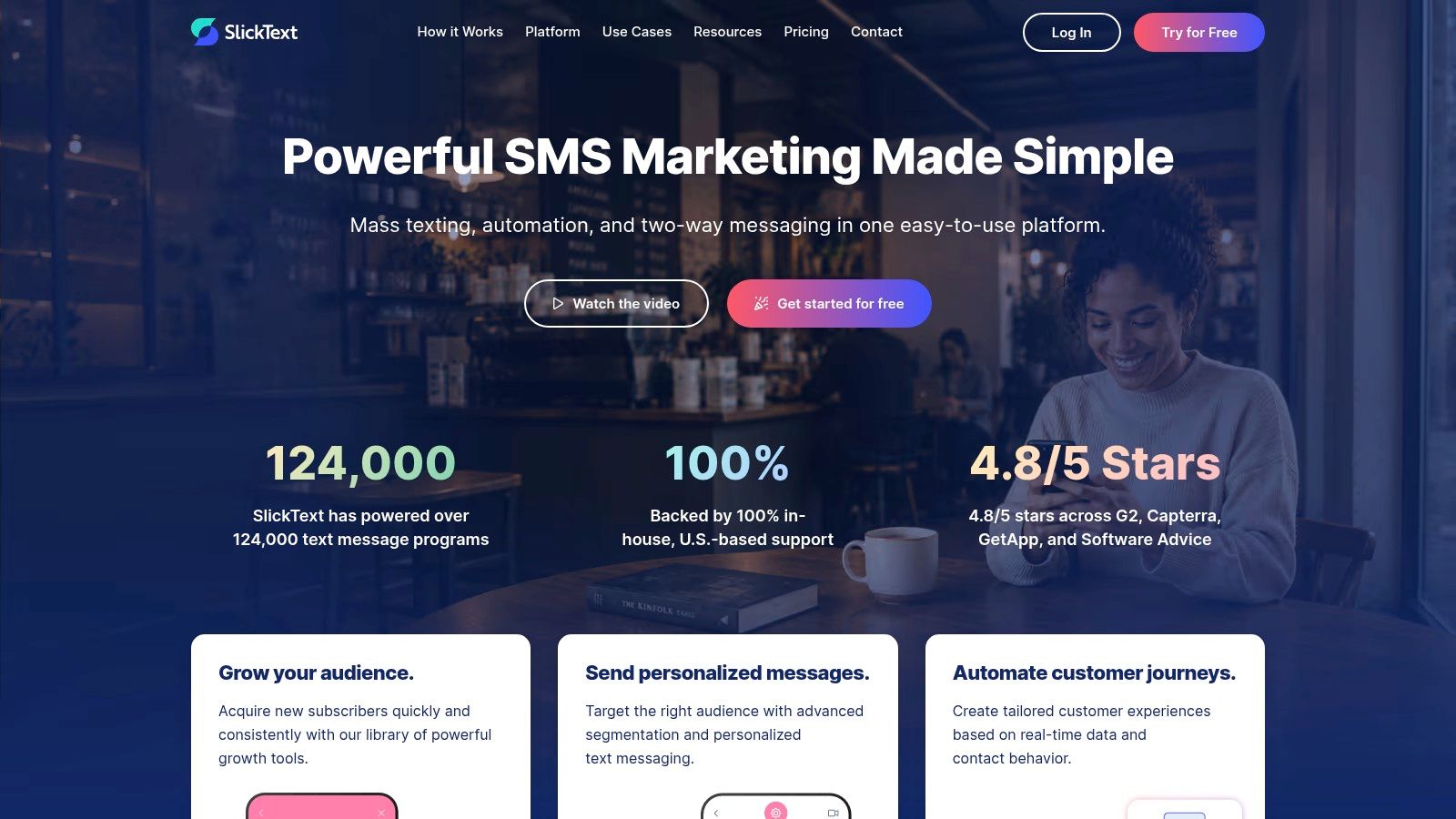
SlickText prices by monthly message credits, which makes plan shopping more honest than a vague "contact sales" page.
Mass texting, scheduled campaigns, and workflows sit with list-building and contact management. You can choose a local number, a toll-free number, or a short code. Listed plans include unlimited contacts and, according to the pricing page, the full feature set. Live support is included. One-to-one onboarding starts on plans from $129.
Coverage is the hard limit. Listed SMS sending is the United States and Canada. If you ship to the UK or the EU, this is the wrong default. Carrier fees and some number types cost extra. A long message or an MMS can burn more than one credit, so a "500 text" plan is not 500 picture messages. Compare credits to your real segment count, not to the marketing headline.
Plans are listed at SlickText.
10. EZ Texting
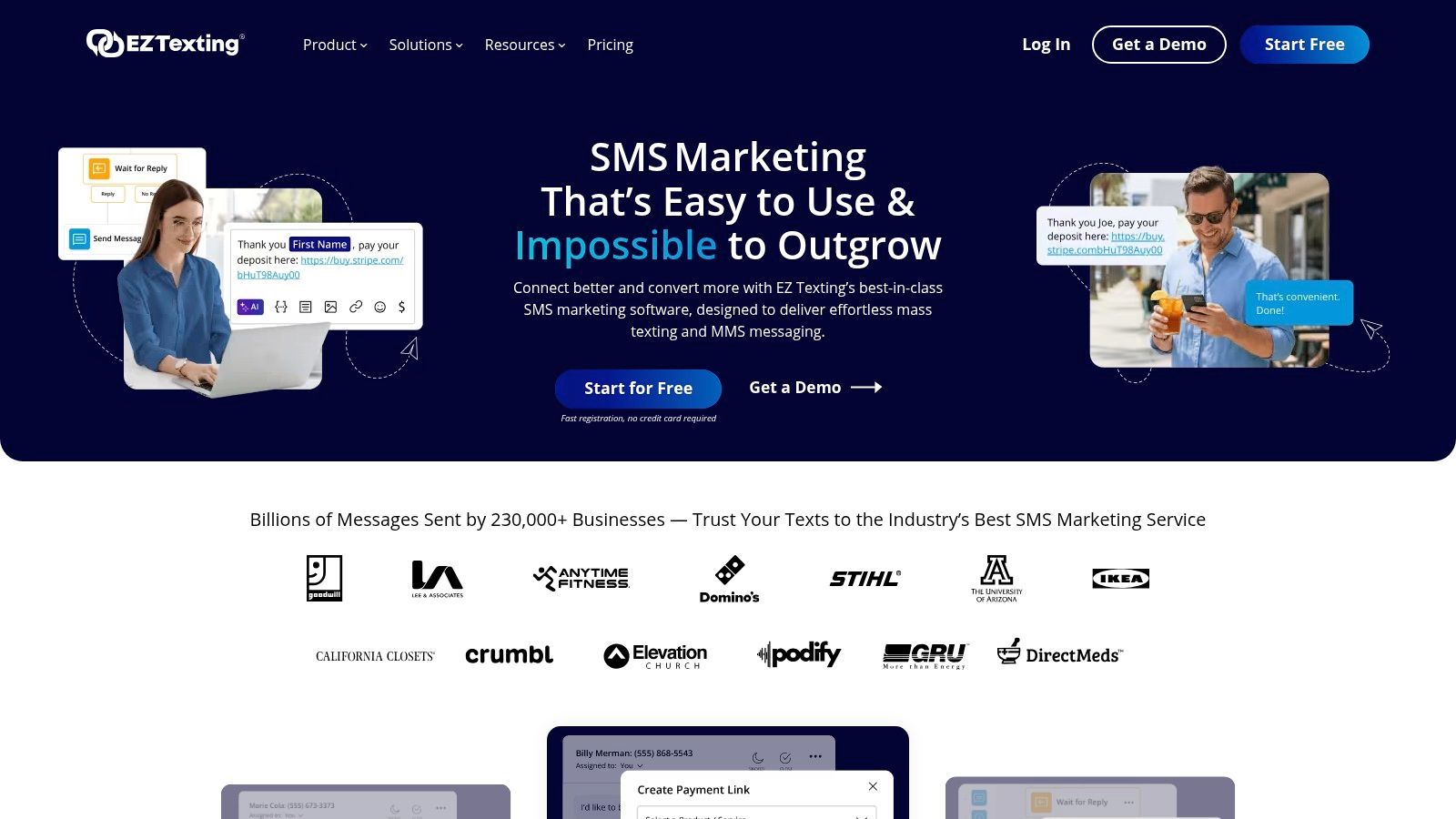
EZ Texting is a browser-based SMS and MMS platform for list blasts, replies, keywords, forms, scheduling, and basic automation. You do not install desktop software. Public plans and a 14-day trial give you a way to click through before you commit. Incoming replies are free according to its FAQ, which matters if customers text back.
It is a general business texting tool, not a Shopify customer-journey platform. You will not get cart and checkout events as a native spine. Plans use message credits, and MMS consumes more credits than SMS. Telecom fees and overage terms belong in the comparison spreadsheet, not in a footnote you find after month two.
Number type changes both deliverability and price. Read a practical long code versus short code note before you rent a code you do not need. Then price the plan at EZ Texting against the credits you will really burn.
SMS Campaign Tools Compared
The differences sit in how each tool bills, how thoroughly it reads Shopify data, and what it can automate on its own.
| Best For | Pricing Model | Shopify Integration | Automation Depth |
|---|---|---|---|
| YipSMS Inc., Shopify merchants seeking SMS growth and sales recovery | Pay-as-you-go with auto top-up wallet; SMS from $0.015 per message on Premium ($299/month) | Native Shopify integration with customer and segment syncing and discount codes | Strong: cart recovery, welcomes, shipping updates, and AI-assisted campaigns |
| Postscript, Shopify merchants focused on SMS campaigns and subscriber growth | Starter has a $49 monthly minimum; carrier fees extra | Shopify-connected campaigns, automations, and audience tools | Strong: cart recovery, welcome, and win-back flows |
| Klaviyo, Teams coordinating email and SMS marketing | Free plan with limited messaging; SMS billed separately | Shopify integration with shared customer and purchase data | Strong: automated multichannel flows and segmentation |
| Omnisend, Ecommerce teams managing SMS alongside other channels | Usage-based; rates vary by destination and volume | Ecommerce-focused integration for campaigns and workflows | Strong: multichannel automations, templates, and segmentation |
| Yotpo SMS, Stores already using Yotpo retention products | Confirm plan and usage costs with vendor | Shopify integration with customer-data syncing and Yotpo products | Moderate: ecommerce campaigns and retention use cases |
| Attentive, Larger brands investing in mobile messaging | Quote-based; public pricing not listed | Shopify subscriber syncing, store-data segments, and discount codes | Strong: transactional messaging journeys and targeted campaigns |
| Shopify Messaging, Merchants testing basic SMS within Shopify | Pricing and availability depend on Shopify rules | Built into Shopify admin with customer segments | Basic to moderate: checkout, cart, and browse automations |
| SimpleTexting, Small teams prioritizing broadcasts and two-way texting | Plan-based; extra costs may apply for MMS, numbers, and carrier fees | Less Shopify-centered; integrations include tools such as Zapier | Moderate: auto-replies, drip campaigns, and basic automations |
| SlickText, Businesses seeking credit-based SMS with broad features | Monthly message-credit tiers; additional fees may apply | No specific Shopify integration details provided | Moderate: scheduled campaigns and workflow automation |
| EZ Texting, Small businesses focused on broadcasts and replies | Credit-based plans; MMS and telecom fees may add costs | General business texting platform, not Shopify-focused | Moderate: scheduling and general-purpose automation |
A pricing cell only shows the entry rate. Carrier fees, MMS rates, and monthly minimums decide the actual cost per delivered message, so run a month of your projected sends through two or three of these plans before you commit.
Pick the Tool That Matches Your Sending Volume
Match the platform to the stage you are in. A new Shopify store should start on a native app with a free trial, turn on one abandoned-cart flow, and read incremental orders before any monthly plan. A brand that already runs email should weigh a multichannel suite so SMS and email do not double-count the same buyer. A high-volume program can justify enterprise onboarding, a dedicated number, and a human who answers when a carrier filter spikes.
Volume is rising, which is not the same as profit. SimpleTexting's 2025 statistics roundup notes that one 2025 ecommerce report recorded 31% year-over-year message growth, and that 84% of surveyed U.S. consumers had opted in to business SMS. More sends without a holdout just move discounts earlier. I would track net revenue after message cost, discounts, and refunds, and I would cap frequency when unsubscribes climb. Open rate is a weak target. Delivered does not mean the text created a sale.
If you sell into the UK, do not copy a US checkout box and call it consent. The ICO's PECR guidance on electronic marketing says permission for email does not automatically cover texts. Use a separate, unticked SMS opt-in, store the wording and the time, and put a visible STOP on promotional messages so every flow shares one suppression list. Automation that keeps its own recipient rules will text someone who already opted out. Agencies should not move a subscriber from one client brand to another without consent that names that business.
For a first campaign this week, I would not start with a contract. YipSMS's 14-day free trial, pay-as-you-go pricing with no monthly app fee, and $20 credit after a first review is the lowest-risk way to send. Install, launch the cart flow, and judge it on orders you would not have had.
YipSMS Inc. is a Shopify SMS campaign tool for list growth, cart and checkout recovery, and repeat-purchase texts, with one-click setup, prebuilt flows, and pay-as-you-go rates. If you want to send a first campaign this week without a monthly app fee, start on the 14-day trial and the review credit, then keep the flow only if the orders are incremental. Visit YipSMS Inc. and turn on one abandoned-cart automation before you add another broadcast.
How this article was made: the YIPSMS team drafts some articles with AI writing tools, then checks pricing, compliance and product details against how YIPSMS actually works before publishing. Spotted something wrong? Tell us through your YIPSMS account.