8 Out of Stock Messages That Convert
An out-of-stock notice can end a purchase journey, or it can give the shopper a reason to stay engaged. The difference is rarely the apology itself. It's the next action: join a restock list, choose an available alternative, reserve a future shipment, or receive priority access.
The scale of the problem makes that action commercially important. IHL's retail analysis estimated that inventory distortion could still cost around $1.7 trillion globally in 2026, equivalent to 6.2% of worldwide retail sales. The same coverage attributed $634.1 billion of the earlier annual loss to out-of-stocks. Retail Insight Network's inventory distortion coverage shows why out of stock messages deserve more attention than a generic “sold out” label.
The eight templates below are organized around distinct recovery strategies. Each one connects the message to timing, segmentation, inventory safeguards, and a measurable SMS action. The examples are ready to adapt for Shopify stores, whether you're trying to recover a viewed product, protect a loyal customer relationship, increase basket size, or learn which products deserve a restock.
YipSMS can support Shopify-based automation, scheduled campaigns, audience segmentation, product follow-ups, and analytics. The strongest flow starts at the product page, captures consent while intent is high, and sends only when the inventory event and audience conditions match.
Table of Contents
- 1. The Urgency-Driven Restock Alert
- 2. The Transparency and Honesty Approach
- 3. The Exclusive Early Access and VIP Waitlist
- 4. The Alternative Product Recommendation Bundle
- 5. The Pre-Order and Inventory Roadmap Transparency
- 6. The Scarcity and Social Proof Combo
- 7. The Cross-Sell and Complementary Product Strategy
- 8. The Customer Feedback and Demand-Driven Restock Priority
- 8 Approaches to Out-of-Stock Messaging
- Build the Right Restock Flow for Every Customer
1. The Urgency-Driven Restock Alert
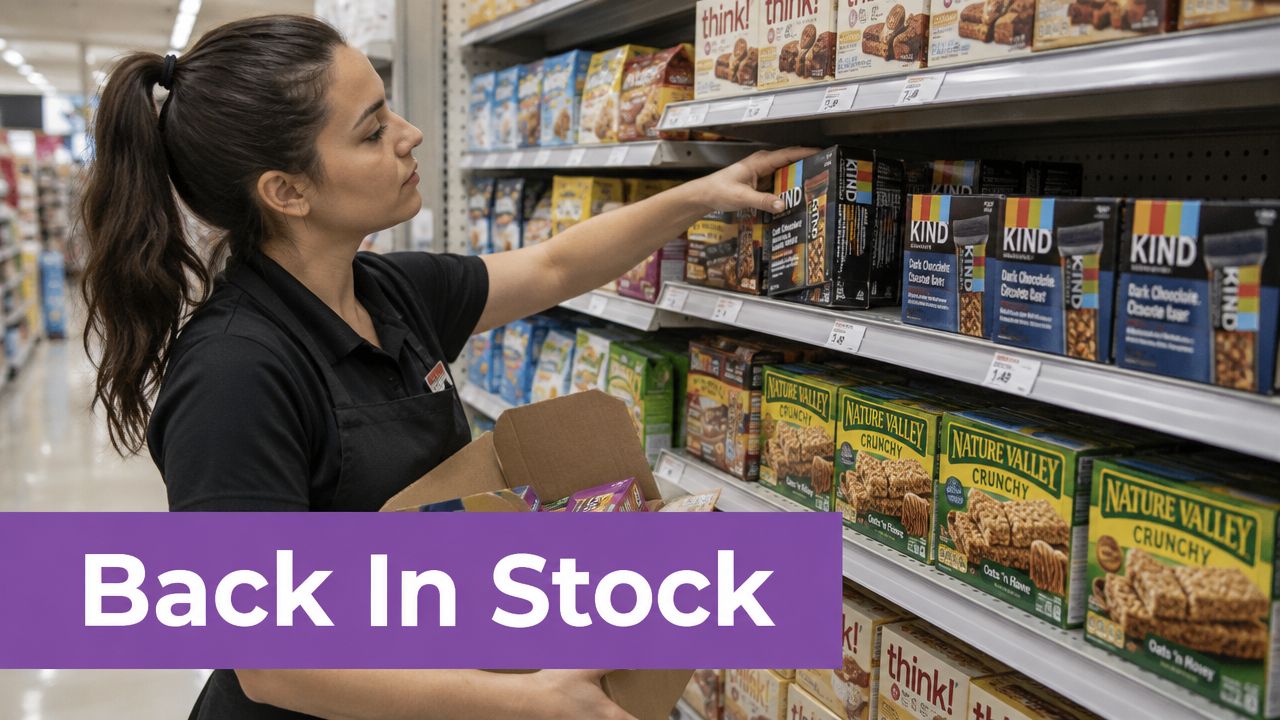
A restock alert works best when the customer has already shown intent. Someone who viewed a limited-edition sneaker, added activewear to a wishlist, or searched for a cult-favorite beauty product doesn't need a broad promotion. They need a timely message that says the specific item is available again.
SMS template
Your wishlist item is back: [Product Name]. Stock may move quickly. Shop now: [Link] Reply STOP to opt out.
The urgency should reflect reality. Don't add “selling fast” unless the inventory system confirms limited availability or the product has a reliable history of quick sell-through. A false scarcity cue might produce a click today, but it can weaken trust when customers see the same claim repeated.
Set the trigger around intent
Connect the restock event to real-time inventory data, then filter the audience before sending. Suitable segments include shoppers who viewed the product, added it to a cart, joined a wishlist, or previously purchased a related variant. A customer who has never interacted with the product shouldn't receive the same alert as someone who tried to buy it.
YipSMS can connect a Shopify back-in-stock workflow to the product or variant becoming available, sending an SMS to opted-in subscribers for that item. Its back-in-stock notification workflow is most useful when the trigger, product link, consent status, and inventory condition are handled together.
Use the product name as a personalization token and add an image when the channel supports it. Test the send window for your own audience rather than assuming every customer responds at the same moment. Track clicks, purchases, sell-through, and unsubscribe activity by product. A restock alert that drives fast clicks but creates overselling or customer-service complaints needs a better inventory safeguard, not a louder message.
2. The Transparency and Honesty Approach
A clear availability update protects the relationship when the restock date is uncertain. The message should acknowledge the disappointment, explain what the shopper can do next, and avoid promising a date that the operations team can't support.
SMS template
[Product Name] is temporarily out of stock, and we're sorry we missed you. Join the waitlist for a restock alert or explore similar styles: [Link] Reply STOP to opt out.
This approach fits products affected by supplier delays, seasonal production, sustainability constraints, or unpredictable demand. Patagonia, Warby Parker, and Allbirds are useful reference points for the kinds of customer conversations involved: supply availability, frame wait times, and product constraints all require more context than a bare “sold out” label. Use those brand contexts as inspiration, not as claims about a particular campaign.
Give the customer a useful alternative
The product page should offer a waitlist signup, a comparable in-stock item, or a pre-order path when one is available. A popup can capture the shopper's phone number and the exact product or variant they want. YipSMS's drag-and-drop popup designer can support that capture point, while its automation can send an availability update soon after depletion rather than leaving the shopper to discover the problem later.
A pre-order message needs a plain fulfillment explanation:
[Product Name] is available for pre-order. Orders ship after [clearly stated fulfillment milestone]. Reserve yours here: [Link] Reply STOP to opt out.
Don't hide the expected timeline in a terms page. Send a separate shipping update to pre-order customers before the item is replenished, then move them into the ordinary post-purchase flow once the order is fulfilled.
Structured product information also matters for pages that display availability, pricing, or offers. Review product schema markup for Shopify alongside the visible message so search engines and shoppers receive consistent information. Use analytics to identify which out-of-stock products generate the strongest waitlist or pre-order interest, then feed that demand into purchasing decisions.
3. The Exclusive Early Access and VIP Waitlist
Scarcity becomes a loyalty tool when access is earned rather than randomly distributed. Reserve a restock window for customers who have demonstrated value through a loyalty program, repeat purchases, or meaningful engagement. Then make the benefit concrete, not vague.
SMS template
As a [Tier Name] member, you have first access to [Product Name]. Shop before public availability: [Exclusive Link] Reply STOP to opt out.
This format suits launches and limited restocks associated with brands such as Yeezy and Adidas, Sephora's VIB Rouge program, or Supreme-style drop experiences. The key lesson isn't to copy those brands. It's to define who qualifies, what access they receive, and when public inventory opens.
Make the privilege measurable
Your VIP segment might include loyalty members, repeat purchasers, high-value customers, or subscribers in a clearly named tier. Don't change the rules from one restock to the next without telling customers. If a customer receives VIP treatment once and loses it without explanation, the program feels arbitrary.
YipSMS segmentation can separate VIP recipients from the standard restock audience. Use a dedicated link or code so you can attribute purchases to the access window, then trigger a post-purchase message that thanks the customer for their loyalty. A practical sequence looks like this:
- Audience rule: Include only customers who meet the published VIP condition.
- Inventory rule: Release only the quantity that the warehouse can fulfill.
- Message rule: State the access benefit and product clearly.
- Measurement rule: Track clicks, purchases, code use, and opt-outs separately.
The text message sign-up guidance from YipSMS can help you build the permission layer before the restock occurs. Don't use a VIP message to disguise ordinary inventory scarcity. It should reward a real relationship and give recipients a reason to remain subscribed.
4. The Alternative Product Recommendation Bundle
An out-of-stock product doesn't always mean the shopper has to leave. If your catalog has relevant inventory, send a small set of alternatives based on the customer's original intent. A person looking for a black running jacket may accept another jacket in the same price range. Someone seeking a specific foundation shade may need a close shade match, not a random bestseller.
SMS template
Loved [Product Name]? Try these available options: [Alternative One], [Alternative Two], and [Alternative Three]. Shop the collection: [Link] Reply STOP to opt out.
The recommendation needs a clear relationship to the unavailable item. Match category, use case, price point, size, color, or product attributes. Shopify data can also identify complementary products and previous browsing behavior. YipSMS's personalized product recommendations provides a useful starting point for connecting that product logic to an SMS flow.
Match the recommendation to the customer
A new customer may respond best to a close substitute with a simple explanation. A loyal customer may be more receptive to a premium alternative or a bundle that reflects their purchase history. Don't send three nearly identical products if the customer needs help choosing. Give each option a short differentiator on the landing page, then keep the SMS itself easy to scan.
Test copy such as:
Try these similar items: [Link]
against:
[Product Name] is unavailable. These options are ready to ship: [Link]
The test should isolate the wording, not change the audience, product set, and landing page at the same time. If a shopper views one of the recommended products without purchasing, trigger a relevant follow-up rather than an unrelated promotion. Measure clicks and conversions by recommendation type, then remove alternatives that attract attention but don't lead to orders. The best recovery message protects relevance first and revenue second.
5. The Pre-Order and Inventory Roadmap Transparency
Some shoppers will wait if you give them a credible roadmap. A useful roadmap explains what is known, what remains uncertain, and whether the customer can commit before inventory arrives. It turns an unavailable product into a managed expectation.
SMS template
[Product Name] is planned for restock on [Date]. Pre-order now, or join the priority list for an availability alert: [Link] Reply STOP to opt out.
Only use a date when your supply and fulfillment teams can support it. If the date is provisional, label it as an estimate on the product page and in the message. Missing a promised restock date creates more frustration than admitting uncertainty at the start.
Build a sequence, not a single announcement
Create an internal inventory roadmap that records expected arrivals, allocation limits, variant availability, and fulfillment dependencies. YipSMS segmentation can then separate customers by roadmap status. A customer who pre-ordered needs shipping information, while a customer who only joined the waitlist needs an availability alert.
A practical flow includes:
- Initial update: Explain that the product is unavailable and offer the pre-order or priority-list action.
- Preparation update: Remind pre-order customers before the expected fulfillment milestone.
- Availability update: Send the restock alert only after the inventory event is confirmed.
- Shipping update: Confirm dispatch and delivery information through the appropriate post-purchase flow.
Use analytics to compare pre-order demand with the inventory you can allocate. Avoid inserting a discount into every pre-order message. A price incentive may accelerate commitment, but it can also train customers to wait for a promotion and reduce margin. If you offer one, state the fulfillment terms plainly and apply it only to the intended segment.
For another perspective on managing availability communication, review this ecommerce stockout discussion. The operational principle is simple: disclose the gap early, provide a real option, and keep the promise consistent across the product page, SMS, and checkout.
6. The Scarcity and Social Proof Combo
Scarcity can increase action, but only when the evidence is accurate. Pair a verified inventory signal with genuine activity, such as a real waitlist, recent purchases, or a product's documented sell-through pattern. Never invent a queue or use a countdown that doesn't reflect the store's actual conditions.
SMS template
[Product Name] is back in stock, and shoppers are already viewing it. Availability is limited. Shop now: [Link] Reply STOP to opt out.
A stronger version can use a real inventory cue:
[Product Name] has returned in limited stock. Get yours while it's available: [Link] Reply STOP to opt out.
Use proof without manufacturing pressure
The tempting approach is to test increasingly dramatic claims, such as an exact number of units remaining, a precise purchase count, or a hyperlocal activity statement. Those details should appear only when your inventory and activity systems can verify them in real time. “People in [City] are buying this” is appropriate only if the underlying data supports it and the use complies with your privacy practices.
The message should also respect product context. Urgency can suit a limited sneaker restock or a popular beauty product. It may feel manipulative for an everyday household item that customers expect to remain available. Academic work on scarcity effects, available through this Journal of Consumer Research stockout paper, supports a practical caution: scarcity cues can influence behavior in different ways depending on the product and purchase pattern.
Segment by product demand and customer intent. Send the first message to people who requested the item, then follow up only when there's a meaningful status change. Track clicks, purchases, replies, and opt-outs by proof type. If “limited availability” performs as well as a more aggressive claim, choose the clearer wording. Long-term trust is a conversion asset, and fake scarcity spends it quickly.

7. The Cross-Sell and Complementary Product Strategy
Sometimes the unavailable product is only one part of the customer's intended purchase. A sold-out pair of Nike shoes may still create an opportunity to sell socks or apparel. A missing dress may lead to a belt or jewelry purchase. A depleted skincare product may have a compatible cleanser or moisturizer that keeps the routine intact.
SMS template
[Product Name] is currently unavailable. Complete your routine with [Complementary Product] or [Second Complementary Product]: [Link] Reply STOP to opt out.
This strategy works when the substitute doesn't pretend to replace the original item. The shopper should understand that you're offering a related purchase, not redirecting them to an inferior match behind their back.
Build the pairing from actual behavior
Use Shopify product relationships and historical order data to identify what customers buy together. ASOS-style outfit completion, Sephora skincare pairings, Everlane basics, and Nike accessory recommendations all illustrate the merchandising logic. Again, the useful takeaway is the pattern, not an unsupported claim about a specific brand's SMS program.
Create product bundles at the catalog level, then expose them through dynamic SMS templates. Personalize the pairing when the original item is known:
- Footwear shopper: Recommend socks, care products, or complementary apparel.
- Dress shopper: Recommend a belt, jewelry, or a matching layer.
- Skincare shopper: Recommend a compatible step in the same routine.
- Repeat buyer: Recommend a premium or replenishment-oriented pairing.
Test "Complete the look," "Bundle and save," and "Recommended with [Product]" as separate messages. A bundle incentive can improve the reason to act, but it shouldn't obscure the stockout or imply that the original product is available. Track bundle clicks, orders, and average order value separately from ordinary restock conversions. That tells you whether the message recovered intent or only attracted low-value browsing.
8. The Customer Feedback and Demand-Driven Restock Priority
When demand is unclear, ask customers before committing inventory. A short reply-based poll turns an out-of-stock message into a two-way conversation and gives interested shoppers a reason to identify themselves.
SMS template
Want [Product Name] restocked? Reply WANT and we'll prioritize your notification. See similar options: [Link] Reply STOP to opt out.
Keep the response simple. “Reply WANT,” “Text PRIORITY,” or a product-specific keyword creates less friction than an open-ended question. If several products are being evaluated, use a keyword tied to the product or variant so the response enters the correct segment.
Close the loop after the vote
The first reply should receive an immediate acknowledgment:
Thanks for your vote for [Product Name]. We'll notify you first if it returns. Reply STOP to opt out.
Store the respondent in a dedicated segment. When inventory becomes available, send a priority restock message to that group before widening the audience. If the product won't return, be honest and offer a relevant alternative rather than leaving the segment dormant.
YipSMS's two-way SMS and keyword features can support a flow that captures responses, confirms participation, and routes future alerts. Follow-up questions can add qualitative context:
What made you want [Product Name]? Reply with one word, such as fit, color, size, or formula.
Use that feedback to shape product descriptions, launch messaging, and future assortment decisions. Don't ask for feedback you won't use. Customers should eventually hear what happened:
You voted, and [Product Name] is coming back. Join the priority list: [Link]
The response segment also needs frequency control. A customer who voted for one item shouldn't receive every inventory survey. Relevance protects engagement and makes the next priority alert feel earned.
8 Approaches to Out-of-Stock Messaging
| Strategy | 🔄 Implementation complexity | ⚡ Resource requirements | 📊 Expected outcomes | 💡 Ideal use cases | ⭐ Key advantages |
|---|---|---|---|---|---|
| The Urgency-Driven Restock Alert | Moderate, real-time inventory triggers, countdowns, segmentation | Low–Medium, SMS platform + inventory API, basic creative | Immediate sales lift; high engagement (open 35–45%, CTR 10–20%, conv 5–12%) | Limited drops, cart abandoners, high-intent browsers | Capitalizes intent for fast conversions; high short-term ROI |
| The Transparency & Honesty Approach | Moderate, accurate forecasts, waitlist/pre-order flows | Medium, forecasting tools, CRM updates, clear copy | Builds long-term trust; steady pre-orders (pre-order conv 8–15%), fewer support tickets | Sustainability brands, long lead-time products, trust-first audiences | Strengthens loyalty and reduces service load; aligns with values-driven buyers |
| The Exclusive Early Access / VIP Waitlist | Moderate–High, VIP segmentation, reserved inventory, access windows | Medium–High, loyalty system, unique links/codes, inventory gating | Strong VIP conversion (open 45–60%, CTR 25–35%, conv 15–25%); higher CLV | Loyalty programs, limited editions, high-LTV customer segments | Rewards top customers, increases retention and lifetime value |
| The Alternative Product Recommendation Bundle | High, recommendation engine or manual curation, personalization | High, AI recommendations, product images, MMS capability | Recovers lost revenue; AOV +15–25%, alt conversion 6–12% | Large catalogs, similar-product categories, users open to suggestions | Redirects intent to available inventory; raises AOV via helpful alternatives |
| The Pre-Order & Inventory Roadmap Transparency | High, supply-chain visibility, timeline UI, pre-order management | High, forecasting, logistics coordination, payment capture for pre-orders | Locks future sales (pre-order conv 12–20%), improves forecasting; revenue +30–40% | Product launches, high-ticket or seasonal items, predictable restocks | Secures demand ahead of restock; increases predictability and anticipation |
| The Scarcity + Social Proof Combo | High, real-time activity tracking, genuine counters, dynamic updates | High, real-time analytics, inventory sync, UX for live metrics | Largest urgency lift (open 40–50%, CTR 15–25%, conv 10–20%); urgency-driven +40–60% | Trending drops, limited-edition launches, youth-skewing audiences | Combines scarcity and validation for maximal conversion impact |
| The Cross-Sell & Complementary Product Strategy | Moderate, product relationship data and bundle setup | Medium, product mapping, bundle pricing, visuals | Increases AOV significantly (+20–40%); bundle conv 7–14% | Apparel/beauty/household where items pair naturally | Recovers revenue and creates complete purchases via helpful upsells |
| The Customer Feedback & Demand-Driven Restock Priority | Moderate, two-way SMS, keyword handling, reply automation | Medium, reply infrastructure, segmentation, follow-up workflows | Collects demand signals (reply rate 5–15%); improves forecast accuracy +25–35% | Indie/DTC/community-driven brands, pre-production decisions | Generates demand data and community engagement; prioritizes restocks by interest |
Build the Right Restock Flow for Every Customer
The best out of stock messages don't all pursue the same conversion. They solve different customer and inventory problems.
Use urgency when a high-demand product has returned and the inventory system can confirm availability. Send the alert to people who viewed, wishlisted, or attempted to purchase the item. Add urgency only when the stock condition supports it, then measure the relationship between send timing, clicks, purchases, and overselling.
Choose transparency when the date is uncertain or the shortage has an operational cause that customers may want explained. Give shoppers a waitlist, a credible pre-order path, or an alternative. This message protects trust, reduces repeated support questions, and creates a cleaner expectation for future updates.
Use alternatives when comparable inventory is ready to ship. Match the recommendation to the original intent, not just the same broad category. A shopper who wanted a particular fit, shade, size, or use case needs a close substitute. Track each recommendation separately so your team knows which pairings recover demand.
Apply VIP access when you're building loyalty rather than clearing inventory. Define the qualification rule, protect the reserved stock, and make the access benefit visible. A dedicated segment and trackable link will show whether the program creates repeat engagement or only shifts purchases that would have happened anyway.
Use bundles when the unavailable item is part of a broader outfit, routine, or collection. The cross-sell should feel helpful, not like an attempt to hide the stockout. Measure bundle conversion and average order value independently from direct restock sales.
Choose feedback when demand is difficult to forecast. A reply keyword can identify the shoppers most likely to buy and give merchandising teams useful language for future campaigns. Follow up with the result, whether the product is returning, changing, or being replaced.
Test one message variable at a time. Start with the call to action, then test timing, product framing, segmentation, or creative. Monitor clicks, conversions, replies, opt-outs, inventory accuracy, and customer-service contacts together. A message with a strong click rate but poor inventory accuracy is not a successful flow.
Timing matters because an unavailable item creates more friction when the shopper discovers it late. Research summarized by Oregon State University found that shoppers reacted more negatively when the retailer waited until checkout to reveal the stockout, while earlier disclosure produced better responses. Put the availability state, next action, and fulfillment expectation on the product page before checkout, then let SMS continue the conversation.
Automation improves consistency, but it shouldn't remove judgment. Suppress a restock alert when a variant is already unavailable again, pause a campaign when warehouse counts are unreliable, and exclude customers who already purchased. Keep messages tightly relevant and respect opt-out behavior. One ecommerce SMS benchmark reported median opt-out rates of 0.42% per send and about 1.7% per month, so list health deserves the same attention as conversion performance. The benchmark's SMS data reinforces the operational rule: send fewer, better-matched messages.
YipSMS Inc. can support the workflow with Shopify integration, subscriber capture, automation, scheduled campaigns, segmentation, and real-time analytics. Build the simplest useful flow first: capture intent on the product page, trigger from verified inventory, send one relevant action, and measure the result. Then add VIP access, recommendations, bundles, or feedback only where the data shows a genuine customer need.
YipSMS Inc. offers Shopify-focused SMS marketing with subscriber popups, automated product and restock flows, segmentation, scheduled campaigns, and analytics for measuring clicks and conversions. Visit YipSMS Inc. to connect your store and turn out-of-stock interest into timely, permission-based customer actions.
How this article was made: the YIPSMS team drafts some articles with AI writing tools, then checks pricing, compliance and product details against how YIPSMS actually works before publishing. Spotted something wrong? Tell us through your YIPSMS account.