What Is Subscriber
A shopper enters their phone number at your Shopify checkout, pays for an order, and leaves. You see a new contact in your customer records and wonder whether you can text them about your next sale. That small decision is where subscriber management begins, because having someone's number and having permission to market to them aren't the same thing.
Table of Contents
- The Shopper Moment That Starts the Whole Conversation
- What a Subscriber Actually Means for SMS Marketing
- The Three Subscriber Types Every Store Confuses
- How SMS Consent Works in Practice
- Why Subscriber Quality Beats Subscriber Quantity
- Growing Your Subscriber List the Right Way
- A Simple Subscriber Management Routine
The Shopper Moment That Starts the Whole Conversation
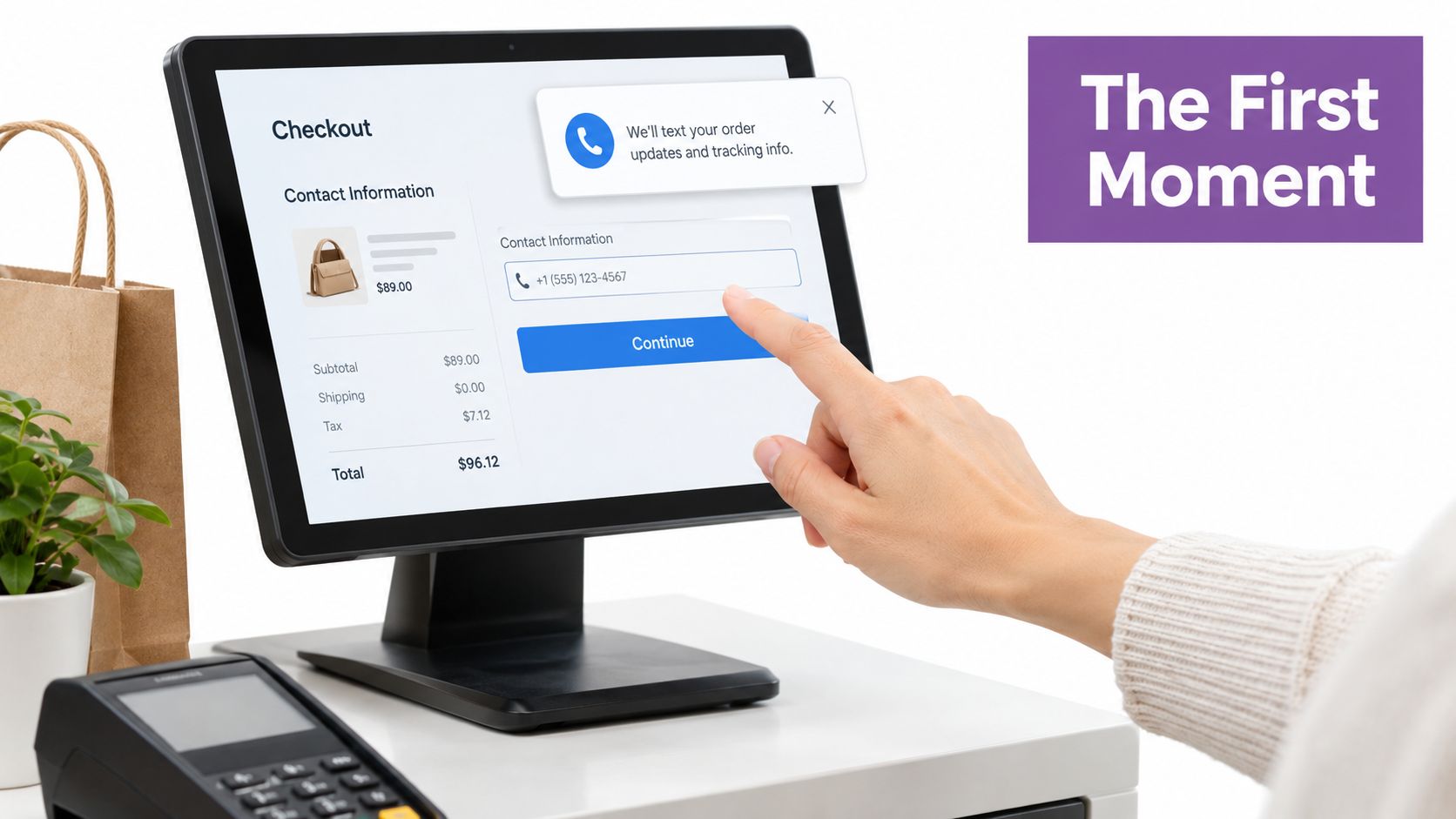
The phone field looks ordinary to a merchant. To the shopper, it might mean a delivery driver can contact them, the store can resolve an order problem, or they'll receive shipping updates. Unless your signup explains otherwise, don't assume they intended to join a promotional list.
A popup creates a different moment. If it clearly offers product launches and promotions by text, the shopper can decide whether that ongoing relationship is useful. Your job is to make the choice understandable before you make it easy.
Start with the shopper's expectation
Walk through your store as a new visitor, not as the person who built it. Read the phone field, nearby checkbox, popup headline, and confirmation message together.
- Identify the promise. Does the shopper expect order information, promotional offers, or both through separately defined choices?
- Check the action. Can you point to something the shopper deliberately did to request marketing texts?
- Inspect the handoff. Does the customer record preserve that choice, or does your system merely save a phone number?
These checks matter because acquisition and communication are separate decisions. A checkout can successfully collect a number while failing to establish a marketing relationship.
Practical rule: Treat the phone field as contact information until you can demonstrate what the shopper agreed to receive.
Consider a hypothetical skincare store. A shopper buying cleanser might appreciate delivery updates but have no interest in launch announcements. Another visitor might subscribe specifically for restock alerts without buying anything yet.
Both are valuable relationships, but they call for different messages. A subscriber is a person with expectations, not inventory your store owns. Build your list around those expectations, and you'll have a clearer basis for deciding what to send.
What a Subscriber Actually Means for SMS Marketing
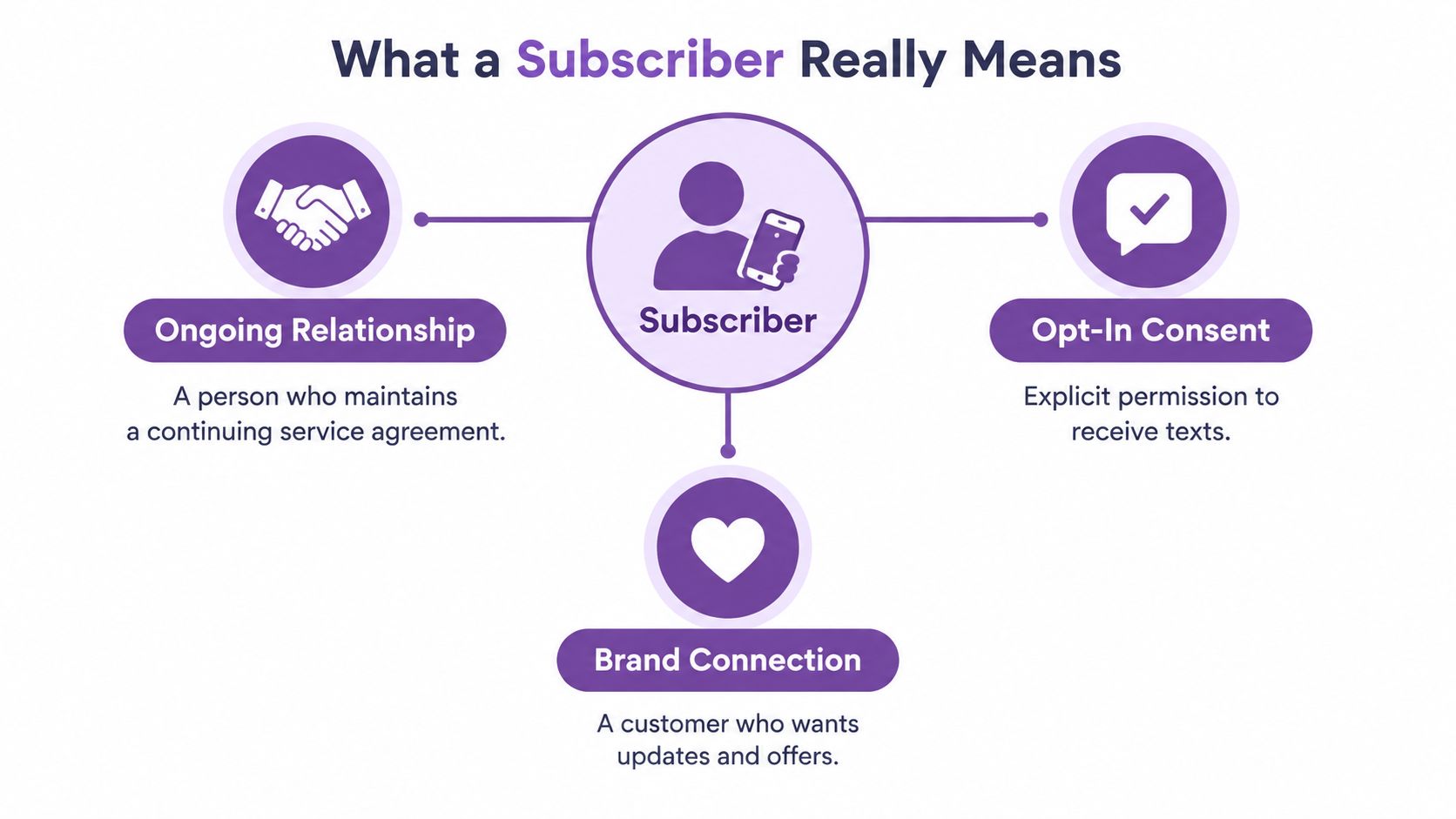
The search phrase “what is subscriber” usually points to a simple question: what makes someone a subscriber rather than just a contact? In general, a subscriber maintains an ongoing service relationship instead of making only a one-time purchase.
Subscription counts don't necessarily represent unique people. The International Telecommunication Union estimated 9.2 billion mobile-cellular subscriptions worldwide in 2025, equivalent to 112 subscriptions per 100 inhabitants, illustrating how someone can hold multiple connections in its global subscription statistics. For a store, that's a useful reminder to distinguish people, phone numbers, and subscription records.
Think of a membership, not an address book
A gym can have your contact details because you once asked about classes. That doesn't mean you hold an active membership. Likewise, a merchant can store a phone number without having an active SMS marketing subscription.
For ecommerce, a useful definition is: an SMS marketing subscriber is an identifiable customer or prospect who knowingly authorized promotional texts from your brand and can withdraw that permission. The relationship belongs to a particular channel and purpose. It isn't permanent ownership of the customer's attention.
| Relationship | What it tells you |
|---|---|
| Contact | You have a way to reach someone |
| Customer | Someone has bought from your store |
| Follower | Someone follows your social account |
| Email subscriber | Someone authorized the relevant email communication |
| SMS marketing subscriber | Someone authorized the relevant promotional texts |
These categories can overlap, but none should replace another. A loyal customer might prefer email, while a prospect might want text alerts before making their first purchase.
Define what subscription means in your store
Write an internal definition that names the channel, purpose, permission status, and current eligibility to receive messages. Then make sure your database can represent each part separately.
For a concrete reference when thinking about a named notification offering, consider Ovenbell's SMS notifications from Ovenbell. The useful distinction is between a specific alert subscription and an undefined invitation to contact someone about anything.
Your operational definition should be precise enough that another team member can inspect a record and explain why it belongs in a campaign audience.
The Three Subscriber Types Every Store Confuses
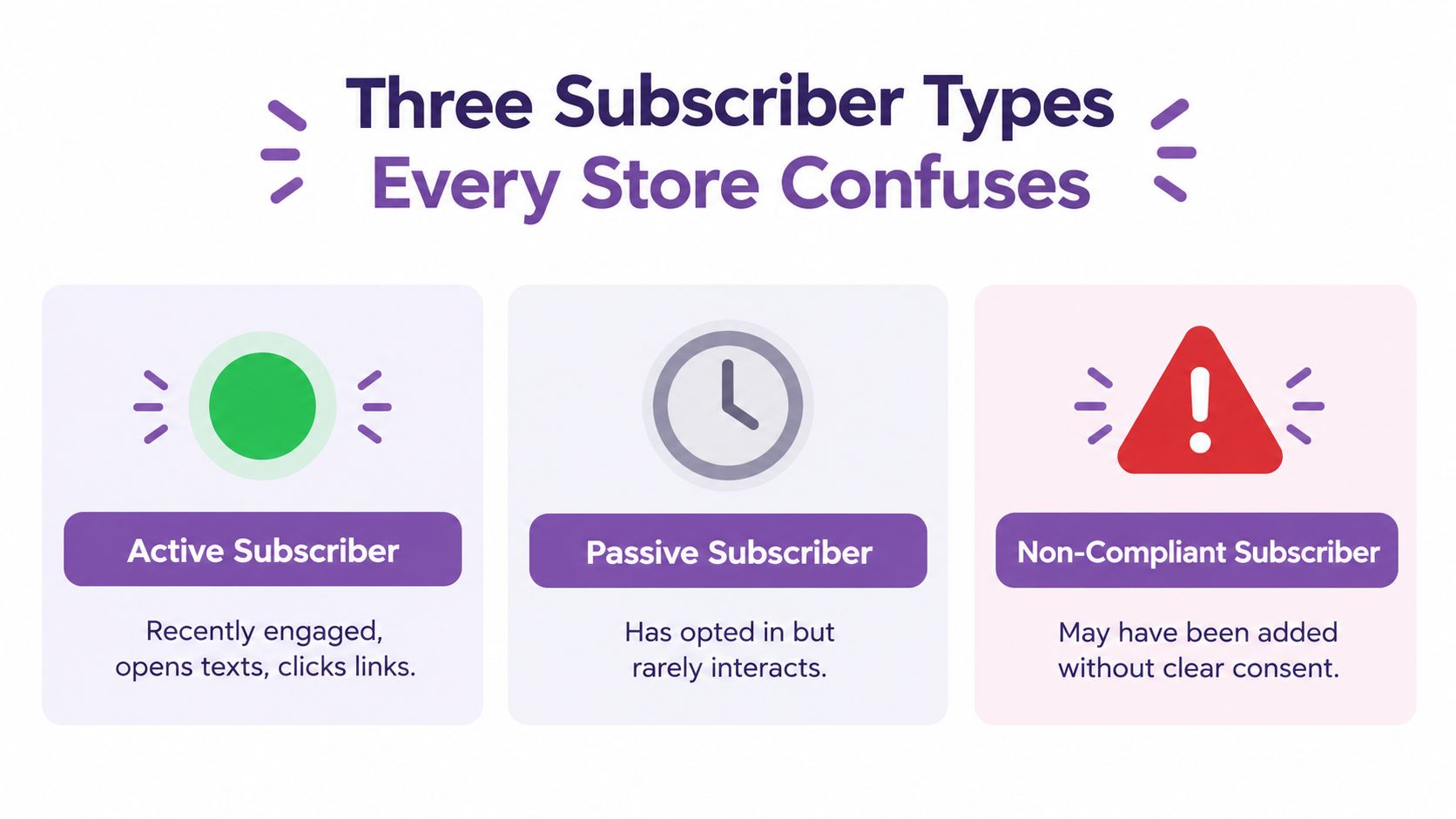
Before building segments around buying behavior, separate recipients by message purpose and sending eligibility. A useful merchant model includes marketing subscribers, transactional recipients, and lapsed marketing subscribers. These are working categories for list management, not universal legal classifications.
The accompanying visual describes a different dimension: active, passive, and non-compliant records. Keep these dimensions separate. Engagement describes behavior; compliance describes authorization; message purpose describes why you're contacting someone.
Subscriber Type Comparison
| Type | Consent Scope | Message Purpose | Opt-Out Required |
|---|---|---|---|
| Marketing | Documented permission for promotional SMS | Offers, launches, promotional recommendations | Yes, provide an easy route |
| Transactional | Authorization appropriate to the service message and applicable rules | Order, shipping, or account information | Support applicable withdrawal requirements; don't assume identical rules |
| Lapsed marketing | Marketing permission may remain, but engagement needs review | Carefully selected re-engagement, if eligible | Yes, as with other promotional texts |
A marketing subscriber who clicks a product launch message belongs in a different commercial segment from someone who hasn't responded to recent campaigns. Both may have permission on file, but your decision to send shouldn't depend on permission alone.
A transactional recipient is different again. Someone awaiting a parcel needs shipment information, not an automatic sales pitch attached to every update.
Separate purpose from commercial health
Lapsed doesn't mean unsubscribed. It means your store has defined an inactivity condition worth reviewing, such as no recent clicks, replies, or purchases within a period appropriate to your buying cycle.
Industry survey reporting describes 84% of US consumers opting in to business texts, up from 79% the previous year, while 52% received messages from at least four businesses, according to Webtonic's SMS marketing statistics coverage. Those figures support a practical concern: shoppers may have permission relationships with several brands competing for their attention.
Before sending, filter by purpose, permission status, suppression status, and engagement. Don't let a recent purchase override an unsubscribe, and don't interpret silence as renewed interest.
How SMS Consent Works in Practice
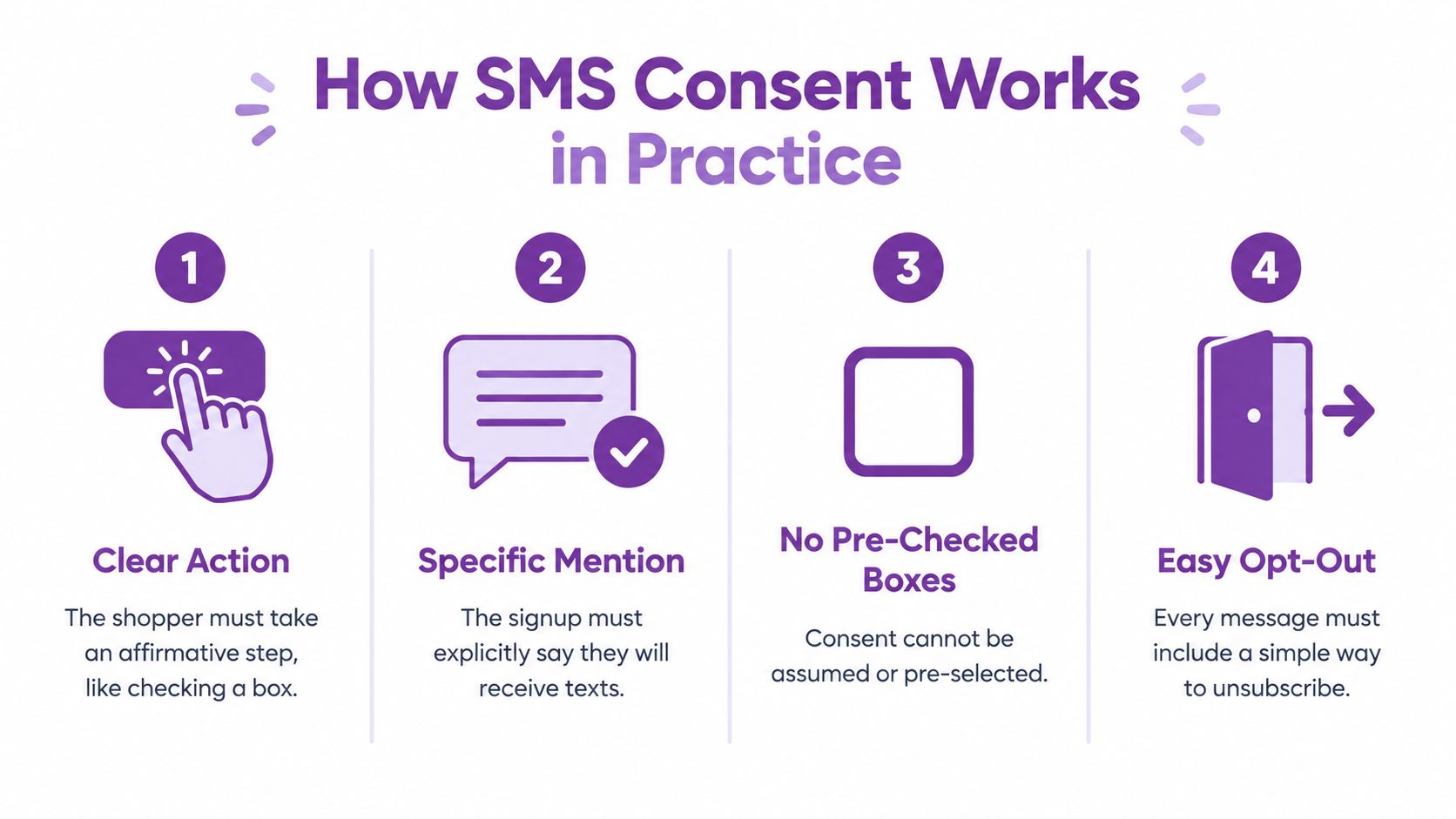
Valid consent starts with a clear choice. Shopify says SMS permission must be collected separately from email permission, recommends affirmative methods such as a checkout checkbox or keyword signup, and warns against buying or importing phone-number lists in its SMS deliverability guidance.
UK guidance requires text-specific consent that identifies the organization and communication type, involves a positive action, and isn't collected through pre-ticked boxes or made a condition of receiving a service, as explained in the ICO's direct marketing guidance. Requirements differ by market, so treat your signup design as an operational starting point, not a universal legal guarantee.
Replace vague language with a defined choice
For a hypothetical store named Cedar Goods, this is an illustrative starting point:
Yes, I agree to receive recurring automated promotional texts from Cedar Goods at the number provided. Message frequency varies. Message and data rates may apply. Reply STOP to unsubscribe. Consent isn't a condition of purchase. Review our Terms and Privacy Policy.
Make the Terms and Privacy Policy references functional links to your actual documents. Adapt the frequency statement to your real program, and have the complete form reviewed for your markets.
Avoid language such as “Enter your number for updates” when you intend to send promotions. It doesn't adequately explain the proposed relationship.
The US framework also matters: automated marketing texts generally require prior express written consent, with company-specific written permission described in the Congressional Research Service's TCPA overview.
Preserve the evidence behind the checkbox
- Signup wording. Save the version the shopper saw, including relevant disclosures.
- Record details. Preserve the phone number, timestamp, signup source, and affirmative action.
- Permission history. Retain changes and withdrawals so staff can reconstruct the relationship.
For another purpose-specific example to consider, RentReboot's apartment alerts via text message provides a reference for thinking about a clearly named alert category rather than generic “updates.” Your store should be equally explicit about its own offering.
Use this guide to SMS opt-in requirements when reviewing the path from signup wording to stored permission.
Why Subscriber Quality Beats Subscriber Quantity
A larger list isn't automatically a more valuable list. If you can't establish permission, reach recipients reliably, or connect messages with relevant customer needs, the raw count is a poor operating target.
Texting's habitual use helps explain its appeal, but historical usage shouldn't be mistaken for guaranteed marketing attention. Pew's findings reproduced in EBSCO's texting overview reported that 73% of adult US cellphone owners used texting in 2011, rising to 95% among owners aged 18–29. Those are historical channel-use figures, not current campaign performance benchmarks.
Measure whether subscribers still welcome your messages, not just whether their numbers remain in your database.
Put actionable metrics beside list size
Build a report that helps someone make a sending decision. Define each metric consistently so changes mean something.
- Active rate. Track the share of eligible subscribers meeting your chosen engagement definition. Use a window that suits your product's purchase cycle.
- Revenue per recipient. Divide attributed campaign revenue by recipients using a consistent denominator. Label it attributed revenue, not automatically incremental revenue.
- Opt-out rate. Compare campaign withdrawals with the audience sent to. Review the offer, frequency, and acquisition source when it rises.
- Complaint rate. Track available complaints against a clearly defined sending denominator, and investigate the affected records.
- Delivery and source quality. Compare failures, clicks, and conversions across signup forms, checkout opt-ins, and keyword campaigns.
A segment that produces clicks but few purchases calls for a different response from one producing delivery failures. The former may need a better offer or landing page; the latter needs record and delivery review before more sending.
Make smaller audiences a deliberate choice
For example, a merchant could send a restock notice to subscribers interested in that product rather than broadcasting it to every eligible number. That's a targeting recommendation, not a promise of a particular return.
PledgeBox's resource on how to build a Kickstarter email list offers an adjacent resource for thinking about list building, while keeping email authorization distinct from SMS. For Shopify execution, use this customer data segmentation guide to organize audiences around meaningful differences.
Your goal isn't the smallest possible list. It's a list whose size reflects genuine permission and whose sending segments reflect current relevance.
Growing Your Subscriber List the Right Way
Start with a reason someone would want texts from your store. Restock notices, early access to product launches, and relevant offers are clearer propositions than asking visitors to “join our community” without explaining what arrives on their phones.
For a hypothetical apparel store, a popup might lead with “Want launch alerts by text?” The supporting consent language should carry the necessary disclosures, while the confirmation should explain what happens next. Don't make the headline promise exclusive product news if the actual program sends unrelated promotions.
Build a path from intent to a useful message
Use a drag-and-drop popup builder if your chosen Shopify SMS app supports it. Keep the phone field and marketing choice easy to understand, and preview the experience on mobile.
A keyword signup can provide another entry point, provided the invitation and resulting flow communicate the same defined purpose. Before launch, use this text signup setup guide to review the collection experience.
- Capture interest. Match the popup offer to the page, such as restock information on an unavailable product.
- Confirm expectations. Follow signup with an appropriate welcome message that identifies the store and explains the subscribed content.
- Trigger selectively. Consider cart or checkout abandonment, viewed-product follow-ups, and personalized recommendations only for eligible promotional recipients.
- Keep service flows distinct. Configure shipping and delivery notifications around their service purpose rather than using them as a shortcut into marketing.
Test the flow before scaling acquisition
Choose an app with the popup, automation, scheduling, and reporting functions your store needs. Prebuilt flows can save configuration work, but inspect their audience filters, message content, and exit conditions before activation.
Place a test order, abandon a test checkout, and verify that purchasing removes a recipient from an irrelevant recovery sequence. Check that a subscriber won't receive several overlapping messages merely because they triggered several events.
Attributed sales don't prove incremental sales. Where practical, compare an eligible sending group with a comparable holdout group, then assess purchases alongside messaging costs and withdrawals. Use that evidence to decide which signup offers and automations deserve more attention.
A Simple Subscriber Management Routine
Subscriber management needs an owner and a recurring review. It also needs automation for events that can't wait for someone to open a spreadsheet.
CTIA says consumers should be able to opt out at any time through multiple methods, including text, email, or phone, and every request should be honored; it permits one final confirmation message per campaign, with no further messages after that confirmation, in its Messaging Principles and Best Practices. Operationally, make STOP and comparable withdrawal requests suppress promotional sending immediately, including queued and bulk campaigns.
Use a weekly review checklist
- Verify suppression. Test unsubscribe handling and confirm scheduled audiences respect the latest status.
- Review exceptions. Investigate failures, complaints, missing consent evidence, and unexpected signup-source changes.
- Assess inactivity. Reduce sending or suppress disengaged recipients according to your documented policy. Re-engagement is only appropriate while permission remains valid.
- Prevent accidental re-enrollment. Ensure imports, customer updates, and purchases can't restore withdrawn marketing permission without a new affirmative opt-in.
A suppressed contact can remain a customer record. Keep the sending restriction separate from customer-service access so staff don't confuse stopping promotions with deleting the relationship.
Keep disclosures aligned with operations
Shopify's SMS campaign requirements call for privacy disclosures covering collection, use, storage, sharing with parties such as SMS providers, and access or deletion rights. Terms should explain message frequency, possible data rates, opt-out instructions, and support contact information.
Review those documents whenever you change providers, signup methods, or messaging workflows. Assign responsibility for customer requests and document how staff escalate an unsubscribe received outside the SMS platform.
The routine is simple: verify permission, respect withdrawal, and send for a clear reason. That gives your team a practical foundation for protecting customer trust and running a commercially disciplined SMS program.
YipSMS Inc. offers Shopify subscriber-collection popups, prebuilt SMS automation flows, and campaign analytics as an option for managing these workflows. Visit YipSMS Inc. to explore the tools, then start with a clearly defined signup offer and test permission capture, targeting, and suppression before launching your first campaign.
How this article was made: the YIPSMS team drafts some articles with AI writing tools, then checks pricing, compliance and product details against how YIPSMS actually works before publishing. Spotted something wrong? Tell us through your YIPSMS account.