Best Mass Texting App for Shopify: 10 Tools Compared
At a glance
Compare the best mass texting app options for Shopify and eCommerce stores: pricing, integrations, automations, and which fits your business.
Your Shopify store has 6,000 SMS subscribers. You've set up a cart-recovery text for each abandoned checkout, and you're ready to send a weekend promotion. Then you discover the bill includes MMS charges, carrier fees, and a monthly minimum you hadn't budgeted for.
That's a hypothetical store, but it's the right buying problem to solve. The cheapest advertised message rate isn't necessarily the cheapest campaign. You also pay through setup work, unused credits, integration maintenance, and time spent fixing flows that don't receive the right Shopify events.
The best mass texting app should fit how your store sells. A founder sending product drops needs something different from a CRM team coordinating email, cart recovery, shipping notifications, and customer replies.
These ten tools differ most in price structure, Shopify integration depth, automation coverage, and operational workload. Before committing, build the same campaign in each shortlisted platform and test the shopping events you'll depend on.
Treat SMS as part of your retention program, alongside loyalty points and win-back emails. Don't pay to text a shopper who has already purchased or who would be better served by an order-status notification. Start with the tools that match your team's capacity, not the ones with the longest feature lists.
Table of Contents
- 1. YipSMS Inc.
- 2. Postscript
- 3. Klaviyo
- 4. Attentive
- 5. Omnisend
- 6. SimpleTexting
- 7. SlickText
- 8. EZ Texting
- 9. Textedly
- 10. Twilio
- Starting price, free options, and Shopify fit across the ten mass texting apps
- Matching Your Store to the Right Texting Tool
1. YipSMS Inc.
A Shopify store can add subscriber sign-ups and revenue automations without building custom integrations. YipSMS combines bulk and scheduled messaging with Shopify workflows, making it a fit for merchants who want ready-to-use tools without a developer.
YipSMS includes 10 prebuilt revenue automations that can be activated with one click. They cover shipping and delivery notifications, popup subscriber welcomes, AI chat responses, keyword opt-in replies, Shopify segment entry, and cart and checkout recovery.
For list growth, the drag-and-drop popup builder captures phone, email, and name, with TCPA-compliant consent and Privacy Policy links built in. Unlimited named lists and a QR code generator support sign-ups online and offline.
What you'll pay and set up
The Shopify app has no monthly app fee. Merchants pay for the messages they send. Optional subscription plans add a monthly fee and reduce per-message rates.
- Free: $0 per month, with SMS at $0.025 per message and MMS at $0.055.
- Gold: $99 per month, plus SMS at $0.018 and MMS at $0.042.
- Premium: $299 per month, plus SMS at $0.015 and MMS at $0.030.
- Bulk SMS: $0.032 per segment. Budget this separately from Shopify plan pricing.
The setup guide covers app installation, 10DLC registration, and sending the first campaign. A 14-day free trial gives merchants time to try the workflow. Start with a welcome automation and checkout recovery, then test scheduled campaigns and real-time analytics.
Where it works: SMS includes automatic STOP/HELP handling, trackable short links, personalization tokens, and real-time analytics. MMS adds images, GIFs, and video, along with all SMS features.
Where it falls short: YipSMS is built for Shopify. Merchants using another commerce platform should check integration requirements before choosing it.
2. Postscript
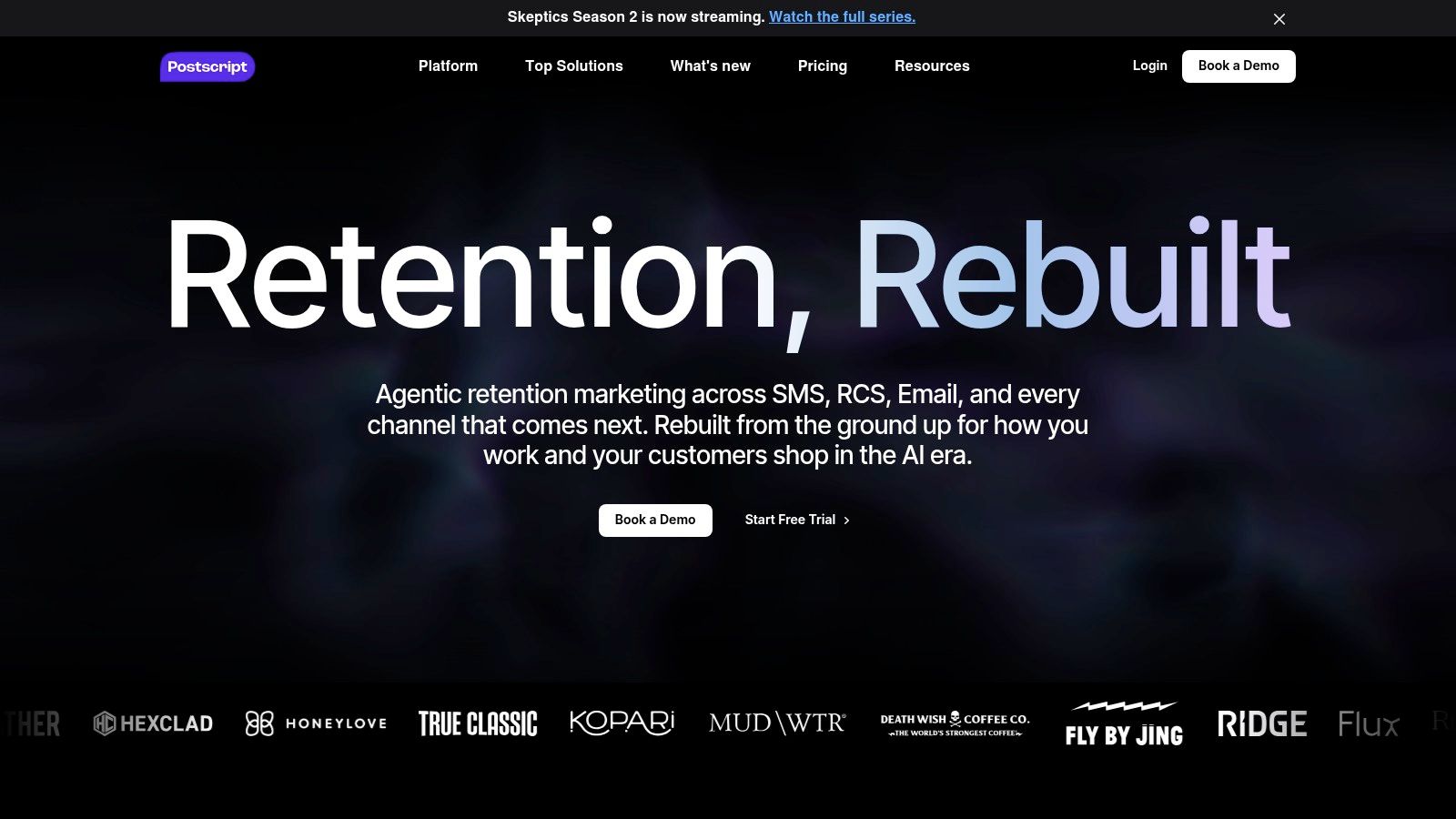
Postscript makes sense when SMS is a dedicated revenue channel, not an occasional add-on. Shopify shopping activity informs segmentation, campaigns, and visual automations, while subscriber-growth tools and reply management support the work around each send.
For a clothing store, that means targeting shoppers by purchase behavior instead of uploading a fresh spreadsheet for every promotion. Its cart, browse, welcome, shipping, and upsell templates offer a practical starting point without custom development.
Cost matters at low volume: Postscript lists Starter without a platform fee but with a $49 monthly minimum spend after the trial, alongside usage and carrier charges; its trial includes $100 credit for the first 30 days.
Buying rule: A minimum spend matters most during quiet months. Model your ordinary sending volume, not just your launch-week volume.
Where Postscript earns its place
- Strong fit: Shopify teams that want dedicated SMS acquisition, targeting, automation, and reporting.
- Setup workload: Build and test the visual journeys, then confirm purchase suppression and reply ownership.
- Main compromise: You're adding a specialized channel platform rather than consolidating email and customer management.
Compare a Shopify SMS app on the actual checkout-recovery workflow, not just the presence of an integration badge.
For campaign planning, prioritize recovery before broad blasts. Postscript's ecommerce benchmarks place abandoned-cart conversion between 3.97% and 7.84% for the middle 50% of performers. Treat that as a comparison range, not a promised store result.
3. Klaviyo
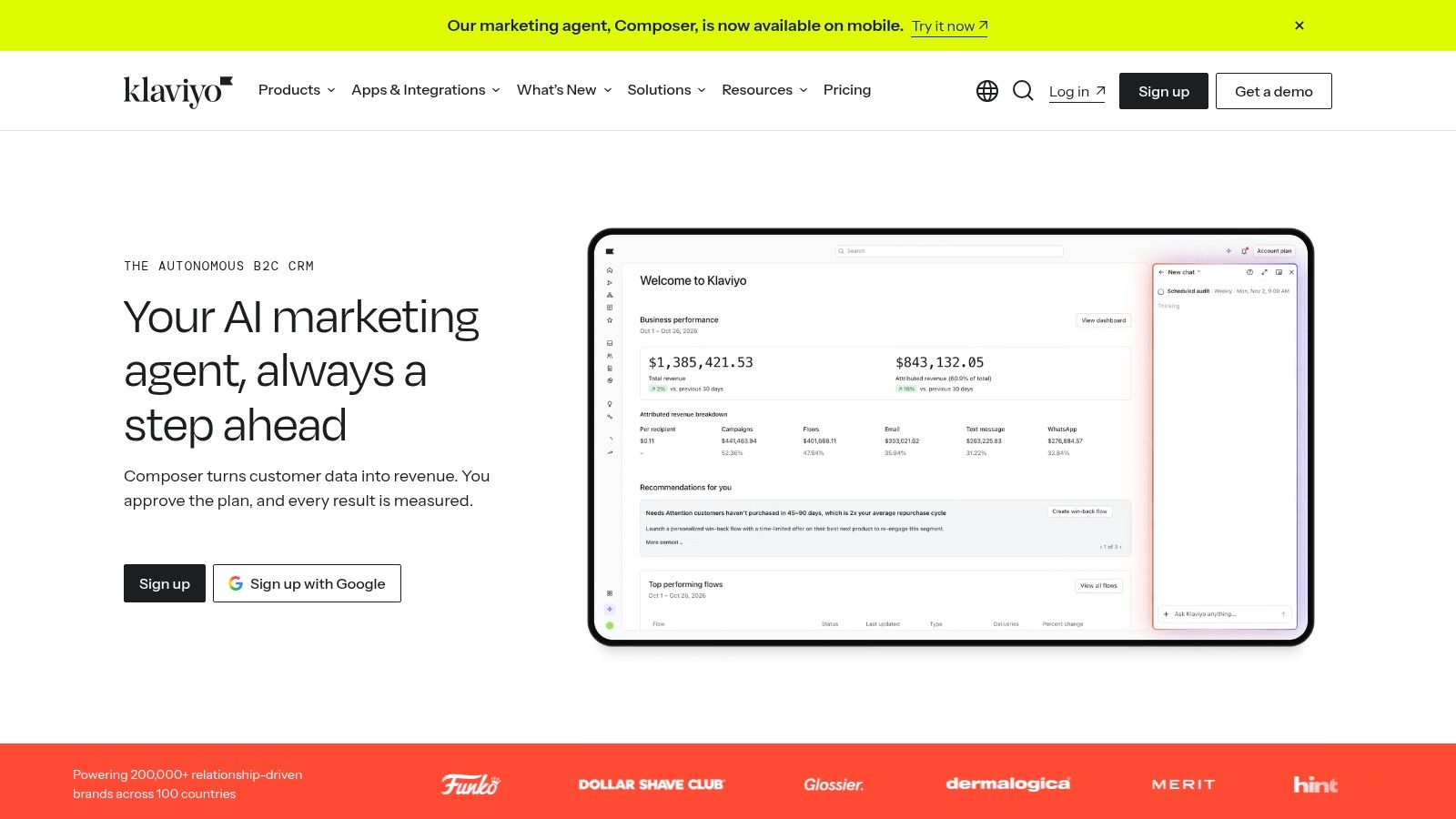
Already using Klaviyo for email? Keeping SMS beside the same customer profiles can be more useful than moving to a slightly cheaper standalone sender. Your team can coordinate channel timing and maintain shared behavioral segments.
Klaviyo offers a free plan with up to 250 profiles, 500 monthly emails, and $5 of mobile messages per month; paid mobile messaging is separate, with costs depending on usage, destination, message type, length, and sender number type.
Don't compare the email subscription alone against an SMS competitor's total bill. Include mobile-message spending, and remember that unused dollar-based mobile-message spend doesn't roll over.
Choose it for coordinated lifecycle marketing
A useful setup is email for detailed product education, followed by SMS when a shopper takes a high-intent action. Build purchase suppression into the journey so customers don't receive a recovery offer after checking out.
- Developer requirement: Standard Shopify flows can be configured through the platform rather than built as a custom application.
- Operational cost: Shared data helps, but someone still needs to maintain segment rules, channel priorities, and flow exclusions.
- Limitation: The platform can be excessive if you only need occasional bulk announcements.
The strongest reason to choose Klaviyo is automation coordination. Klaviyo's SMS benchmarks report approximately 0.27% conversion for ecommerce campaigns versus about 1.9% for flows. Use separate campaign and flow reporting so an effective recovery sequence doesn't hide weak broadcasts.
4. Attentive
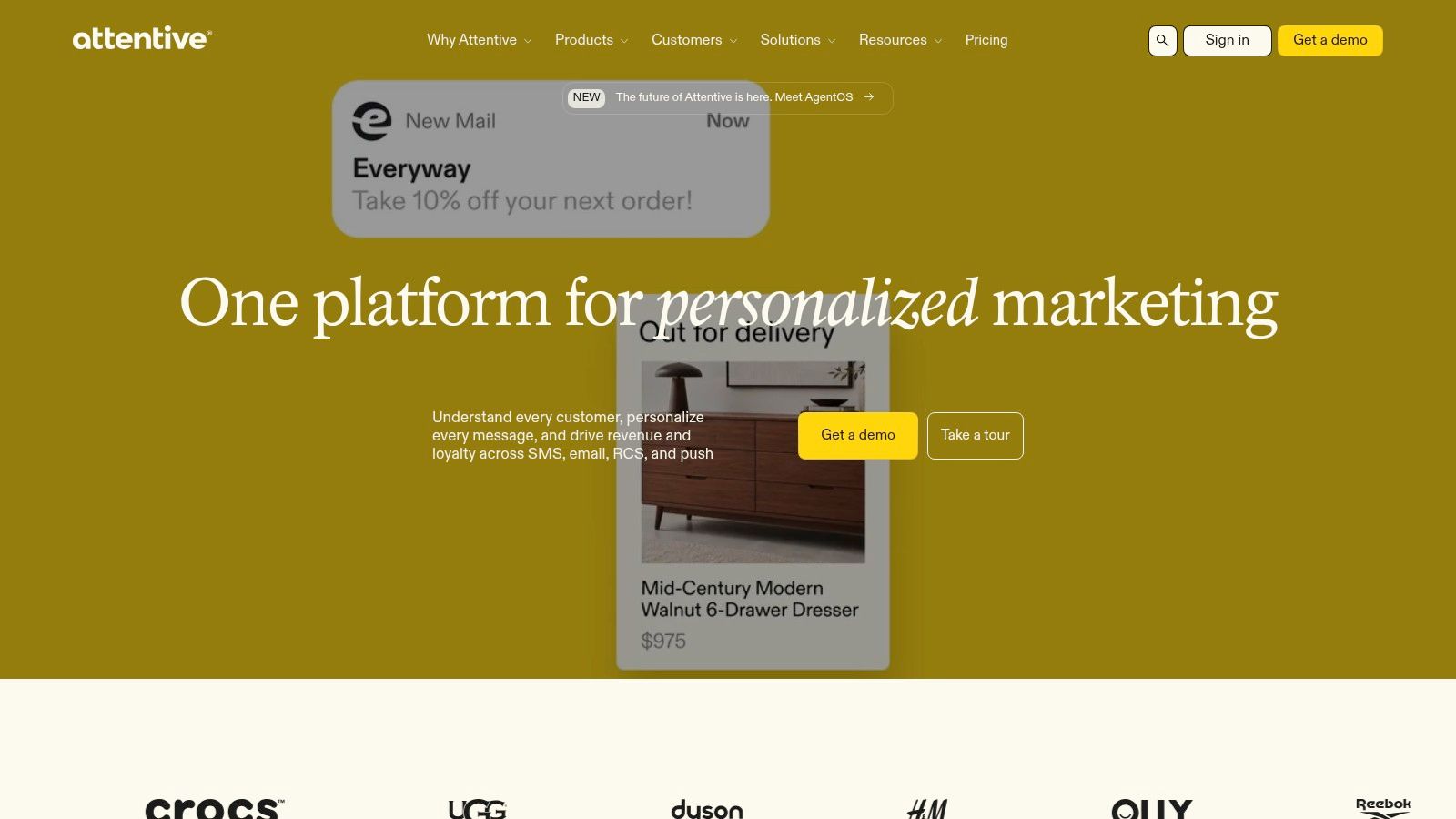
Attentive belongs on the shortlist for established marketing teams building a substantial mobile-marketing program. Its Shopify integration supports subscriber and opt-in syncing, commerce-based targeting, and automated customer journeys.
Attentive uses quote-based pricing tied to message volume and subscriber-list size. That makes the sales evaluation important: obtain a campaign-level estimate for your audience, message mix, and expected automation traffic before comparing it with self-serve apps.
A demo should show your actual requirements. Have the team demonstrate browse abandonment, checkout recovery, order-related messages, and two-way messaging rather than walking through a generic promotional campaign.
Implementation deserves a close look
Shopify integration reduces the need to build commerce connections yourself. It doesn't remove the work of mapping consent, choosing triggers, reviewing creative, and reconciling reporting.
- Best use: A team with an owner for acquisition, lifecycle strategy, and ongoing optimization.
- Main trade-off: A broad platform and sales-led process may be more than a small store needs.
- Reporting concern: Revenue attributed inside the platform may not appear identically in Shopify's own reports.
Use the TCPA compliance checklist when reviewing signup language and suppression behavior.
Consent is an operational requirement, not a launch-day checkbox. Infobip's global SMS compliance guide discusses consent records, privacy obligations, and revocation handling across markets. Test how a reply such as “remove me” reaches the person or process responsible for suppression.
5. Omnisend
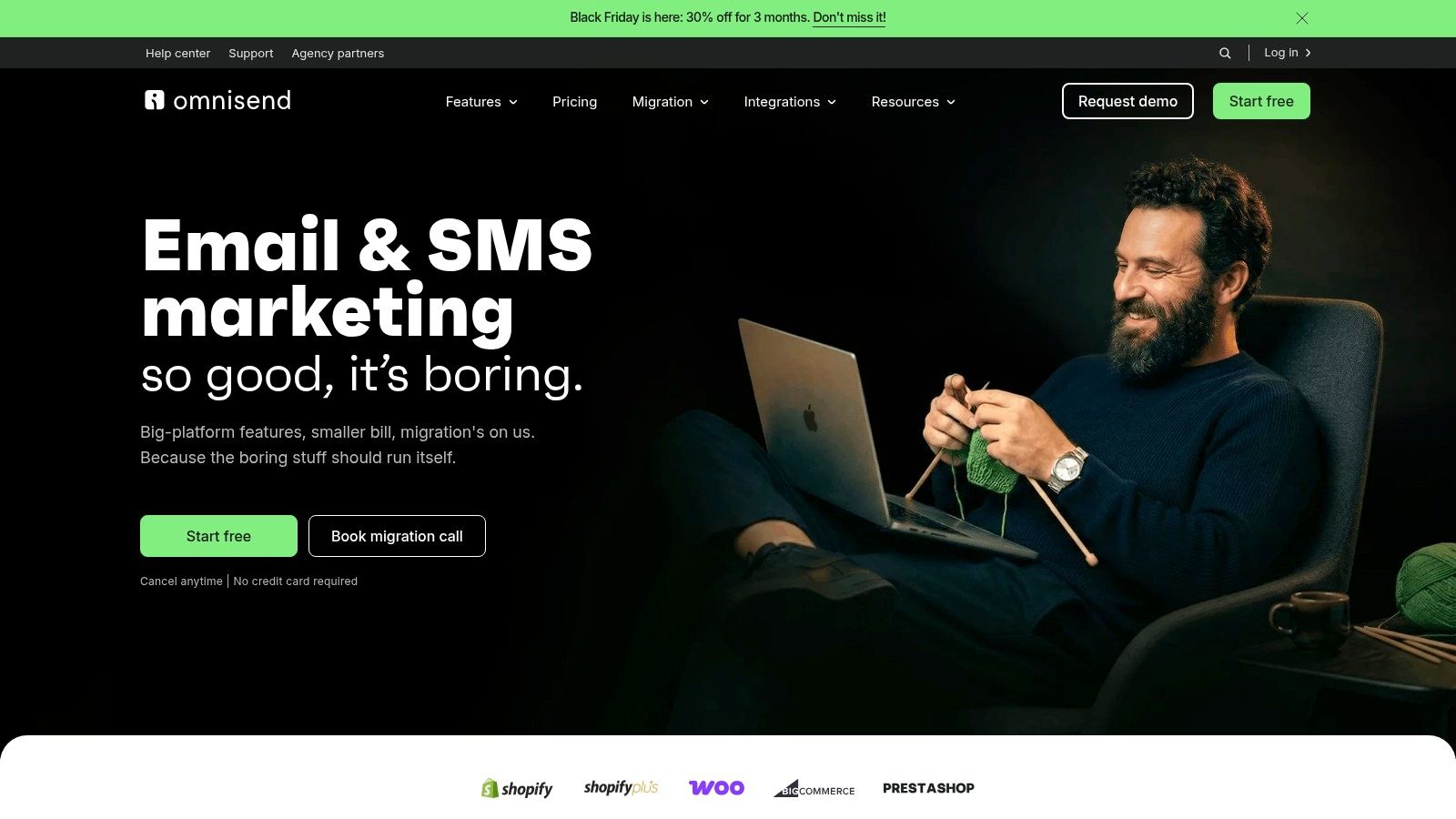
Choose Omnisend when consolidating email and SMS work is more valuable than buying a dedicated texting interface. Campaigns and ecommerce automations live in the same marketing platform, which can simplify production for a small retention team.
For new subscriptions, Omnisend makes SMS a separate add-on to Pro, rather than an option on new Free or Standard plans, with listed US SMS rates starting at $0.009 per message at lower usage tiers. Country and volume affect the applicable rate.
That headline rate isn't your complete campaign cost. Include the required platform subscription and separate SMS credits, then use the campaign cost estimate before sending.
A lower message rate only helps if the required plan also makes sense for the email work you'll actually do.
Practical strengths and limits
- Setup: Configure ecommerce workflows in the platform, then test cart and order events without assuming every template is ready for your store.
- Campaign production: Combine email and text within the same customer journey instead of managing disconnected schedules.
- International planning: Review destination-specific pricing before sending across your whole list.
- MMS: Available for US and Canadian recipients, so don't assume identical creative options everywhere.
Automation deserves the initial effort. Omnisend's 2025 ecommerce marketing report found automated SMS generated 18% of orders from 9% of SMS sends in its analyzed merchant dataset. That supports building relevant triggers before increasing broadcast volume.
6. SimpleTexting
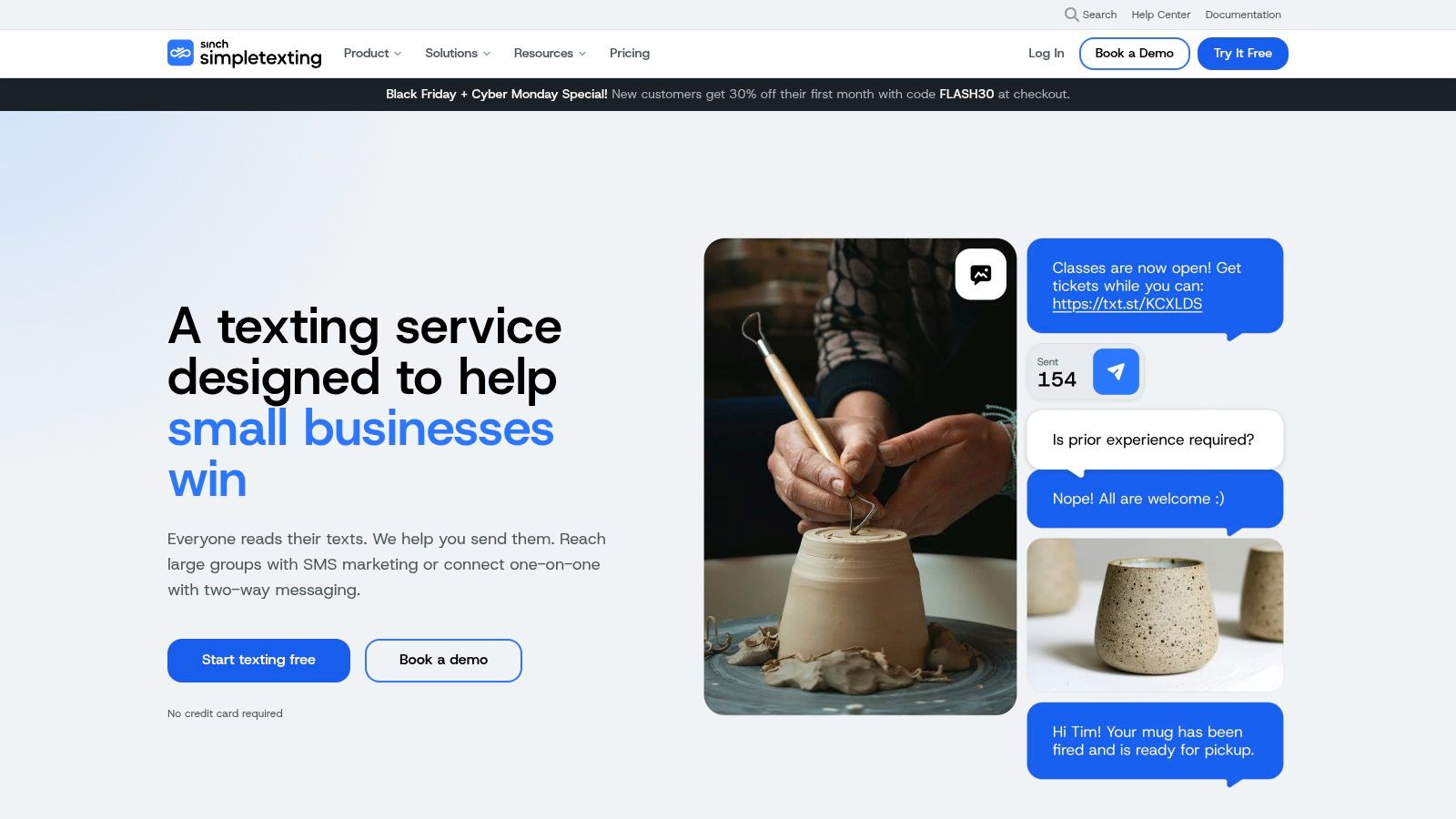
A store that mostly sends restock announcements and answers customer questions may not need a full ecommerce lifecycle platform. SimpleTexting handles general business texting, including bulk campaigns, two-way conversations, auto-replies, and drip messages.
SimpleTexting gives a pricing example of 500 credits for an estimated $39 per month, including a local number in that configuration; dedicated short codes start at $1,000 per month. Actual selections affect the bill, and local-number charges need checking against the configuration you choose.
The important distinction is between sending without a developer and running Shopify shopping-event flows without integration work. Basic broadcasts don't require custom code. Cart recovery may require more configuration or connected services than a Shopify-focused app.
Where it fits an ecommerce team
Text-to-join keywords, forms, popups, audience segments, reporting, and MMS cover common campaign needs. Mailchimp and Zapier integrations can help connect existing tools, but each additional connection creates something your team must maintain.
- Useful advantage: A shared business-texting workflow for promotions and conversations.
- Budget constraint: MMS consumes more credits than SMS, and sender-number choices affect total cost.
- Commerce limitation: Don't assume the drip campaign builder has the same purchase-aware behavior as a native recovery flow.
Use this bulk SMS marketing guide to plan audience selection and campaign execution. In the trial, prove that a completed Shopify purchase stops any promotional follow-up that would now be inappropriate.
7. SlickText
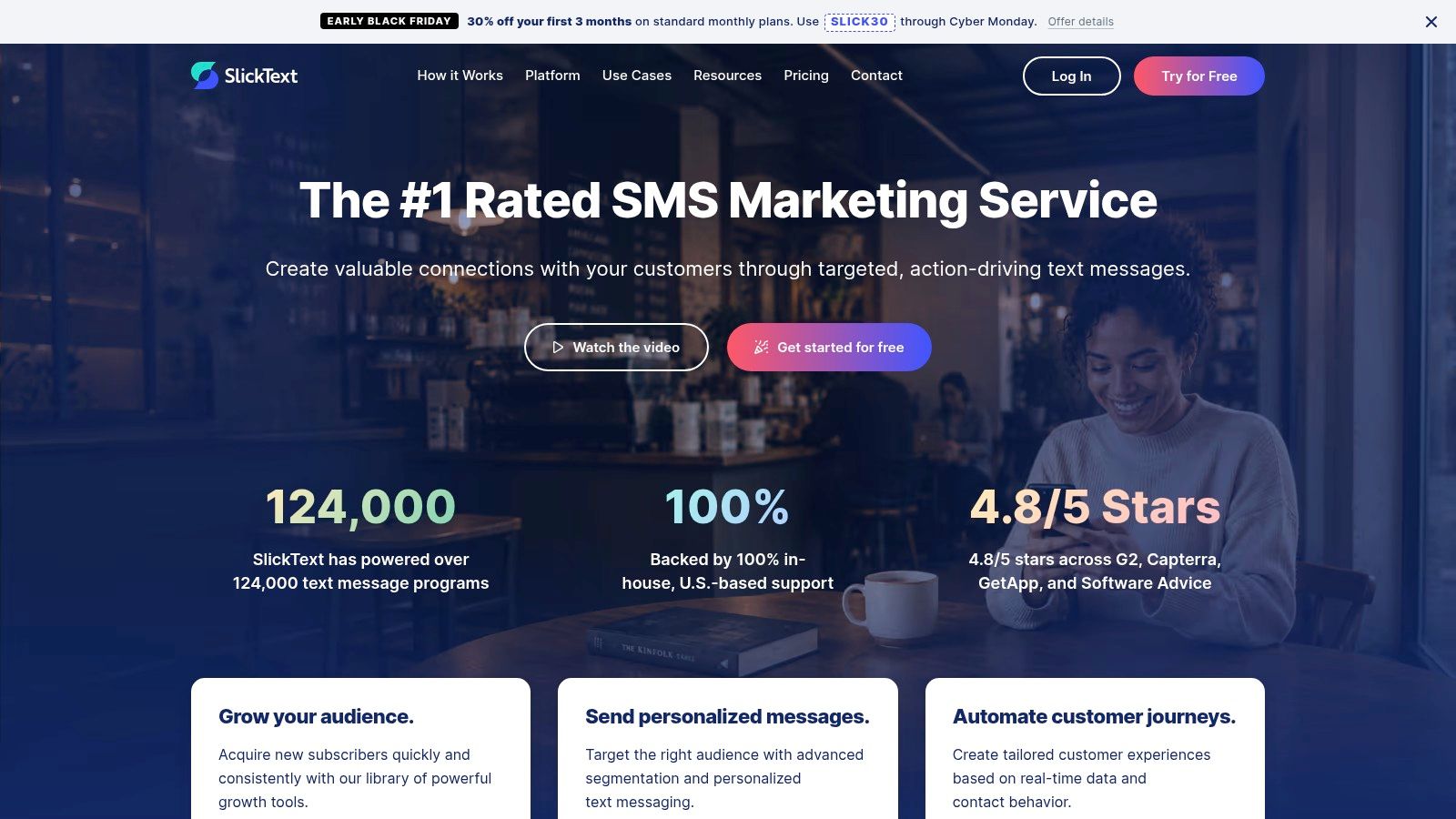
SlickText is a strong candidate when list building and self-serve campaign management carry equal weight. Popups, web forms, keywords, QR codes, and tap-to-join links give a store several acquisition routes beyond checkout.
SlickText starts at $29 per month for 500 credits, with carrier fees additional and MMS consuming three credits; it also offers a 14-day free trial. Credit rollover is available within its stated terms.
That pricing can work for measured sending, but a small entry allowance isn't a large-campaign budget. Estimate credits from the final message format, not just the number of contacts.
Test the workflow, not just the builder
SlickText supports triggers, conditions, delays, and branching, plus personalized, scheduled, and recurring campaigns. The interface can reduce coding work, but you still need to validate the Shopify event and customer data used by each branch.
- Acquisition strength: Multiple signup formats suit stores selling online and at physical events.
- Management benefit: Published plans include unlimited contacts and users.
- Cost limitation: Carrier charges and advanced sender options can increase the effective campaign cost.
For performance review, use clicks rather than unsupported universal open-rate claims. SlickText's retail and ecommerce benchmarks classify 6.8%–13.3% click-through as good and 13.3% or higher as excellent.
Those ranges aren't guarantees. Compare similar audience segments and offers, then investigate whether the landing page matches the text.
8. EZ Texting
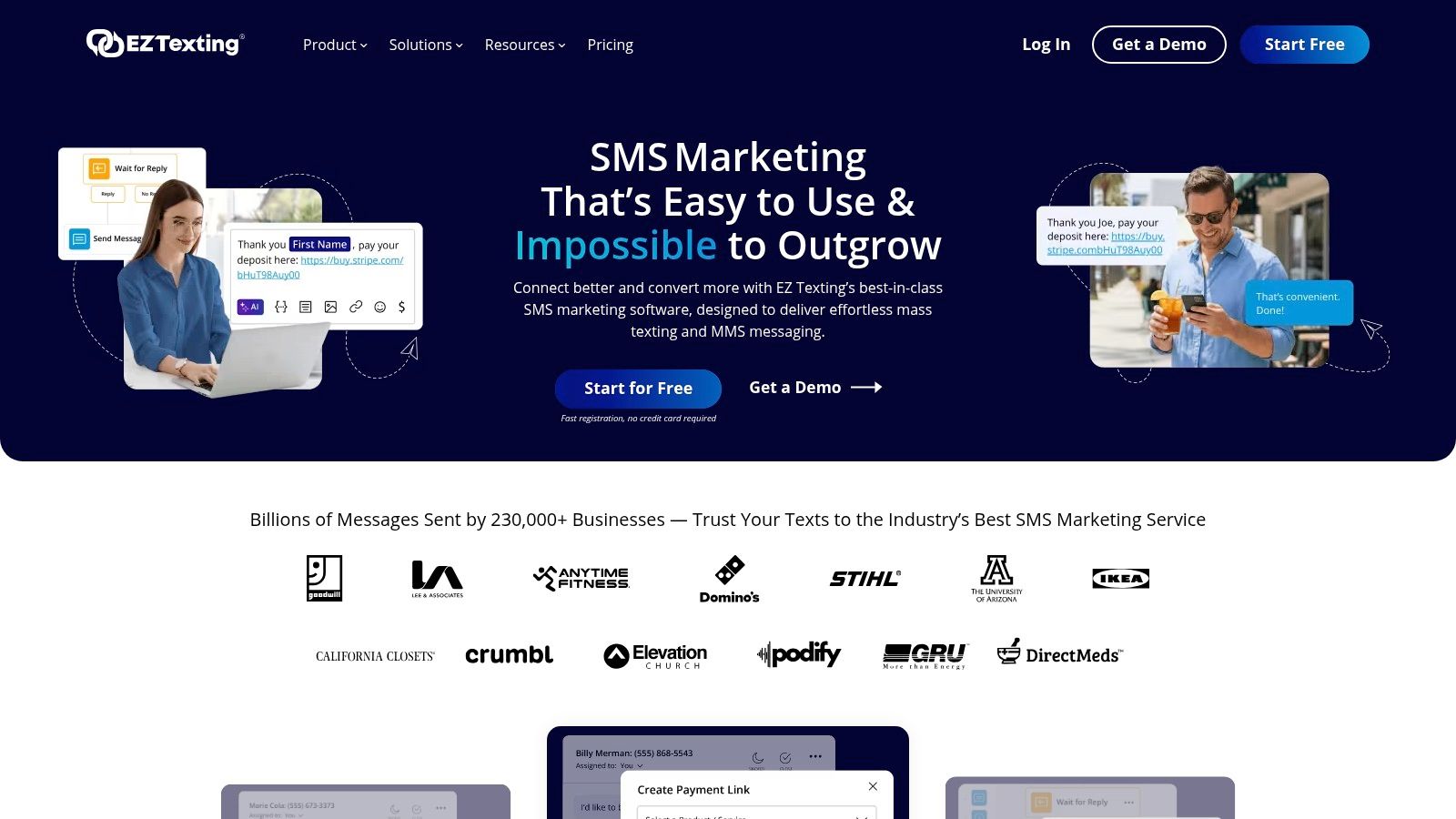
A store sending a product announcement and handling replies may find EZ Texting's browser-based tools sufficient. Teams focused on Shopify lifecycle messaging should confirm how much setup its store-event workflows require.
EZ Texting lists plans starting at $25 per month, with higher tiers at $75 and $125. Each SMS uses one credit, while an MMS uses three. Incoming messages are free on the listed plans.
Budget for attempted sends
Many SMS platforms may count attempted sends against a credit balance. Confirm how EZ Texting's current plan terms treat failed deliveries before setting a campaign budget. Clean your permission-based list and review failed sends before resending.
For an ecommerce evaluation, trace a complete workflow:
- Straightforward use: Schedule a product announcement and manage customer replies.
- Setup check: Confirm how Shopify events enter the platform and whether a purchase suppresses a recovery message.
- Cost trade-off: Frequent campaigns may require a larger plan or paid overages.
- Creative choice: An image can help explain a product, but MMS uses more credits than SMS.
Choose EZ Texting when business messaging is the primary job. If abandoned-cart revenue is the priority, verify that the full Shopify workflow works as expected before committing.
9. Textedly
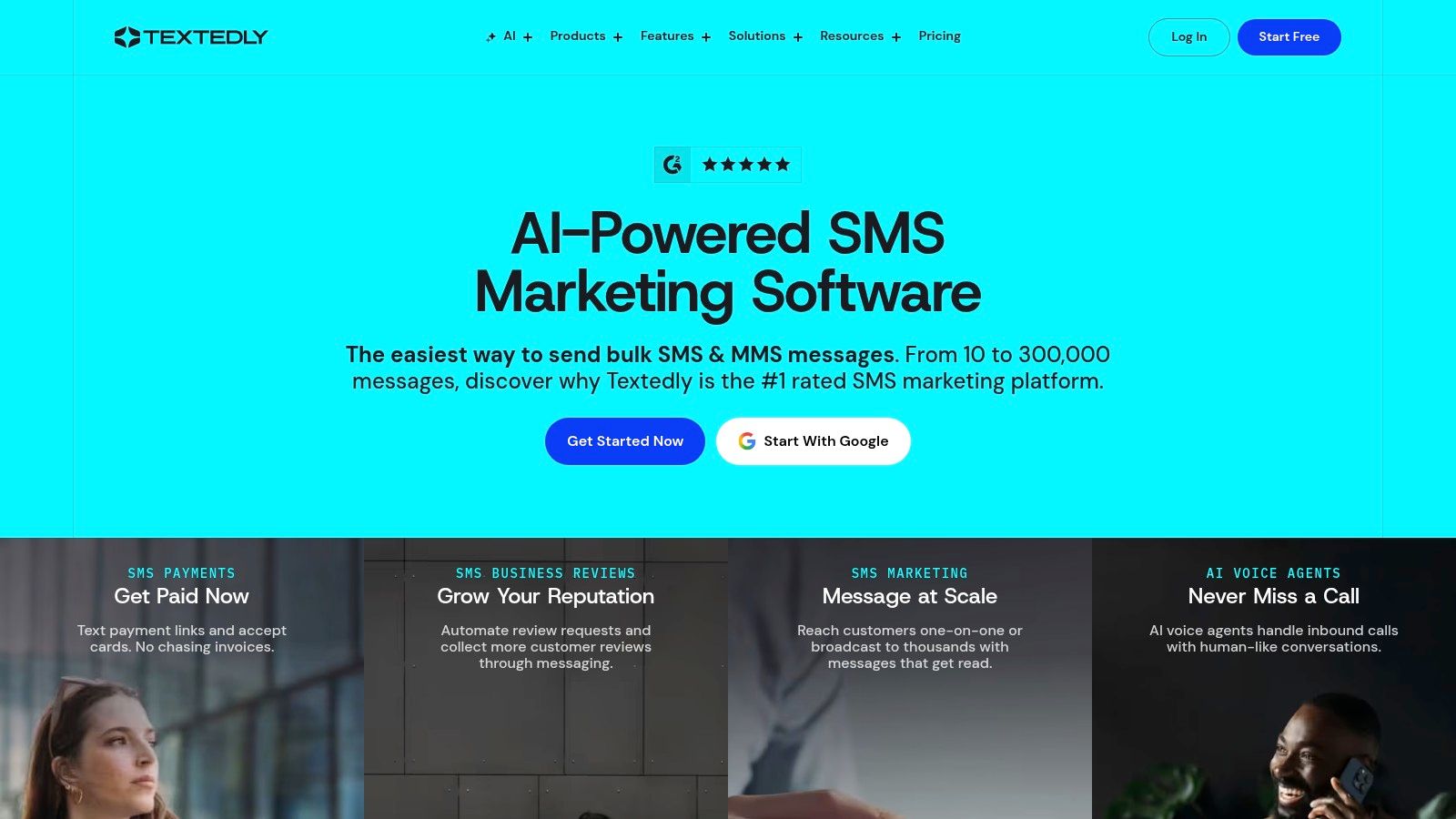
Published volume tiers make Textedly approachable for merchants who already know their approximate sending needs. It combines bulk SMS and MMS, scheduling, contact management, campaign tracking, and an omnichannel inbox.
Textedly starts at $29 per month for 500 messages and offers a free account with 50 text messages and one custom keyword. Use the allowance as a testing budget, not evidence that the entry plan will cover your regular promotions.
Shopify appears among its integrations. That's a reason to investigate, not proof that every ecommerce automation is ready without additional configuration.
Follow the event through to the purchase
During evaluation, create a test contact, trigger the intended Shopify event, and inspect the resulting message. Then complete the purchase and confirm the follow-up rules change appropriately.
- Good fit: Teams prioritizing predictable message-volume tiers and ordinary campaign management.
- Setup work: Contact fields, integration mapping, campaign templates, and inbox ownership still need attention.
- Feature boundary: SMS payments and review requests require higher plans.
- Buying risk: A published message allowance doesn't explain every limit relevant to a shopping-event workflow.
The inbox matters because promotional sends can produce delivery questions and purchase-intent replies at the same time. Assign someone to handle those conversations before launch.
For a small store, a manageable reply workflow can matter more than another automation feature. Don't scale the broadcast until the team can handle what comes back.
10. Twilio
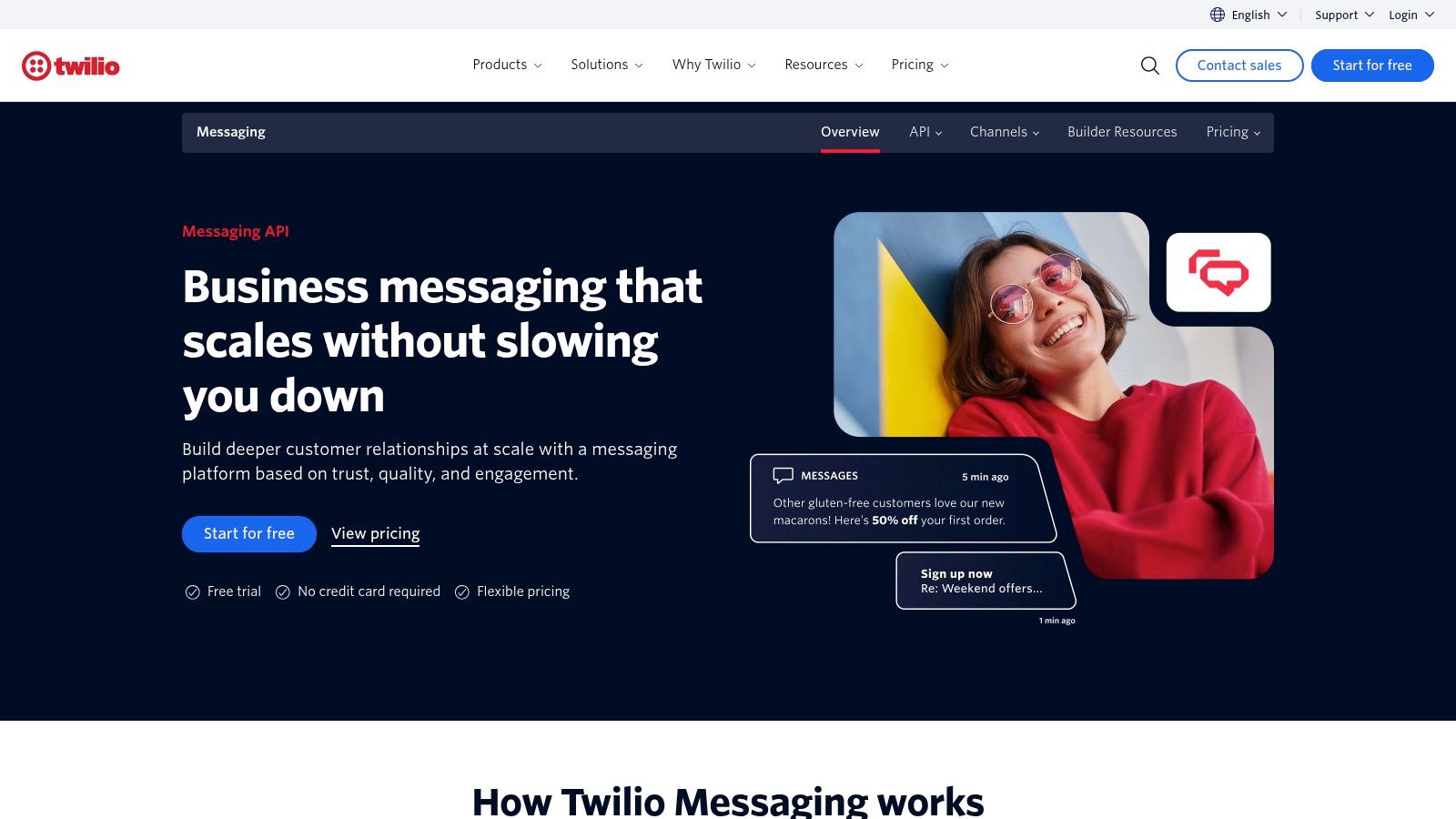
Twilio is infrastructure for building a texting system, not a ready-made Shopify marketing dashboard. It belongs on the shortlist when developers need custom sending, receiving, or integration workflows.
Twilio lists US SMS at $0.0083 per message segment, with carrier fees, number costs, and registration charges potentially additional. That base rate isn't directly comparable with a complete marketing app subscription.
Your team must build or connect campaign management, consent records, list growth, suppression, reply handling, and revenue reporting. Engineering time is part of the cost even when the sending rate looks attractive.
Flexibility has an owner
A custom application can suit unusual workflows, such as routing messages through internal business systems. For a merchant who wants a cart reminder and a weekly product drop, the maintenance burden is harder to justify.
- Developer requirement: Technical implementation is central, not optional.
- Main strength: You control how messaging fits your software and operational processes.
- Main weakness: There's no turnkey Shopify campaign experience to configure and launch.
- Ongoing responsibility: Someone must monitor failures, integrations, consent changes, and reporting.
Consent handling needs particular care in a custom build. The FTC's analysis of a lead-marketing ecosystem found 86% of the examined messages lacked an apparent opt-out instruction. Build suppression and unsubscribe handling into the system before sending promotional traffic, not after complaints arrive.
Starting price, free options, and Shopify fit across the ten mass texting apps
Compare the cost of a typical campaign with the setup it requires. Subscription fees and message rates are not directly comparable, so check whether a tool charges a monthly fee, includes message credits, or requires custom development for Shopify workflows.
| Item | Starting Price | Free Option | Shopify Fit | Best For |
|---|---|---|---|---|
| YipSMS Inc. | $0.032 per SMS segment; subscription plans are available | Free plan; 14-day free trial | Shopify app with one-click setup and prebuilt automations | Shopify merchants seeking SMS list growth and sales recovery |
| Postscript | No platform fee; $49 monthly minimum spend after trial | 30-day trial with $100 credit | Strong Shopify data, targeting, and automation support | Stores focused on SMS marketing |
| Klaviyo | Usage-based mobile messaging; rates vary | Free plan with limited profiles, email, and mobile-message spend | Connects Shopify customer data with email and SMS | Teams coordinating multichannel lifecycle marketing |
| Attentive | Quote-based | No free plan listed | Shopify syncing, targeting, and transactional journeys | Established brands running large mobile-marketing programs |
| Omnisend | SMS requires Pro plan; SMS credits cost extra | Free plan excludes SMS for new subscribers | E-commerce workflows combine email and SMS | Merchants managing email and SMS in one platform |
| SimpleTexting | About $39/month for 500 credits | Free trial; no credit card required | Less focused on Shopify-specific automations | Businesses needing general-purpose bulk texting |
| SlickText | $29/month for 500 credits | 14-day free trial | General SMS tools; limited Shopify-specific focus | Small businesses needing list growth and SMS automation |
| EZ Texting | $25/month | No free plan listed | Suitable for general business messaging, not Shopify-specific automation | Organizations sending browser-based SMS and MMS campaigns |
| Textedly | $29/month for 500 messages | Free account with 50 texts | Shopify integration available | Businesses seeking published message-volume plans |
| Twilio | $0.0083 per US SMS segment, plus possible fees | Free trial for API testing | Requires custom development or integration | Developers building custom messaging workflows |
YipSMS charges $0.032 per segment on its pay-as-you-go SMS plan, with no monthly minimum. Its Free plan costs $0 per month, with SMS at $0.025 per message and MMS at $0.055 per message. Subscription plans add a monthly fee to the per-message cost. The Shopify app has no monthly app fee on top of message costs.
Matching Your Store to the Right Texting Tool
Start with your store's actual constraints. Does it run on Shopify? How many opted-in subscribers will receive campaigns each month? Will you send plain text, MMS, or both, and who will answer replies?
Choose for the workflow you need now. A Shopify-focused app is the practical starting point when cart recovery, subscriber welcomes, and shipping messages need to run without a developer. Klaviyo or Omnisend deserves consideration when coordinating email and SMS matters more than having a dedicated texting platform.
Postscript and Attentive suit teams treating SMS as a substantial program. SimpleTexting, SlickText, EZ Texting, and Textedly warrant testing for general campaign needs. Twilio makes sense when a technical team has a specific reason to build rather than configure.
Compare the complete monthly bill
Test two or three shortlisted tools using free trials where available. Keep the audience, message, destination countries, and intended automations consistent so you're comparing the same work.
- Usage: Include campaign segments, automation traffic, MMS, and expected follow-up sends.
- Fixed charges: Add subscriptions, minimum spends, number costs, registration, and required add-ons.
- Operational work: Account for integration setup, troubleshooting, reporting, and reply management.
- Unused capacity: Check credit expiry or rollover terms before purchasing a larger allowance.
Don't treat contact count as send volume. A subscriber may receive a welcome text, an abandoned-checkout reminder, and a promotional campaign during the same billing period. Longer copy and message formatting can also change segment consumption.
Prove the flows before scaling
Run an abandoned checkout through to recovery, and test a shipping notification against a real order event. Confirm the checkout link, discount behavior, local sending schedule, opt-out handling, and purchase suppression.
Then build a campaign end to end. Check the final message preview, audience exclusions, estimated cost, reply destination, and reporting before release.
Compare delivered messages, clicks, conversions, revenue per recipient, opt-outs, and total spend against your existing benchmarks. Keep platform-attributed revenue separate from your judgment about whether the campaign generated additional sales.
The best mass texting app isn't the one that lets you send the biggest blast fastest. It's the one your team can operate reliably, whose full bill you understand, and whose Shopify workflows you've tested.
Our prebuilt Shopify automations, subscriber-growth tools, and personalized SMS and MMS campaigns help stores launch without building a messaging system from scratch. Visit YipSMS Inc. to explore the plans and use the free trial to test cart recovery, welcome messages, and your first scheduled campaign.
Links referenced in this article
- loyalty points and win-back emails
- Postscript
- Postscript's ecommerce benchmarks
- Klaviyo
- Klaviyo's SMS benchmarks
- Attentive
- Infobip's global SMS compliance guide
- Omnisend
- Omnisend's 2025 ecommerce marketing report
- SimpleTexting
- SlickText
- SlickText's retail and ecommerce benchmarks
- EZ Texting
- Textedly
- Twilio
- FTC's analysis of a lead-marketing ecosystem
YIPSMS publishes educational articles, including AI-assisted content supplied through Outrank. Our internal team reviews Outrank articles for accuracy before publication. Pricing and requirements can change; check current YIPSMS pricing and official guidance before acting. Compliance content is general information, not legal advice. Spotted something wrong? Tell us through your YIPSMS account.