The 10 Best SMS Messaging Apps for Shopify Stores (2026)
Your SMS provider can undermine a great campaign before anyone reads the copy. Message delivery, consent handling, and billing depend on the platform you choose. And sending more isn't automatically better: 49% of consumers said excessive messaging was their biggest source of annoyance in Validity's global study of 1,218 consumers across the United States, United Kingdom, Australia, and New Zealand.
That's why the best SMS messaging app isn't necessarily the one with the longest feature list. It's the one that lets your team send relevant messages, control frequency, recover sales, and understand what each campaign costs.
For Shopify stores, I'd shortlist YipSMS for an overall Shopify-native setup, Brevo for occasional budget-conscious sending, Attentive for enterprise programs, and Shopify Messaging for ease of use. For deliverability-focused evaluation, start with Postscript, but treat that as a testing recommendation, not a claim that it outperforms every competitor.
Buying rule: Compare the cost of delivering your actual campaign, not the advertised price of a text.
Before installing anything, check published message rates, carrier fees, automation depth, list-growth tools, and setup requirements. A cheap rate won't help if the workflow you need sits behind an expensive plan. A powerful platform won't help either if nobody on your team has time to operate it.
Table of Contents
- 1. YipSMS Inc.
- 2. Postscript
- 3. Klaviyo
- 4. Attentive
- 5. Shopify Messaging
- 6. Omnisend
- 7. Recart
- 8. Emotive
- 9. Brevo
- 10. SimpleTexting
- Best SMS Messaging Apps Compared at a Glance
- How to Pick Your SMS App and Send Your First Campaign This Week
1. YipSMS Inc.
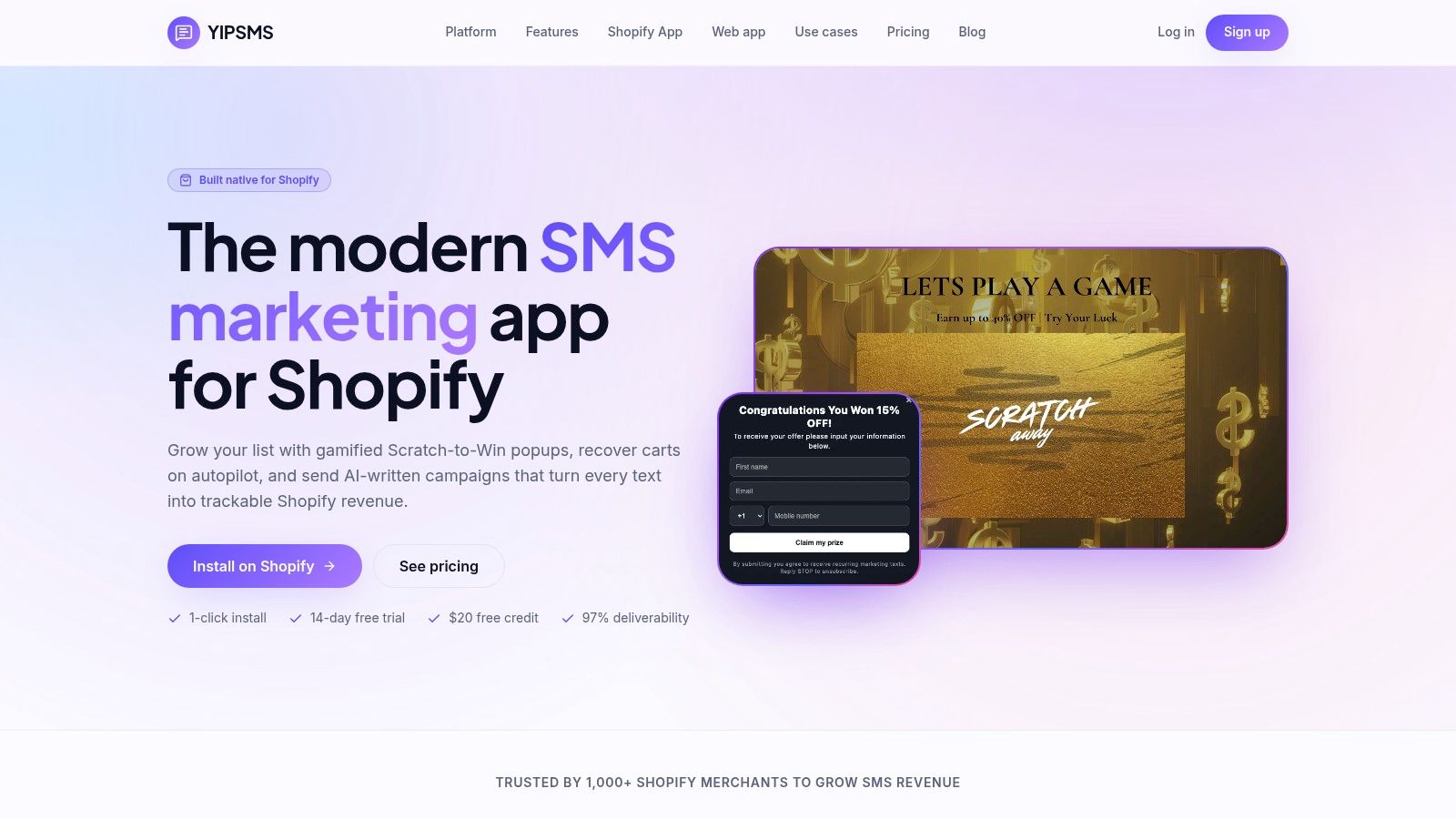
A strong Shopify fit for stores that want quick setup and revenue-focused automations.
YipSMS is built for Shopify merchants who want to run campaigns and purchase-related messages from one app. Its 10 prebuilt revenue automations include cart and checkout abandonment, viewed-product follow-ups, welcome messages, shipping notifications, and personalized recommendations. Teams can activate flows with one click, then tailor messages using personalization tokens and dynamic fields.
A drag-and-drop popup designer helps grow a subscriber list. Unlimited named lists, text-to-join keywords, and QR codes offer additional ways to collect subscribers, including offline.
What you'll pay and what to test
The Free plan costs $0 per month, with SMS at $0.025 per message and MMS at $0.055 per message. Gold costs $99 per month, plus $0.018 per SMS or $0.042 per MMS. Premium costs $299 per month, plus $0.015 per SMS or $0.030 per MMS. Subscription fees are on top of message costs.
The 14-day free trial gives merchants time to try the workflows before choosing a plan. New merchants receive $20 in free credit after their first review.
- Strongest fit: Shopify stores that want prebuilt automations, scheduled campaigns, list-growth tools, and real-time analytics in one app.
- Operational advantage: YipSMS registers numbers for 10DLC and toll-free messaging. Campaigns add opt-out language automatically, and the app handles STOP and HELP responses.
- Main limitation: Paid plans add a monthly fee. Compare the lower per-message rates against your expected volume before subscribing.
Start with a welcome flow and abandoned-checkout automation. Check that purchase events stop recovery messages and that discounts apply correctly. Then compare campaign analytics with the orders you can inspect. A reported engagement lift or return should not replace that store-level check.
2. Postscript
Best shortlist for SMS-first Shopify teams focused on delivery operations.
Postscript suits merchants who want SMS to operate as a dedicated sales channel rather than an email-platform add-on. Its Shopify focus, campaigns, automated flows, acquisition tools, dedicated toll-free number, and branded short links fit familiar ecommerce workflows.
The attraction is specialization. Your team can concentrate on subscriber acquisition, purchase behavior, and message performance without configuring a broader CRM.
But specialization doesn't prove superior deliverability. Evaluate delivery receipts, failed-message explanations, registration support, and incident escalation before awarding any provider that label.
A platform that explains why a message failed is more useful than one that only reports how many messages you sent.
Carrier fees add to Postscript's listed message rates, so the headline rate isn't your complete cost. Higher-tier analytics, priority support, and API access can also change the subscription you need.
For a meaningful trial, use a permissioned audience with representative carriers and customer locations. Review delivery failures separately from customers who received a message but didn't click.
Choose Postscript if your team intends to build a substantial Shopify SMS program and wants an SMS-first workspace. Choose a broader platform if coordinating email and SMS inside shared journeys matters more than channel specialization. Its Shopify-centered approach is also less compelling when your business operates across a mixed commerce stack.
3. Klaviyo
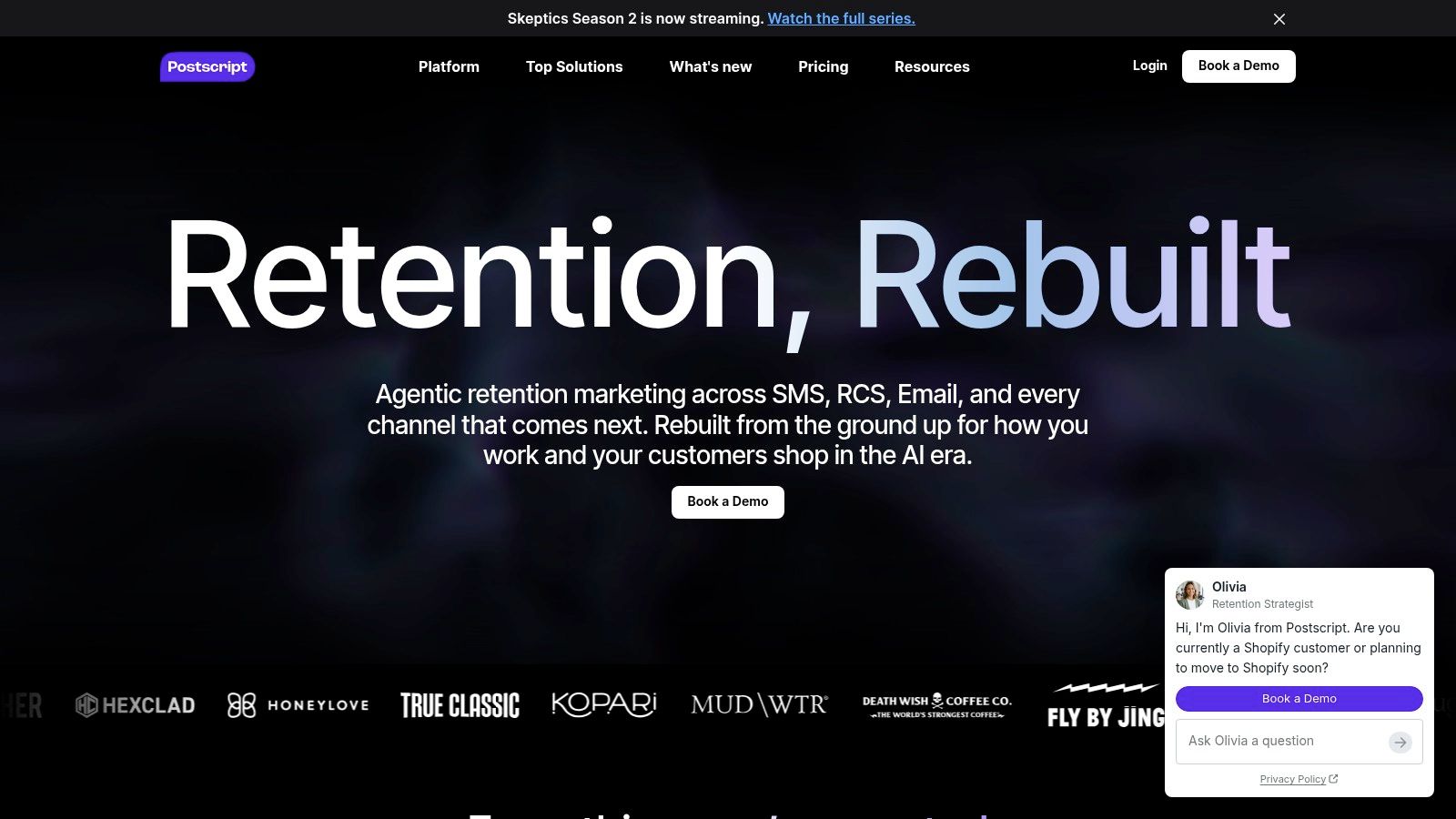
Best for coordinated email and SMS lifecycle marketing.
Already running email in Klaviyo? Start your evaluation there before adding another customer database. Shared profiles, Shopify subscriber syncing, segments, and automated journeys can simplify decisions about who receives which message.
Say a customer abandons checkout after receiving a promotional email. A coordinated workflow can consider their recent activity and purchase status before sending SMS, rather than having separate tools independently pursue the same sale.
That's the advantage: customer context, not another campaign composer.
Where the complexity becomes worthwhile
Klaviyo makes sense when your team wants to segment by purchase behavior, coordinate channels, and maintain reusable lifecycle flows. It's less attractive when you only need occasional texts and don't want to learn a broader marketing system.
- Best reason to choose it: Email and SMS can use shared customer profiles and segments.
- Cost consideration: Mobile messaging rates vary and need to be reviewed in account billing.
- Main trade-off: More configuration and segmentation options mean more decisions before launch.
Test exclusions as carefully as triggers. Confirm that customers who purchase leave abandoned-checkout flows, and that recent recipients don't receive overlapping promotional messages.
I'd keep Klaviyo on the shortlist for an established CRM team. For a founder launching SMS alongside packing orders and answering support tickets, a simpler Shopify-native tool may get a useful workflow live with less maintenance.
4. Attentive
Best for enterprise-scale programs and cross-channel support.
Attentive belongs on the shortlist when your requirements include strategic support, onboarding, complex journeys, and coordination across SMS, MMS, RCS, email, and push. It's a sales-led purchase, not the quickest route to an inexpensive campaign.
Its appeal is the combination of software and operational support. Signup tools, testing, reporting, compliance features, and planning assistance can suit teams managing a larger messaging program.
Richer messaging deserves consideration, too. In a side-by-side comparison, 81% of consumers preferred RCS over traditional SMS, according to Twilio's 2025 State of Customer Engagement Report.
Buy operational capacity, not channel names
RCS support alone isn't a reason to sign a contract. Request a demonstration of recipient eligibility, fallback behavior, reporting, and how your team will manage customers across channels.
- Strongest fit: Brands with dedicated marketing operators and complex customer journeys.
- Buying friction: Public pricing doesn't provide a straightforward self-serve comparison.
- Potential mismatch: Small stores may pay for capabilities and service they won't use.
Bring a specific workflow to the sales call: signup, welcome offer, checkout abandonment, purchase suppression, and post-purchase communication. Have the vendor demonstrate the entire sequence, including exceptions.
I'd choose Attentive when support requirements and program complexity justify a more involved buying process. If your immediate goal is to recover abandoned checkouts, launch a narrower tool first.
5. Shopify Messaging
Best for merchants who want to manage campaigns inside Shopify.
Shopify Messaging suits stores that prefer to work with customer and order context in Shopify rather than add another marketing workspace. Templates, segmentation, scheduling, campaign analytics, and ecommerce automations cover common campaign needs.
The trade-off is specialization. Before choosing it, confirm that the countries, message types, and automation triggers you need are supported. A familiar editor does not guarantee that every workflow is available.
Start with the workflow you actually need
An SMS notification app needs a different evaluation depending on whether you're sending shipping updates, promotions, or abandoned-checkout messages. Check the exact triggers and exclusions for your use case.
- Audience eligibility: Confirm that customers' countries and consent status fit the campaign.
- Automation behavior: Check checkout, cart, and browse triggers, including purchase exclusions.
- Billing separation: SMS charges are separate from the free email allowance.
Shopify Messaging is a practical ease-of-use choice for straightforward campaigns. Teams that need specialized SMS acquisition testing, granular troubleshooting, or a more developed messaging operation may prefer a dedicated tool.
Start with one eligible customer segment and a relevant offer. That keeps the first campaign focused and makes its results easier to interpret.
6. Omnisend
Best for merchants consolidating email, SMS, and web push.
Omnisend is worth considering when you want ecommerce marketing channels together but don't want an SMS-only platform. It supports campaigns and automated customer journeys across email, SMS, and web push, with support beyond Shopify.
The important catch is plan gating. Its free entry plan helps merchants start with email and push, but SMS requires Pro and a separate credits subscription.
That changes the comparison. Don't compare its entry plan with a specialist's usable SMS plan and conclude that the platforms cost the same.
Budget safeguard: Price the subscription that unlocks your workflow, then add the credits required to run it.
A practical evaluation should include a coordinated abandoned-checkout journey. Check how the platform handles email engagement, SMS eligibility, purchases, and suppression before adding more branches.
Omnisend's strengths are channel consolidation, ecommerce automation, and publicly visible pricing that supports an initial comparison. Its limitations are the additional SMS credit expense and the possibility that an SMS specialist better fits your daily workflow.
Use the Shopify SMS marketing app comparison to weigh Shopify-native simplicity against broader channel coverage.
I'd shortlist Omnisend when you're replacing fragmented marketing tools. I wouldn't upgrade solely to access SMS without first checking whether the combined subscription and credits make sense for your expected sending volume.
7. Recart
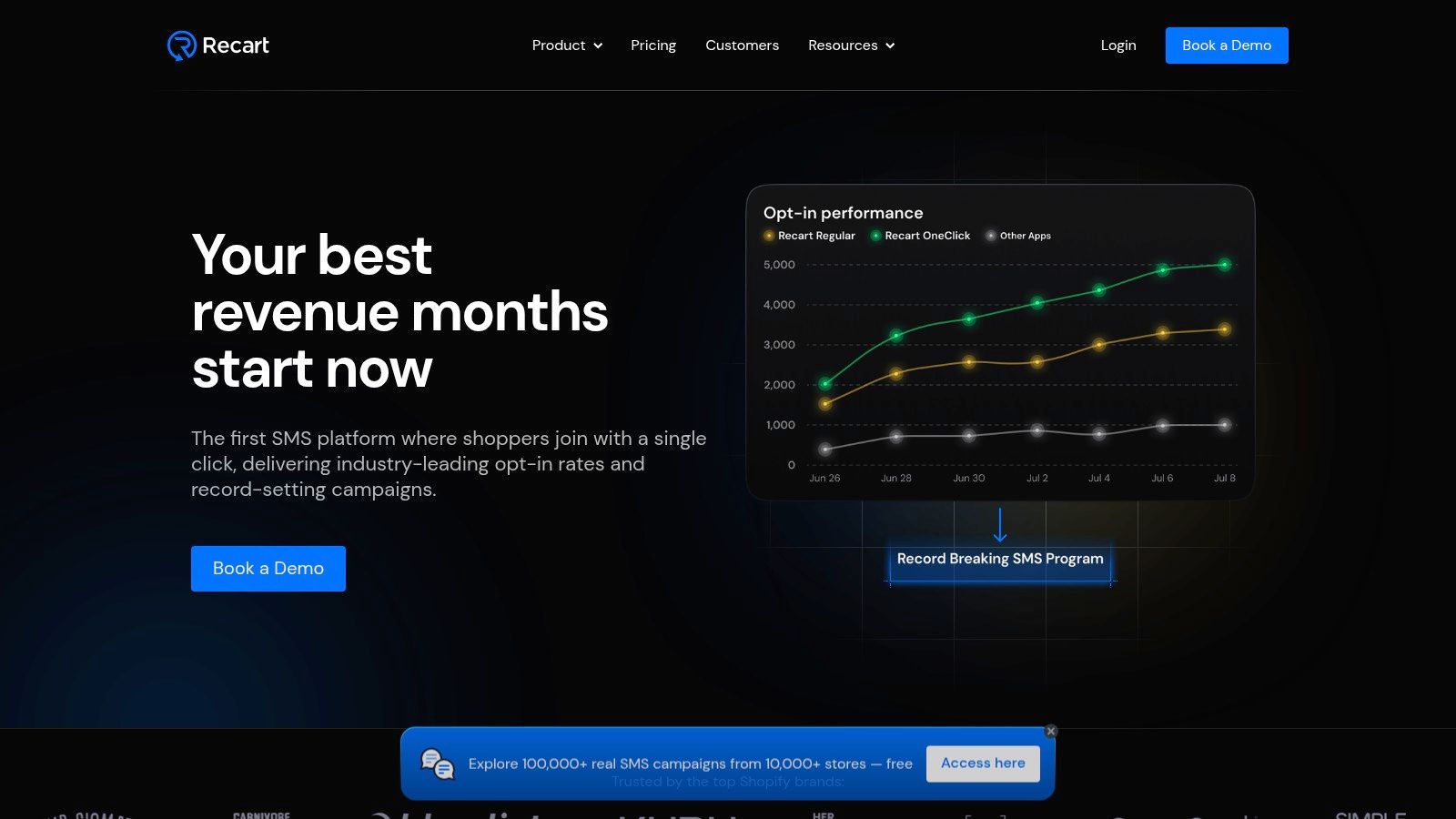
Best for stores that want help operating their SMS program.
A merchant can install excellent software and still never send a campaign. Recart addresses that operational problem by combining Shopify-focused SMS tools with managed onboarding, list-growth assistance, and campaign support.
Its popups, abandoned-cart flows, and other ecommerce automations cover familiar revenue opportunities. The differentiator is having help turning those features into an active program.
That support has value when your team lacks time or a dedicated SMS operator. It has less value when an experienced marketer already owns planning, copy, segmentation, and reporting.
Clarify who does the work
Before subscribing, establish which tasks the managed service covers. Separate strategy recommendations from campaign production, approvals, implementation, and ongoing optimization.
- Useful support: Help with onboarding, subscriber growth, and campaign execution.
- Cost exposure: Monthly plans sit above basic self-serve options, with message allowances and separate overages.
- Billing question: Carrier fees may be additional, so compare the full expected invoice.
Bring your promotional calendar and an example abandoned-checkout flow to the evaluation. Clarify who writes the messages, configures the audience, checks links, and approves the send.
I'd choose Recart when execution capacity is the bottleneck. If your team already runs disciplined campaigns, compare its managed-service premium against a self-serve platform before committing.
The right outcome isn't more activity from an agency or account manager. It's a program your store can afford, understand, and maintain.
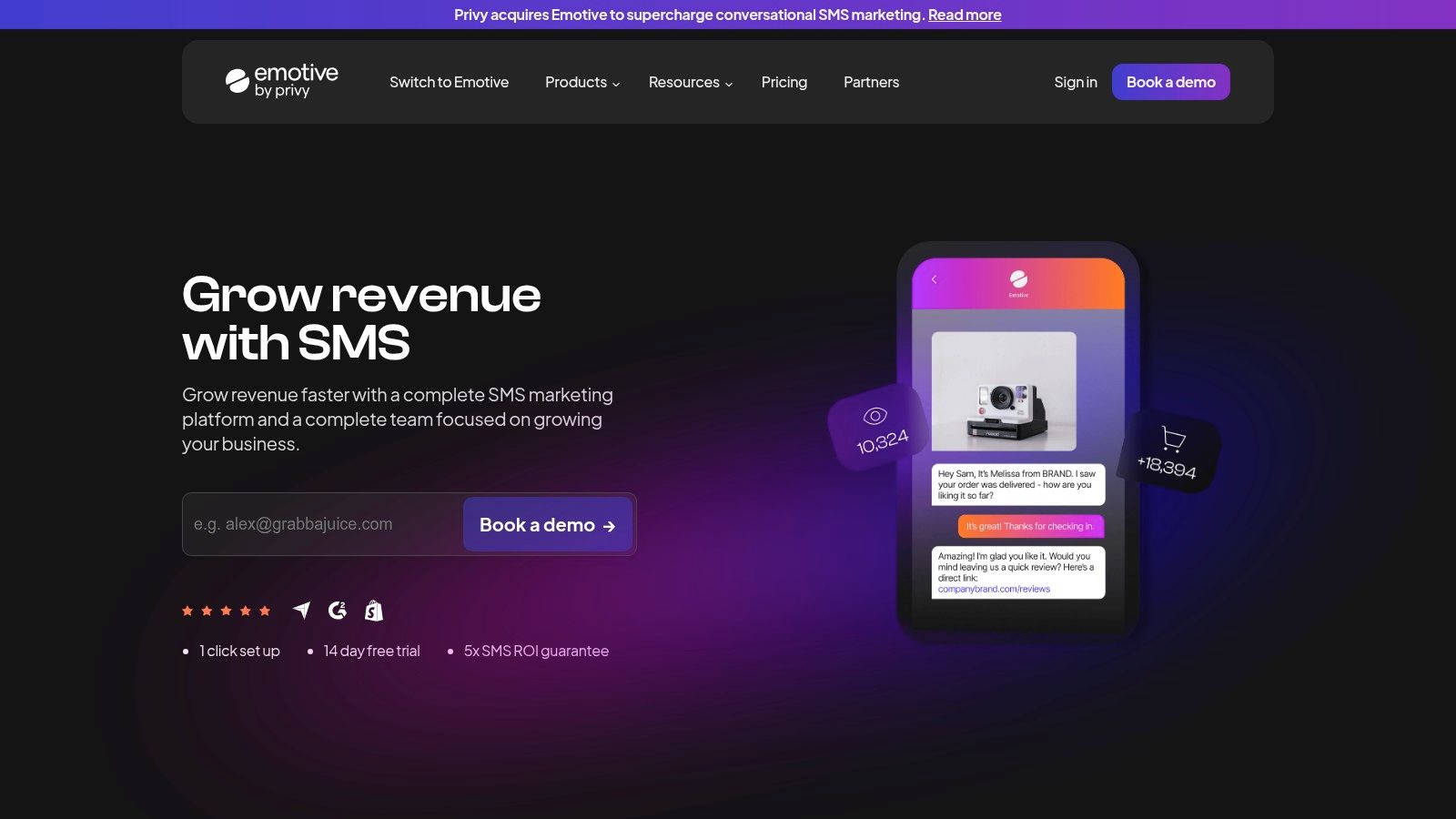
8. Emotive
Best for teams seeking onboarding and higher-touch campaign support.
Choose Emotive for its service model as much as its SMS and MMS tools. Onboarding and customer-success support can help a team that understands its products but hasn't developed SMS expertise.
Higher tiers can include copywriting and dedicated Slack access. Those services are useful only when they address a real gap in your team.
Published plan prices and message rates make initial comparison easier than a fully custom enterprise quote. However, monthly fees and minimum spends can make low-volume sending expensive.
Evaluate the support you'll actually use
Ask for a clear division of responsibilities during evaluation. Your team still needs to approve product claims, discount terms, inventory availability, and customer targeting even when someone else helps write campaign copy.
Compare the offer against your internal capacity:
- Choose support deliberately: Copywriting assistance matters if writing and reviewing campaigns routinely delays launches.
- Inspect minimum commitments: A low message rate doesn't offset unused spending requirements.
- Confirm integration scope: Validate current Shopify requirements and the events needed for your automations.
A useful test is a product-launch campaign with an eligible customer segment and a clearly defined offer. Evaluate the setup process and support response, not just the finished message.
I'd consider Emotive for a lean team that wants structured help. Experienced operators who already have a copywriter and established workflows may get less value from the higher-touch tiers.
9. Brevo
Best budget structure for occasional sending and prepaid credits.
If your store sends SMS intermittently, a recurring SMS-specific subscription can be the wrong expense. Brevo offers prepaid SMS credits that don't expire, alongside broader email, automation, and CRM tools.
That makes it a useful budget candidate for occasional campaigns or stores consolidating customer communication. It supports both marketing and transactional SMS, but it's less Shopify-specialized than ecommerce-first alternatives.
Budget pick doesn't mean universally cheapest. Destination country and message length affect costs, and sender registration requirements depend on where you're sending.
Calculate costs by destination
Build your estimate around your actual customer geography. A blended rate that ignores where subscribers live can produce an unrealistic budget.
- Pricing advantage: You can add SMS without adopting an SMS-specific monthly plan.
- Operational trade-off: Shopify cart-recovery and customer-lifecycle requirements deserve a closer integration review.
- International consideration: Validate sender ID registration and permitted sender formats for each destination.
Test a complete event-to-message workflow rather than stopping after a successful manual send. A campaign tool may be easy to use while the Shopify automation you need takes additional configuration.
I'd choose Brevo for occasional messaging when prepaid flexibility matters more than Shopify-specific depth. For a store planning ongoing acquisition popups, abandoned-checkout recovery, and repeat-purchase automation, compare the implementation effort against a native specialist before deciding on price alone.
10. SimpleTexting
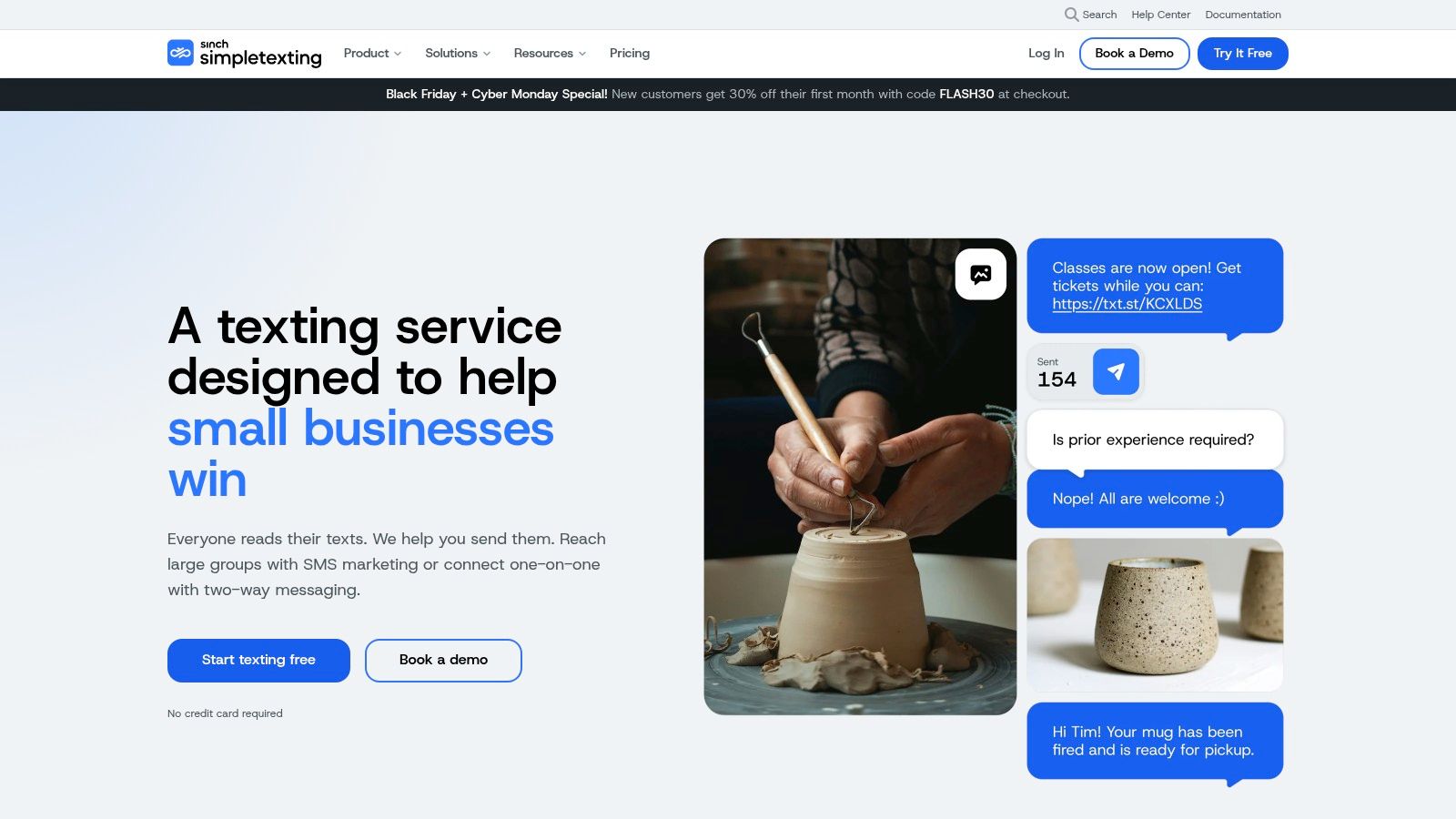
Best for customer conversations alongside promotional texting.
SimpleTexting is a practical choice when customers need to reply, not just click. Mass texting, two-way messaging, auto-replies, keywords, drip campaigns, MMS, and contact segments suit businesses that combine promotions with customer conversations.
For a Shopify merchant, that could mean answering product questions after a launch announcement or handling replies to a local pickup campaign. The platform's general-purpose design can be an advantage for these interactions.
It's less compelling when your main requirement is tightly integrated Shopify lifecycle automation. Confirm how customer events, purchases, and suppression will move between systems.
Don't invite replies unless someone owns the inbox and knows when to escalate a customer question.
Carrier fees apply, and short-code numbers or additional credits can increase costs. Local, toll-free, and short-code options should be compared against the actual needs of your program rather than selected for appearance.
During the trial, test an inbound reply, a keyword signup, an automatic response, and an unsubscribe. Review whether your staff can find the customer context they need without switching repeatedly between tools.
This text message marketing software guide can help distinguish conversational texting from ecommerce automation requirements.
I'd choose SimpleTexting when interactive communication is central. For primarily automated cart recovery and repeat-purchase campaigns, I'd favor a Shopify-focused platform unless the integration test proves equally straightforward.
Best SMS Messaging Apps Compared at a Glance
Pricing details are included only where this comparison supports a specific figure. For the other apps, use the free-plan or trial information and Shopify fit shown here, then confirm current rates before choosing.
| Best For | Price and Free Plan or Trial | Shopify Integration |
|---|---|---|
| YipSMS Inc., Shopify SMS campaigns and automation | Free plan: $0/month, with SMS at $0.025 per message and MMS at $0.055 per message. Includes a 14-day free trial. New merchants receive $20 in free credit after their first review. | Shopify SMS app |
| Shopify-focused SMS campaigns and automations | Pricing details not established here | Designed for Shopify merchants |
| Coordinated email and SMS marketing | Pricing details not established here | Shopify integration with SMS subscriber syncing |
| Larger brands needing cross-channel messaging and support | Custom pricing; no public starting price listed here | Shopify integration details not established here |
| Shopify merchants seeking a familiar campaign workflow | SMS charges apply; no platform price established here | Shopify-native |
| Ecommerce stores bundling email, SMS, and web push | Free plan for email and push; SMS requires Pro | Supports Shopify and other ecommerce platforms |
| Merchants wanting managed SMS support | Pricing details not established here | Shopify-focused |
| Ecommerce teams seeking SMS with hands-on support | Pricing details not established here | Confirm integration requirements |
| Businesses adding occasional or international SMS to marketing tools | Prepaid credits; rates vary by country and message length | Less Shopify-focused; integration details not established here |
| Businesses needing two-way texting and opt-in campaigns | Pricing details not established here; free trial available | Less Shopify-specific; integration details not established here |
How to Pick Your SMS App and Send Your First Campaign This Week
Match the app to your primary constraint. Choose YipSMS for a Shopify-native starting point, Brevo for occasional prepaid sending, Attentive for enterprise complexity, or Shopify Messaging for a familiar workflow. Consider Postscript when a dedicated SMS operation and delivery troubleshooting are priorities, but validate performance with your own audience.
Don't declare a deliverability winner from marketing claims. Infobip's SMS guidance highlights the importance of routing, encoding, message segmentation, and delivery observability. Inspect delivered, failed, and expired messages, along with failure reasons and delivery timing.
Run a small operational evaluation
Start with the workflow you're most likely to keep. For most stores, that means a signup popup, welcome message, and abandoned-checkout automation rather than an elaborate promotional calendar.
- Confirm the complete bill: Include subscription charges, message segments, carrier fees, MMS, registration, and overages.
- Test subscriber acquisition: Check the popup on mobile, verify the discount, and inspect the stored consent record.
- Launch cart recovery carefully: Exclude purchasers, control overlapping messages, and inspect the checkout link.
- Measure useful outcomes: Compare delivery, clicks, attributed orders, opt-outs, and contribution after discounts and messaging costs.
Use a broader strategy such as AI-driven marketing automation for online retailers to coordinate channels, but don't automate an untested customer journey.
Make consent part of setup
For covered automated marketing texts in the United States, obtain prior express written consent and retain evidence of permission, following FCC guidance on unwanted communications. Use an unchecked opt-in box, name the store, explain the messaging program, and don't treat a purchase or shipping phone number as marketing permission.
Test STOP and HELP before launching. Withdrawal of permission must stop text advertisements, as explained in the FCC's text-message opt-out guidance, so suppression needs to cover campaigns and automated flows.
Many platforms offer trials, credits, or demonstrations, but only a real test exposes operational friction. Send to a small, properly opted-in audience, inspect the results, and fix the workflow before expanding.
For stores wanting fast Shopify setup, transparent pay-as-you-go options, and revenue-attributed automations, YipSMS is my starting recommendation. Choose the plan your current volume supports, activate a focused recovery flow, and let actual costs and orders guide the next decision.
YipSMS Inc. brings Shopify subscriber growth, personalized SMS and MMS campaigns, and prebuilt revenue automations into one workspace. Visit YipSMS Inc. to start your trial, build a signup popup, and test an abandoned-checkout flow against real store results.
How this article was made: the YIPSMS team drafts some articles with AI writing tools, then checks pricing, compliance and product details against how YIPSMS actually works before publishing. Spotted something wrong? Tell us through your YIPSMS account.